

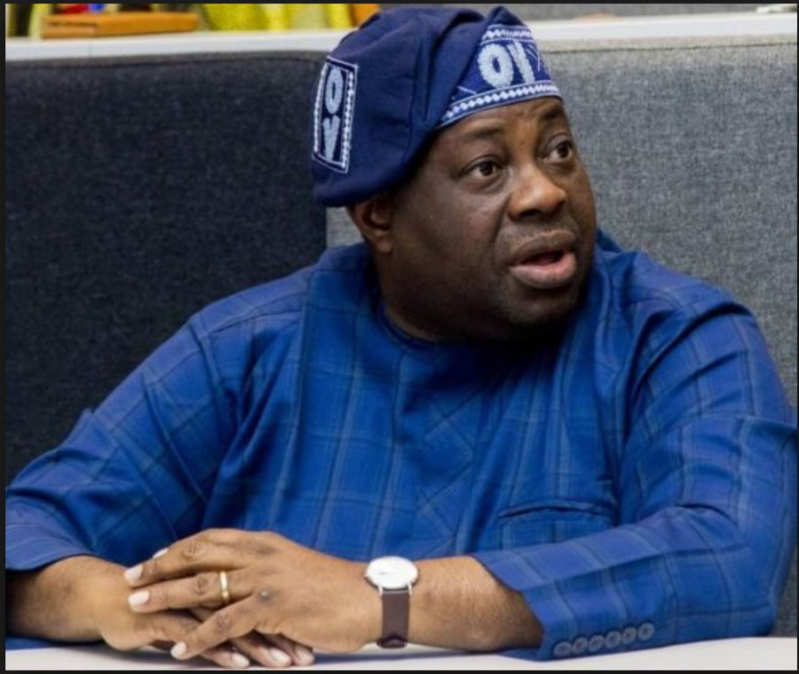
African Democratic Congress chieftain and veteran journalist Dele Momodu has criticised President Bola Ahmed Tinubu over his nationwide broadcast marking Nigeria’s 66th Independence Anniversary, saying the President’s message turned what should have been a celebration into what he described as a “day of lamentation.”
Momodu made the remarks on Thursday, October 1, 2026, shortly after Tinubu addressed Nigerians in an Independence Day broadcast titled “From Reform to Prosperity.” The President used the address to defend his administration’s economic reforms and declare that Nigeria had reached a turning point after more than three years of difficult economic adjustments.
Reacting to the address, Momodu argued that the President’s description of Nigeria’s economic difficulties and the sacrifices demanded from citizens did not reflect the celebratory spirit expected on Independence Day.
“Your speech turned Independence Day to lamentation,” Momodu said in his criticism of the President.
Momodu, a former presidential aspirant and publisher of Ovation International, also disputed the administration’s presentation of its economic performance and said many Nigerians had lost confidence in government promises.
According to him, the difficulties confronting ordinary Nigerians remained significant despite repeated assurances from the government that its reforms would eventually improve living conditions.
His remarks came after Tinubu acknowledged in his address that millions of Nigerians were still struggling to meet basic needs, including food, school fees, healthcare and transportation.
Tinubu said those difficulties did not originate with his administration, arguing that they were the accumulated consequences of decades of low productivity, inadequate infrastructure, limited economic opportunities and institutional failures.
“We cannot erase in four years what accumulated over generations. But we can change its course,” Tinubu said.
The President maintained that his government was building an economy capable of steadily lifting Nigerians out of poverty while providing support for vulnerable households.
Momodu rejected the broader optimism presented by the administration and argued that the lived experiences of many Nigerians remained different from the government's account of economic progress.
He criticised what he described as repeated promises from the administration and maintained that Nigerians wanted improvements they could experience directly in their daily lives.
Tinubu, however, presented a different assessment in his Independence Day address.
The President said Nigeria’s economic outlook had improved after the difficult reforms introduced since his administration assumed office in May 2023.
He pointed to economic growth, declining inflation from its peak, rebuilding of foreign reserves, greater stability in the foreign exchange market and increased non-oil exports as evidence supporting his position.
Tinubu said Nigeria recorded more than $6 billion in non-oil export revenue in 2025, describing it as the highest in the country's history.
“These are not idle claims,” the President said while defending the economic figures presented in his address.
Tinubu also used a medical analogy to explain the economic condition his government inherited and the reforms it subsequently introduced.
He compared Nigeria in 2023 to a patient diagnosed with cancer who had to decide whether to undergo difficult treatment or rely on pain relief without addressing the underlying illness.
“By 2023, poverty was rising, and hope was nearly gone. The country’s situation was darker than ever. We had no choice but to act,” Tinubu said.
The President added that previous Nigerian leaders had, in his description, chosen “morphine” rather than confronting fundamental economic problems.
“For too long, Nigeria’s leaders chose morphine while praying for a miracle that never came,” Tinubu said.
“They focused on symptoms while allowing the disease to take hold deep within the fabric of our society.”
Tinubu said his administration instead decided to address what it regarded as the underlying economic problems.
“The reforms that followed were difficult. The side effects were real. Yet, we must never confuse the medicine with the disease,” he said.
The President's argument centred on reforms introduced after he took office, including the removal of the longstanding petrol subsidy and changes to Nigeria's foreign exchange system.
Those policies have remained major subjects of political debate, particularly because of their effects on fuel prices, transportation costs and the wider cost of living.
In his October 1 speech, Tinubu acknowledged that Nigerians had endured difficult years but said the country had now reached a stage where government policy would increasingly concentrate on prosperity, employment, production and reducing living costs.
“Our priority is to bring down the cost of living,” Tinubu said.
He said the government intended to achieve this by reducing the costs involved in producing and transporting goods consumed by Nigerians.
Tinubu identified expanded irrigation, dry-season farming, better access to seeds and fertiliser, agricultural mechanisation, storage facilities and transportation infrastructure as areas his government would continue to develop.
He also promised greater attention to jobs, industrial growth, digital connectivity and access to finance for Nigerian businesses.
According to Tinubu, the difficult reform period had created the foundation for a new phase.
“The age of reform has done its work. Now begins the age of prosperity,” he declared.
Momodu's reaction challenged that assessment.
The ADC chieftain maintained that the government’s presentation of progress did not correspond with what many citizens were experiencing and argued that Nigerians were becoming increasingly dissatisfied with government assurances.
His remarks therefore represent an opposition political response to the President's Independence Day economic assessment.
Tinubu's address, meanwhile, acknowledged continuing hardship while arguing that the economic reforms had corrected fundamental weaknesses and placed Nigeria on a more sustainable path.
The President also said his administration was strengthening direct assistance to poorer households, improving the National Social Register and continuing programmes including the Nigerian Education Loan Fund and CREDICORP.
Tinubu concluded his address by telling Nigerians that the country had “corrected its course” and should continue moving forward.
“Nigeria has corrected its course. We have passed through our own Red Sea. This is not the time to look back,” the President said.
He described his administration's objective as a Nigeria where prosperity is widely shared and where economic opportunities become reflected in citizens' everyday lives.
Momodu’s response shows the continuing political disagreement over that assessment.
While the President presented October 1 as the beginning of a transition from economic reform to prosperity, Momodu argued that the continuing hardship experienced by citizens made such optimism difficult to reconcile with conditions confronting many households.
The competing statements consequently place two different assessments of Nigeria's economic position before the public: Tinubu says the painful reform stage has strengthened the foundations of the economy and that the next phase will focus on shared prosperity, while Momodu argues that many Nigerians have yet to experience the improvements described by the administration.
📩 Stone Reporters News | 🌍 stonereportersnews.com
✉️ info@stonereportersnews.com | 📘 Facebook: Stone Reporters News | 🐦 X (Twitter): @StoneReportNew | 📸 Instagram: @stonereportersnews
Add comment
Comments