

Reported by Ariajegbe Sylvia Esezobor
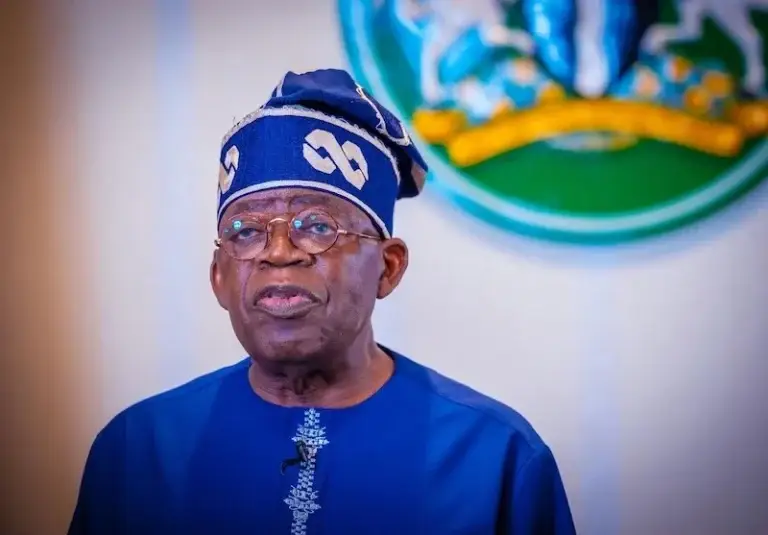
President Bola Ahmed Tinubu has urged state governments across the federation to use their increased revenues more prudently and prioritise projects that improve the living standards of Nigerians, particularly in health and education, in a direct charge to governors following the release of the World Bank's October 2026 Nigeria Development Update.
The President's call was contained in a State House release issued on Sunday by his Special Adviser on Information and Strategy, Bayo Onanuga. "I urge state governments to use their higher revenues more prudently and prioritise projects that improve the living standards of Nigerians, and the health and education of our people," Tinubu said. He also assured that his administration would ensure prosperity is shared by all Nigerians through expanded targeted cash transfers, accelerated deployment of Compressed Natural Gas, increased agricultural productivity and improved access to affordable healthcare and quality education.
The World Bank report, titled "Beyond the Federal Purse: How Higher Revenues Reshaped State Priorities," found that Nigeria's economic reforms have delivered significant fiscal gains to states. According to the report, federation revenues rose by 69 per cent in real terms between 2023 and 2025, with states as the largest beneficiaries. Aggregate state revenues rose by approximately 93 per cent in real terms over the same period, while expenditures rose by 92 per cent. Capital spending increased by 151 per cent in real terms, with the share of state expenditure allocated to capital projects rising from 46 per cent to 61 per cent. Most of the increase went to roads and other transport, agriculture, energy and housing. Twenty-nine of 33 states shifted their spending towards economic infrastructure, while real social spending per person rose in all but one state.
The report also noted that internally generated revenue grew in real terms in 31 of 35 states, and that 21 states reduced their debt-to-GDP ratio between 2021 and 2025. Nigeria's overall public debt is expected to fall from 40.0 per cent of GDP in 2025 to 38.1 per cent in 2026. The World Bank projected that Nigeria's economy will grow by an average of 4.4 per cent between 2026 and 2028, with GDP growth reaching 4.2 per cent in the first half of 2026, up from 3.9 per cent a year earlier. Inflation fell from 27.6 per cent in January 2025 to 15.2 per cent in December 2025, though higher global fuel prices linked to the Middle East conflict have since slowed the decline. The World Bank expects inflation to ease to about 12 per cent by 2028. Nigeria's current account surplus rose to $12.0 billion, or 7.0 per cent of GDP, in the first half of 2026, up from $8.6 billion a year earlier, while gross external reserves increased from $45.5 billion at the end of 2025 to $53.8 billion at the end of August 2026.
The increased revenues flowing to states are reflected in the monthly disbursements from the Federation Account Allocation Committee. In the first six months of 2026, the 36 states received approximately N4.54 trillion from FAAC, representing a 25.77 per cent increase over the N3.61 trillion shared during the corresponding period in 2025. Allocation reached a record N3.007 trillion in July 2026. States also received N2.37 trillion from Value Added Tax allocations in the first half of 2026, up 23.5 per cent from N1.92 trillion in the same period of 2025. State governments recorded at least N435.25 billion in revenue from a special FAAC funding window for infrastructure and security in the first half of 2026, while internally generated revenue across the states rose to N2.43 trillion, a 34 per cent increase.
The President's intervention comes amid a broader debate over accountability for the increased revenues. The World Bank report noted that while states have increased capital spending, education's share of expenditure declined, a finding that has drawn concern from education stakeholders and civil society organisations. Analysts have also pointed to a widening gap between increased government revenues and citizens' living conditions, with critics accusing some political office holders of maintaining lavish lifestyles while residents struggle with elevated living costs and declining purchasing power. Opposition figures, including former Vice President Atiku Abubakar of the African Democratic Congress, have repeatedly demanded greater transparency over the savings generated from the petrol subsidy removal and the increased revenues flowing to states. Tinubu has rejected those demands, describing them as evidence of "serious ignorance of governance and economy," and has said that governors, not the President, should account for how the additional funds are spent.
The World Bank itself has urged states to prioritise better jobs, human capital and services amid the 93 per cent revenue rise, noting that the increase in state revenues has begun to reshape spending priorities with implications for public spending and service delivery. The report's findings provide the Tinubu administration with evidence to support its argument that the reforms are working and creating fiscal space for all tiers of government to invest in their people. The President said the report confirmed that the difficult but necessary decisions to remove the petrol subsidy, unify the foreign exchange market and strengthen fiscal discipline have raised revenues, stabilised the economy and created fiscal space for every tier of government. "The dividends of reform are becoming visible. But more work remains to ensure they fully translate into better living standards for every household, starting with lower food prices and decent jobs for our young people," he said.
The political context of the President's message is significant. The 2027 general elections are less than four months away, with the presidential and National Assembly elections scheduled for January 16, and the governorship and state assembly elections for February 6. President Tinubu is seeking a second term on the All Progressives Congress platform, while former Vice President Atiku Abubakar of the African Democratic Congress, former Anambra Governor Peter Obi of the Nigeria Democratic Congress and Oyo State Governor Seyi Makinde of the Allied Peoples Movement are among the major challengers. The economy and the cost of living have emerged as the central issues in the campaign, and the World Bank report provides the government with data to support its narrative of progress while placing pressure on governors to demonstrate that the increased revenues are translating into tangible improvements for their citizens. The President also commended the Economic Management Team led by the Minister of Finance and Coordinating Minister of the Economy, Taiwo Oyedele, state governors and all stakeholders for their cooperation in implementing the reforms. "I assure Nigerians that the best is yet to come under the Renewed Hope Agenda 2.0, which will accelerate the delivery of shared prosperity for all Nigerians," he added.
📩 Stone Reporters News | 🌍 stonereportersnews.com
✉️ info@stonereportersnews.com | 📘 Facebook: Stone Reporters News | 🐦 X (Twitter): @StoneReportNew | 📸 Instagram: @stonereportersnews
Add comment
Comments