

Reported by Ariajegbe Sylvia Esezobor
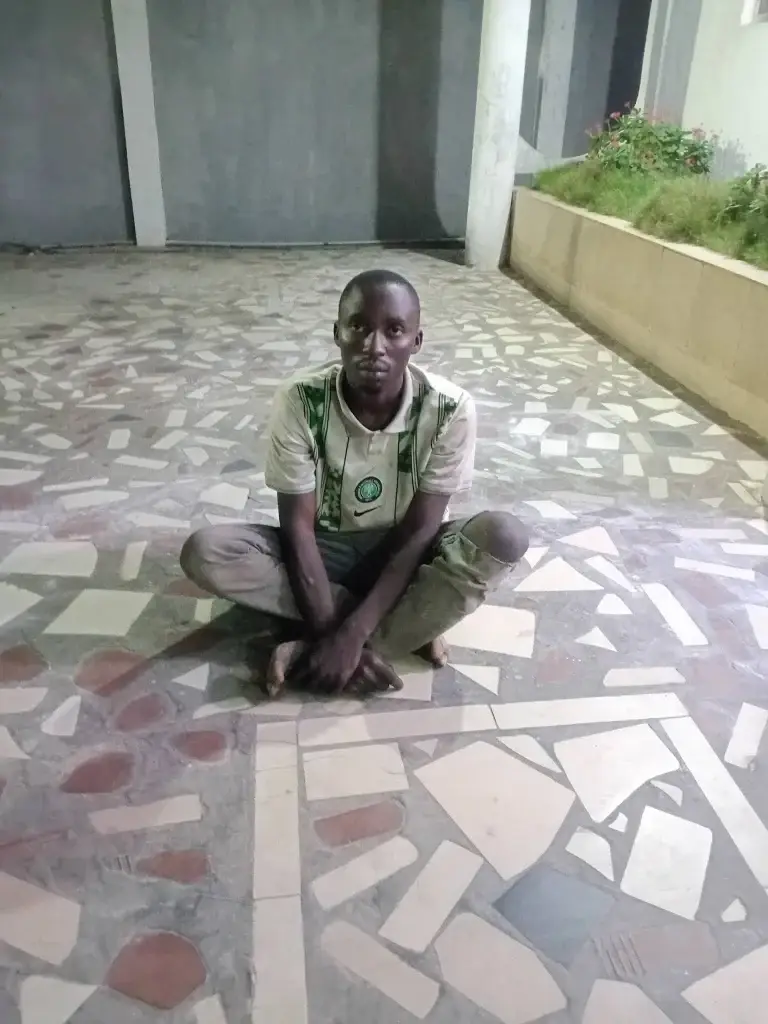
A prospective National Youth Service Corps member, Ibi Bemdoo Philip, has recounted how he and eleven other travellers were abducted in Edo State and held captive in a forest in Kogi State for more than a week, with their captors initially demanding N50 million ransom before reducing the demand to N10 million as their families struggled to raise the money.
In an account shared on Facebook on Sunday, Philip said he was travelling in a Benue Links Nigeria Limited bus to the NYSC orientation camp in Akure, Ondo State, on September 30, 2026, when the vehicle was ambushed at Ibilo, Edo State. He said the driver and two other passengers escaped, while the remaining twelve occupants were taken captive and moved towards Okene, Kogi State. According to him, the captives trekked through the savannah for days, slept on bare ground and rocks, endured heavy rain and survived on little food while their captors held them in the wilderness. "On the first day, we ate nothing. On subsequent days, we were given rice and beans, and sometimes garri," he said. He added that the captives endured four days of heavy rain while being held in the wilderness. "Sometimes, it rained in the morning and again in the evening, leaving us exposed and uncomfortable in the wilderness," he said.
The negotiations for their release began on Friday, October 2, when the kidnappers allowed them to contact their families. Philip said he called his father, Chief Sunday Ibi, and his former course representative at Benue State University, Makurdi, Ols Sally Sewuese Ukule, to inform them of the situation. "I told them the kidnappers were demanding N50 million as ransom. The amount was later reduced to N30 million, but that was where the negotiations ended that night," he said. He added that his father, relatives, friends and other concerned individuals immediately began efforts to raise the money. "My father did everything he could. He barely rested as he desperately tried to find a way to bring me home safely," he said. The prospective corps member said the kidnappers subsequently reduced the ransom demand to N20 million and then N10 million. He explained that whenever the captives were allowed to speak with their families, the calls were placed on loudspeaker so the kidnappers could monitor the conversations. "We were only allowed to speak English. We were asked how much our people had been able to raise," he said.
According to him, the kidnappers became angry when his father disclosed that he had raised N500,000. "At one point, I called my father, and he told me he had N500,000. The kidnappers became angry because they wanted to hear millions, not thousands. That day, I was severely beaten," he recounted. He said his father later told him that he had raised N700,000, but he feared the kidnappers would beat him again if he disclosed the amount. "When I was asked what he had said, I told them N1 million," he added. Philip also said one of the kidnappers collected his identity card and accused him of being a police officer after seeing that his residential address was opposite B Division Police Station. "He accused me of being a police officer and began beating me because of that suspicion," he said. He added that another captive who understood Hausa explained to the kidnapper that his house was merely close to the police station.
The incident is separate from the abduction of twenty prospective corps members travelling from Ibadan to orientation camps in Abia and Akwa Ibom states, who were kidnapped along the Owerri-Onitsha Road in Imo State on October 1 and released a week later. The Imo State Police Command said the victims were freed through a combination of sustained pressure on the abductors and intelligence-led operations, with security sources saying the abductors abandoned their victims and fled after troops of Operation UDO KA intensified operations in the area. However, families of the victims said they paid ransoms to secure their release. One mother disclosed that she paid N6 million for her son's release after the kidnappers initially demanded N50 million per victim before reducing the demand to N15 million and eventually accepting N6 million. Another parent said he paid N3 million, while a father said he paid N6 million and had to borrow the money, asking, "how do I repay the N6 million I borrowed? I'm just a farmer."
The Imo State Commissioner of Police, Audu Garba Bosso, said the command was unaware of any ransom payment. "I am not aware of any ransom paid. What I know is that we rescued the victims," Bosso said. The police have consistently maintained that the victims were freed through security operations rather than negotiation, while the families' accounts suggest otherwise. The discrepancy reflects a recurring challenge in kidnapping cases across Nigeria, where ransoms are often paid covertly and not disclosed to the authorities.
The abductions are the latest in a series of attacks targeting travellers and young Nigerians undertaking the mandatory national service programme. In August 2026, kidnappers abducted corps members travelling from Bayelsa State to Abuja and demanded N20 million for each victim, later reducing the demand to N5 million. The victims were rescued from Egume Forest in Kogi State by joint security forces. In January, a prospective corps member was abducted along the Kogi axis while travelling to Taraba State, with her abductors demanding N30 million. The frequency of these incidents has raised questions about the safety of the NYSC scheme, which requires hundreds of thousands of graduates to travel across the country each year to serve in states other than their own.
The National Association of Nigerian Students, Southwest Zone D, called on the Federal Government to review compulsory long-distance postings and introduce safer deployment and transportation arrangements, demanding the immediate implementation of the risk-sensitive deployment framework approved by the Federal Executive Council in June 2026. The Human Rights Writers Association of Nigeria demanded that the government provide a full account of how the victims were freed, asking whether a ransom was paid and who paid it. "Was a ransom paid? If so, who paid it? And why are the families being left to bear the burden?" HURIWA asked.
For Philip, the ordeal ended with his release, but the trauma of the experience remains. For his family, the financial burden of the ransom, however much it was, has added to the emotional toll of the abduction. For the thousands of prospective corps members preparing to travel to orientation camps across Nigeria in the coming months, the incidents in Edo, Kogi and Imo states are a stark reminder of the risks that accompany the journey to national service. As Philip put it, the kidnappers wanted millions, not thousands, and the families did what they could to bring their loved ones home. The coming months will determine whether the government's promised reforms to the NYSC deployment system materialise or whether another batch of young Nigerians will face the same ordeal.
📩 Stone Reporters News | 🌍 stonereportersnews.com
✉️ info@stonereportersnews.com | 📘 Facebook: Stone Reporters News | 🐦 X (Twitter): @StoneReportNew | 📸 Instagram: @stonereportersnews
Add comment
Comments