

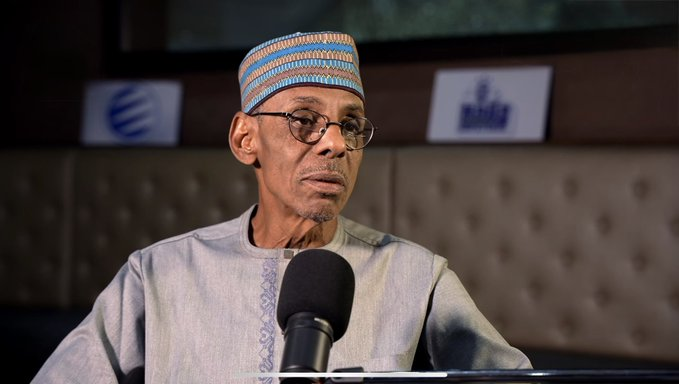
The National Chairman of the Peoples Redemption Party (PRP), Dr Hakeem Baba-Ahmed, has warned that Nigeria's 2027 general elections could be manipulated, calling on electoral authorities to strengthen safeguards against irregularities and ensure that the outcome reflects the choices of voters.
Baba-Ahmed made the remarks during an interview on Channels Television's Politics Today on Tuesday, October 20, 2026, where he raised concerns about electoral malpractice, insecurity and the ability of citizens in vulnerable communities to participate freely in the democratic process.
The former Secretary of the Independent National Electoral Commission (INEC) maintained that no electoral system was entirely immune to manipulation, arguing that the responsibility of authorities was to identify potential threats and minimise opportunities for interference.
Asked whether the 2027 elections could be rigged, Baba-Ahmed responded, “Absolutely.”
He added, “There is no election that cannot be rigged.”
The PRP chairman explained that the possibility of electoral manipulation was not peculiar to Nigeria, noting that concerns about irregularities had emerged in electoral processes in other countries.
However, he argued that the existence of such risks should encourage stronger preventive measures rather than undermine public confidence in democratic elections.
According to him, electoral authorities have a responsibility to prevent misconduct, limit its consequences and protect the rights of citizens to determine their political representatives.
“You can prevent, you can limit the damage of people who think they want to subvert the will of the people,” he said.
His remarks focused on the need for practical safeguards throughout the electoral process, including voting, collation and the declaration of results.
Baba-Ahmed also expressed concern about the possible impact of insecurity on voter participation, particularly in communities affected by banditry, kidnapping and other forms of armed violence.
He argued that residents who cannot move freely because of security threats may face significant obstacles in reaching polling units and exercising their voting rights.
The former presidential adviser cited conditions in parts of northern Nigeria, where armed attacks and displacement have disrupted farming, economic activities, education and everyday movement.
He maintained that the ability to participate in an election should not depend on whether voters can safely travel through areas affected by criminal violence.
“If you don’t improve the manner in which people can freely move out, you can use security to prevent people from voting completely,” Baba-Ahmed warned.
His comments highlighted the relationship between electoral security and political participation, particularly in communities where violence could discourage residents from leaving their homes.
Insecurity can affect elections in several ways, including restrictions on access to polling locations, displacement of registered voters and difficulties transporting electoral personnel and materials.
However, the extent to which these risks will affect the 2027 elections cannot be determined without updated security assessments and information about the arrangements put in place by INEC and relevant security agencies.
Baba-Ahmed also raised concerns about public understanding of the procedures governing the announcement of election results.
He urged INEC to communicate the applicable rules more clearly, particularly regarding the authority responsible for declaring results and the different stages involved in the electoral process.
According to him, voters should understand how ballots are counted, how results are collated and which electoral officials possess the legal authority to make formal declarations.
He suggested that greater transparency and clearer public communication could help reduce disputes and misunderstandings during elections.
Under Nigeria's electoral framework, the conduct of elections involves several stages, including accreditation, voting, counting, collation and the declaration of results by authorised officials.
The integrity of those processes depends on compliance with applicable laws, operational guidelines and safeguards intended to protect the accuracy of recorded votes.
Baba-Ahmed's warning comes as political parties intensify preparations for the 2027 general elections.
The PRP chairman has recently expressed concerns about the political environment, including the potential influence of money on voters and the activities of political parties seeking electoral advantage.
In a separate statement published ahead of the interview, he accused supporters of President Bola Ahmed Tinubu and the All Progressives Congress (APC) of underestimating voters in northern Nigeria.
He alleged that financial inducements could be used to influence political choices and warned against attempts to alter election results.
Those allegations represent Baba-Ahmed's political claims and do not establish that the APC or any other party has undertaken a plan to manipulate the 2027 elections.
The APC and its supporters have defended the administration's record and its right to seek renewed public support through the electoral process.
Kaduna State Commissioner for Information Ahmed Maiyaki, responding to Baba-Ahmed's earlier political comments, said supporters of Tinubu would campaign for the president's re-election and urged political opponents to allow an open contest.
The disagreement illustrates the political tensions emerging as parties prepare to compete for public support.
Beyond the exchanges between political figures, Baba-Ahmed's latest remarks draw attention to broader institutional responsibilities.
INEC is constitutionally responsible for organising federal and state elections within its mandate, while security agencies are expected to provide an environment in which voters, electoral personnel, candidates and observers can participate without intimidation.
Political parties and their supporters are also required to comply with electoral laws and avoid practices that undermine the integrity of the process.
The PRP chairman's concerns about insecurity are particularly relevant to areas where communities have experienced repeated attacks and displacement.
For voters in those locations, access to a polling unit may depend on conditions that extend beyond the technical administration of an election.
Ensuring participation may therefore require coordination between electoral authorities, security institutions and agencies responsible for displaced populations.
Baba-Ahmed's remarks also underscore the importance of public confidence in the management of election results.
Disputes over collation procedures, the accuracy of results and the authority of electoral officials can become sources of political tension, especially in closely contested elections.
Clear rules, consistent application of electoral procedures and timely communication can help voters understand how results are produced and challenged through lawful channels.
The PRP chairman did not present evidence establishing that the 2027 elections had already been compromised.
Rather, his warning concerned the possibility of manipulation and the measures he believes are necessary to protect the process before voting begins.
His intervention adds to discussions about the preparations required to conduct credible elections amid security challenges and increasing political competition.
As Nigeria approaches the 2027 polls, the effectiveness of electoral safeguards, security arrangements and public communication will remain important issues for election administrators, political parties, civil society organisations and voters.
For Baba-Ahmed, the central message is that electoral malpractice must be anticipated and prevented wherever possible, rather than addressed only after disputes arise.
He maintained that the responsibility of electoral authorities is to ensure that citizens can vote freely and that their choices are accurately reflected in the officially declared results.
📩 Stone Reporters News | 🌍 stonereportersnews.com
✉️ info@stonereportersnews.com | 📘 Facebook: Stone Reporters News | 🐦 X (Twitter): @StoneReportNew | 📸 Instagram: @stonereportersnews
Add comment
Comments