

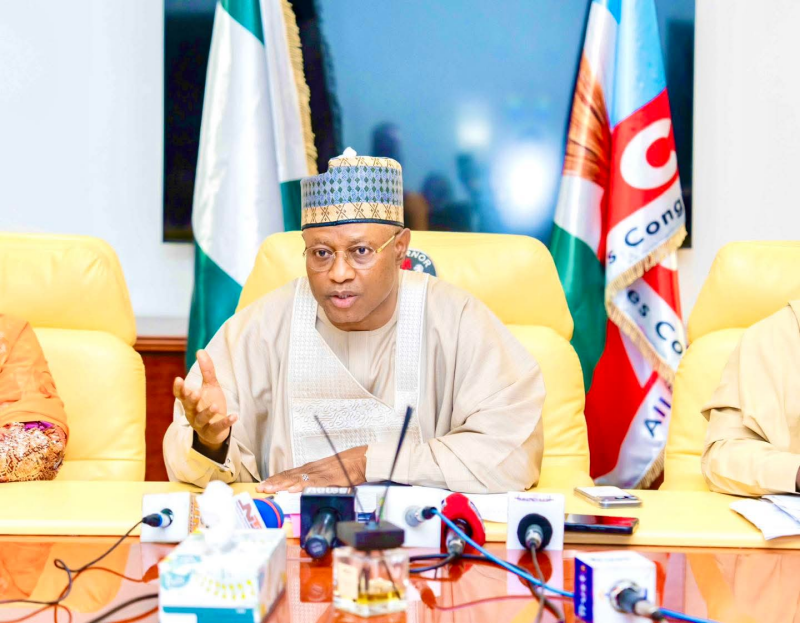
Kaduna State Governor Uba Sani has dismissed suggestions of personal hostility towards his predecessor, Nasir El-Rufai, insisting that he has never spoken negatively about the former governor and continues to hold him in high regard despite their widely reported political differences and El-Rufai's prolonged detention.
Speaking during an interview on Trust TV's Daily Politics programme on Tuesday, October 27, 2026, Sani addressed questions about his relationship with El-Rufai, the former governor's continuing legal difficulties and concerns about his political influence ahead of Nigeria's 2027 general elections. The interview came amid renewed debate over the relationship between the two politicians, who were previously close allies.
"Honestly speaking, I have no problem with him (El-Rufai). If you listen to me carefully, I have never spoken anything bad about him, and I will never speak anything bad about him," Sani said.
The governor maintained that his respect for El-Rufai remained unchanged and suggested that some of his efforts to demonstrate that respect had taken place privately. He declined to disclose the nature of those actions, arguing that personal regard should not always require public declarations.
Sani also distanced himself from remarks attributed to a political supporter who suggested that El-Rufai should remain detained until after the forthcoming elections. The governor insisted that the statement represented the individual's personal position rather than his own.
"The person that made that statement was speaking for himself. He was not speaking for me," Sani said, rejecting any suggestion that he had authorised or endorsed the comments.
The controversy followed remarks by former Kaduna politician Suleiman Hunkuyi, who reportedly urged Sani to ensure that El-Rufai remained in detention until after the 2027 governorship election. The statement attracted attention because it appeared to connect the former governor's legal predicament with the electoral ambitions of his political opponents.
Sani's response sought to separate his administration from such sentiments. He maintained that his relationship with El-Rufai should not be judged by statements made by other political figures or supporters.
The two politicians share a substantial political history. El-Rufai governed Kaduna State between 2015 and 2023, while Sani served as an adviser during his administration before representing Kaduna Central Senatorial District in the National Assembly from 2019 to 2023.
El-Rufai subsequently supported Sani's emergence as the All Progressives Congress governorship candidate and his election as Kaduna State governor in 2023. Their political association made the subsequent deterioration in relations particularly significant within Kaduna's political establishment.
Tensions became increasingly visible after Sani's administration raised concerns about financial obligations inherited from the previous government. In March 2024, the governor disclosed that Kaduna had inherited approximately $587 million in foreign debt, ₦85 billion in domestic liabilities and numerous contractual obligations.
The disclosures generated disagreements between supporters of both administrations. A subsequent investigation by the Kaduna State House of Assembly examined financial transactions and alleged irregularities during El-Rufai's tenure, although the former governor rejected allegations of wrongdoing.
El-Rufai later publicly criticised Sani's political alignment with President Bola Tinubu's administration. In February 2025, he questioned his successor's defence of the federal government and suggested that financial support received by Kaduna influenced the governor's political position.
Those exchanges strengthened public perceptions of a political rupture, even as Sani continued to insist that he bore no personal resentment towards his predecessor.
The controversy has acquired further significance following El-Rufai's detention and prosecution over allegations relating to his time in office. The former governor was initially detained by the Economic and Financial Crimes Commission on February 16, 2026, before being transferred to the custody of the Independent Corrupt Practices and Other Related Offences Commission.
The ICPC said its investigation concerned allegations of financial misconduct, including matters involving public funds, procurement and transactions undertaken during El-Rufai's administration. The former governor has denied wrongdoing and pleaded not guilty to the criminal charges brought against him.
He has also faced separate proceedings concerning allegations of unlawful interception of communications involving National Security Adviser Nuhu Ribadu. El-Rufai has denied the allegations in that case.
His continued detention has attracted criticism from political figures and legal commentators concerned about due process and the length of time he has remained in custody without a conviction.
In September, the Emir of Kano, Muhammadu Sanusi II, publicly questioned the circumstances surrounding El-Rufai's detention. He raised concerns about whether anti-corruption enforcement was being applied consistently and warned against political considerations influencing criminal proceedings.
The ICPC, however, has maintained that its actions followed lawful investigative procedures and that its detention of the former governor was supported by judicial orders.
Against this background, Sani's latest comments represent an attempt to distinguish personal relationships from political disputes and ongoing judicial proceedings.
During the interview, the governor also explained that he regularly consulted former Kaduna leaders on governance matters, including infrastructure development and administrative decisions.
He cited former governor Ahmed Makarfi as one of the individuals whose advice he had sought, particularly concerning road construction projects. According to Sani, consultations with Makarfi influenced decisions relating to the road connecting Soba and Zaria.
The governor further disclosed that he had consulted former Vice President Namadi Sambo on government infrastructure design, demonstrating what he described as his willingness to benefit from the experience of previous officeholders.
"When you are sitting as a governor, you don't have a monopoly of wisdom. The way to succeed is to be humble and listen to people who advise you," Sani said.
His remarks emphasised the importance he places on consultation rather than treating political disagreements as permanent personal divisions.
Nevertheless, the competing public statements and changing political alliances surrounding El-Rufai and Sani demonstrate the complexity of their relationship. While Sani insists he has never spoken against his predecessor, their administrations and political associates have taken sharply different positions on several consequential issues.
The governor's comments do not resolve those disagreements or determine the outcome of El-Rufai's ongoing legal proceedings. They do, however, establish his publicly stated position that political differences should not prevent him from respecting a former ally.
As Kaduna approaches another electoral contest, the relationship between the two leaders remains politically significant. Sani continues to govern the state, while El-Rufai's legal situation and political influence remain subjects of public debate.
For now, the governor's message is that he bears no personal hostility towards the man who supported his rise to office, notwithstanding the disputes that have emerged since the 2023 transition.
📩 Stone Reporters News | 🌍 stonereportersnews.com
✉️ info@stonereportersnews.com | 📘 Facebook: Stone Reporters News | 🐦 X (Twitter): @StoneReportNew | 📸 Instagram: @stonereportersnews
Add comment
Comments