

Reported by: Ijeoma G | Edited by: Oravbiere Osayomore Promise.
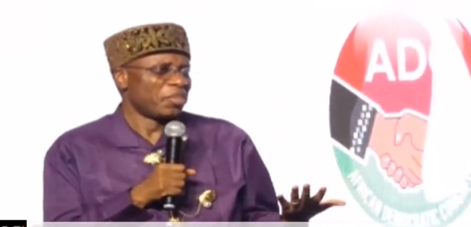
Former Minister of Transportation, Rotimi Amaechi, has launched a sharp criticism of President Bola Ahmed Tinubu, accusing him of undermining democratic principles despite his historical association with pro-democracy struggles during Nigeria’s military era.
Amaechi, speaking amid ongoing realignments within opposition politics, questioned what he described as a contradiction between Tinubu’s past involvement with the National Democratic Coalition and his current approach to governance. He argued that the president, who was widely recognised as part of the pro-democracy movement that resisted military rule in the 1990s, is now presiding over actions that he believes weaken democratic institutions.
In his remarks, Amaechi alleged that state institutions are being deployed in ways that do not reflect democratic ideals, claiming that government structures are increasingly being used against citizens rather than serving them. While he did not provide specific instances during the statement, his comments reflect a broader narrative within opposition circles that has criticised the administration over issues relating to governance, accountability, and institutional independence.
The former Rivers State governor further expressed concern about the trajectory of Nigeria’s political future, asserting that President Tinubu may not willingly relinquish power at the end of his tenure. The claim, which remains speculative and has not been substantiated with evidence, has nonetheless added to growing political tension as discussions around the 2027 general elections begin to intensify.
Amaechi’s comments come at a time when opposition parties are exploring coalition strategies aimed at strengthening their chances in the next electoral cycle. He specifically pointed to the African Democratic Congress as a potential platform for mounting a credible challenge, urging the party to present a strong and viable presidential candidate capable of unseating the incumbent.
The call aligns with ongoing efforts among opposition figures to consolidate support and avoid fragmentation, which many analysts say contributed to their losses in previous elections. The ADC has recently gained attention as a possible rallying point for opposition alliances, particularly following internal restructuring efforts and the involvement of high-profile political actors.
Amaechi’s intervention also reflects his continued relevance within Nigeria’s political landscape after his tenure in the administration of former President Muhammadu Buhari. Known for his outspoken positions, he has remained an influential voice in national discourse, particularly on issues of governance and democratic accountability.
Supporters of the Tinubu administration, however, have pushed back against such criticisms, maintaining that the government remains committed to democratic principles and the rule of law. They argue that ongoing reforms, including economic and institutional changes, are aimed at strengthening the country rather than undermining its democratic framework.
Political analysts note that statements such as Amaechi’s are indicative of early positioning ahead of the 2027 elections, even as the current administration is still within its first term. The emergence of strong opposition narratives, they say, is a normal feature of democratic systems, particularly in contexts where economic and governance challenges dominate public discourse.
At the same time, observers caution that allegations regarding the misuse of institutions or threats to democratic continuity require careful scrutiny and evidence, given their potential implications for political stability and public trust. They emphasise the importance of constructive engagement and adherence to constitutional processes in addressing political disagreements.
As Nigeria moves closer to another electoral cycle, the debate over governance, accountability, and the future of its democracy is expected to intensify. Amaechi’s remarks add to a growing chorus of voices shaping that conversation, highlighting the stakes involved in the contest for political leadership in Africa’s most populous nation.
📩 Stone Reporters News | 🌍 stonereportersnews.com
✉️ info@stonereportersnews.com | 📘 Facebook: Stone Reporters News | 🐦 X (Twitter): @StoneReportNew | 📸 Instagram: @stonereportersnews
Add comment
Comments