

Reported by: Oahimire Omone Precious | Edited by: Oravbiere Osayomore Promise.
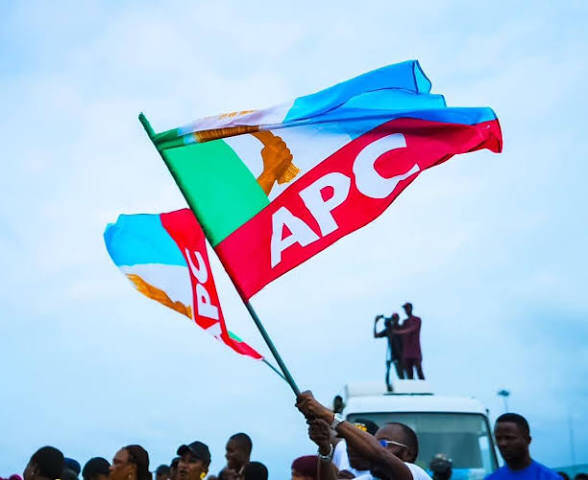
The All Progressives Congress has granted a second reprieve to its 2027 election hopefuls, extending the sale of nomination and expression of interest forms for all elective positions and pushing back the submission and screening deadlines by nearly a week. In a statement issued on Monday, May 4, 2026, the party's National Publicity Secretary, Felix Morka, announced that the sale of forms would now close at midnight on Wednesday, May 6, 2026, while submitted forms would be accepted until midnight on Thursday, May 7, 2026. The screening of aspirants has been moved to Friday, May 8, through Tuesday, May 12, 2026, with the final list of cleared candidates scheduled for publication on Wednesday, May 13, 2026. The extension, which follows a previous adjustment that moved the initial April 25 to May 2 window to a new May 4 deadline, has been framed by the party leadership as a concession to allow more prospective candidates to complete their documentation in line with party guidelines. But behind the bureaucratic language lies a more complicated reality, one of last‑minute scrambles, opposition accusations of deliberate obstruction, and a ruling party racing to lock down its electoral machinery before the 2027 general election campaign season officially begins.
The delay was not entirely unforeseen. When the APC first released its 2027 election timetable on April 21, it set the sale of forms for April 25 to May 2, a compressed eight‑day window that left aspirants with little room for error. But the process stumbled out of the gate. The sale opened three days behind schedule, and by the weekend of May 2, a flood of complaints had reached the party's national secretariat. Aspirants reported being unable to access bank account details for form payments, encountering non‑responsive officials, and struggling to navigate an opaque and seemingly ad‑hoc procurement system. One presidential aspirant, Chief Osifo Stanley, went public on Monday, telling journalists in Abuja that he had made repeated calls to party officials since the previous weekend but had not been provided with the necessary account number to pay for his nomination form. “I made calls between Saturday and yesterday to officials of the party. The account number required to pay for the form is yet to be made available to me as we speak,” Stanley said, describing a situation that he argued violated both the party constitution and independent National Electoral Commission (INEC) regulations. His experience, which was echoed by multiple governorship and legislative aspirants, forced the National Working Committee into an emergency meeting on Monday, where the decision to extend the deadline was finalized.
The form fees themselves are considerable. The APC has set a tiered pricing structure that ranks among the most expensive in the country. Presidential aspirants must pay N30 million for the expression of interest form and another N70 million for the nomination form, totalling N100 million for a shot at the presidency. Governorship aspirants pay a combined N50 million, Senate aspirants N20 million, House of Representatives hopefuls N10 million, and state assembly candidates N6 million. These figures have drawn sharp criticism from civil society groups. The Centre for Democracy and Development (CDD‑West Africa) described the pricing as evidence that the ruling party is taking politics to the highest bidders, effectively excluding all but the wealthiest citizens from seeking leadership positions. In 2023, President Bola Tinubu spent N100 million on his APC nomination forms, a sum nearly twice his total legitimate salary over a four‑year term and more than 1,000 times Nigeria's minimum wage. This time around, Tinubu has already secured his forms, with the member representing Ikeja Federal Constituency, James Faleke, picking them up on his behalf on April 28. Despite the party's insistence that the forms are available to all, the expectation remains that Tinubu will run as a consensus candidate, a prospect that has spawned widespread dissatisfaction among other presidential aspirants who feel the process is being rigged before it even begins.
State chapters of the party are already fracturing over candidate selection. In Gombe State, a fierce dispute erupted when the party announced a consensus governorship candidate, Jamilu Gwamna, shocking former Minister of Communication Isa Pantami, who had also purchased nomination forms. Pantami rejected the outcome on Sunday, calling the process unlawful and insisting that consensus can only stand where all cleared aspirants have voluntarily stepped down in writing. “The action is completely contrary to the provisions of the law, the directive of the National Party, and the instruction of President Bola Ahmed Tinubu,” Pantami said, adding that his legal team was preparing to challenge the arrangement. In Ebonyi State, the party chairman, Chief Stanley Okoro‑Emegha, took a more conciliatory tone, stating that the party would not punish aspirants who defy the consensus arrangement and purchase forms anyway. “Every house has stubborn children,” he said, noting that the party would rely on dialogue to persuade such aspirants to stand down. In Taraba State, the party has ruled out zoning or hand‑picking altogether, with three prominent figures, former Minister of Power Saleh Mamman, businessman David Sabo Kente, and former Minister of Works Alhaji Sambo Jaji, all picking up forms to challenge Governor Agbu Kefas in a direct primary.
Internal crises plague the APC at the national level, however. Just days before the extension announcement, reports emerged from the party's National Working Committee of a deepening rift over the status of deputy national officers. According to a Guardian Nigeria investigation on April 26, five states, namely Akwa Ibom, Kwara, Ekiti, Cross River, and Zamfara, face potential exclusion from the party's primaries and presidential convention because of unresolved disputes over which deputy national officers have been formally recognized. A directive by President Tinubu to include all deputy national officers in the National Working Committee has not been fully implemented, with only a select number recognized while others remain sidelined. Party sources warned that the selective implementation had revived longstanding grievances and could weaken participation in the upcoming primaries, which are set to hold on May 15 and 16, 2026. The timing could not be worse, as the APC is expected to enter election mode immediately after its primaries, with campaigns for the presidential election scheduled to kick off on August 19, 2026.
The broader electoral calendar adds a layer of urgency. INEC has moved the 2027 presidential election forward by several weeks, scheduling it for Saturday, January 16, 2027, while governorship and state assembly elections will hold on Saturday, February 6, 2027. Party primaries must be concluded by May 30, 2026, meaning the APC has just over three weeks to finalize its candidate list, hold its primaries, and resolve any disputes that arise. The repeated extensions of form sale deadlines have trimmed those margins even further, leaving the party with a narrow window to execute its internal democracy. Yet despite the chaos, the party remains outwardly confident. Nasarawa State Governor Abdullahi Sule told reporters on Monday that the growing weakness of opposition parties was itself proof of the APC's superior performance, arguing that the ruling party's achievements have made it difficult for rivals to gain political ground. That confidence may be tested, however, if the internal disputes over forms, consensus candidates, and NWC representation continue to eat into the party's already limited runway. For now, aspirants have until midnight on Wednesday to buy their forms, and until Thursday to submit them. Whether those deadlines hold, or whether the party will be forced into yet another extension, remains an open question in Nigeria's fast‑moving political calendar.
📩 Stone Reporters News | 🌍 stonereportersnews.com
✉️ info@stonereportersnews.com | 📘 Facebook: Stone Reporters News | 🐦 X (Twitter): @StoneReportNew | 📸 Instagram: @stonereportersnews
Add comment
Comments