

Reported by: Oahimire Omone Precious | Edited by: Oravbiere Osayomore Promise.
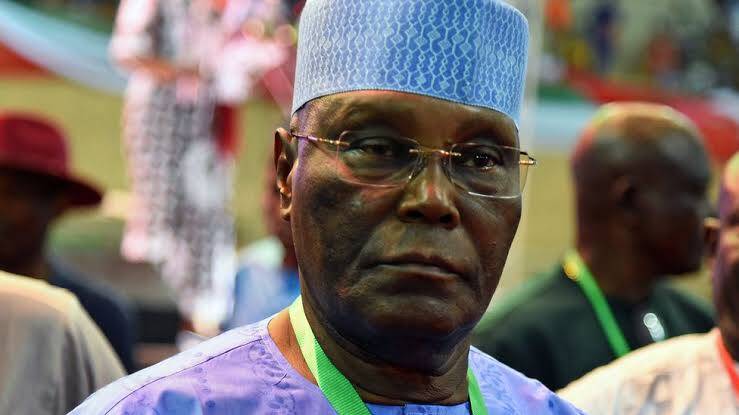
Former Vice President Atiku Abubakar has announced plans to travel to the United States to draw international attention to what he describes as a full-blown internal crisis in Nigeria, warning that escalating insecurity, economic mismanagement, and declining governance standards have pushed the nation to a critical point of no return. In a statement issued on Sunday by his media adviser, Paul Ibe, Atiku said his forthcoming engagement with policy and institutional stakeholders in the United States will focus on the worsening state of security, the economy, and democratic governance, insisting that Nigeria cannot afford to ignore or politicise these challenges any longer. The former presidential candidate, who served as vice president between 1999 and 2007, has emerged as one of the most vocal critics of the Bola Tinubu administration, and his planned US visit signals a significant escalation in his campaign to hold the government accountable on the global stage.
Atiku painted a grim picture of the security situation across the country, warning that the Nigerian state is steadily losing its grip on its most fundamental responsibility: the protection of lives and property. He pointed to the ravaging violence in the North‑West and North‑East, persistent bloodshed in the Middle Belt, and the growing spread of kidnapping and organised criminality nationwide, stating that the situation has moved beyond isolated incidents to a pattern of systemic failure. “Communities are being overrun, livelihoods destroyed, and citizens abandoned to their fate,” Atiku said, adding that any government that cannot guarantee basic security forfeits the moral basis of its mandate. His warning follows a string of deadly attacks across the country, including coordinated assaults on military bases in Borno State and civilian killings in Kaduna, Benue, Kebbi and Kwara states, many of which have left dozens dead and hundreds displaced.
On the economic front, Atiku raised the alarm over rising inflation, a weakened currency, and collapsing purchasing power, which he says have pushed millions of Nigerians into severe distress. He attributed the economic strain to policy inconsistency and a clear lack of strategic direction, noting that public confidence in governance continues to erode as living conditions worsen. Atiku also took aim at the government’s handling of foreign reserves, pointing out that despite a reported N5 trillion oil windfall driven by global crude price surges, Nigeria’s external reserves fell to $48.45 billion as of April 24, down from $48.72 billion the previous week, representing a cumulative depletion of about $1.57 billion since March 11. “This contradiction — of dwindling reserves amid rising oil earnings — exposes a dangerous pattern of economic mismanagement,” Atiku said in a separate statement issued by his senior special assistant on public communication, Phrank Shaibu. He argued that the persistent drawdown suggests the Central Bank of Nigeria is injecting liquidity to support the naira artificially, a strategy he likened to “pouring water into a basket” because it fails to address structural weaknesses such as low productivity, weak exports, and lack of investor confidence.
Atiku also expressed deep concern over the state of Nigeria’s democratic institutions, warning that declining public trust in governance, accountability, and the electoral process poses a direct threat to national stability, especially as the country moves toward the 2027 election cycle. He insisted that any attempt to undermine transparency or manipulate electoral outcomes will carry serious consequences for both national unity and legitimacy. This warning comes as the opposition coalition on the African Democratic Congress continues to fragment, with the exit of Labour Party presidential contender Peter Obi and the anticipated departure of Rabiu Kwankwaso, weakening prospects for a unified challenge to President Tinubu.
Addressing anticipated criticism that taking Nigeria’s internal challenges to an international audience amounts to unpatriotic behaviour or inviting foreign interference, Atiku firmly rejected such claims. “Telling the truth about Nigeria is not unpatriotic,” he declared, stressing that the country does not exist in isolation and cannot pretend that its internal failures have no external implications. He maintained that while only Nigerians will decide the nation’s leadership, international partners have a legitimate interest in the stability, governance standards and democratic health of a country as strategically important as Nigeria. He also noted that responsible leadership does not hide from scrutiny, but welcomes it as a pathway to improvement.
In a direct message to the Tinubu administration, Atiku urged the government to urgently reset its priorities, restore public confidence, and demonstrate a clear, credible strategy to address insecurity and economic decline. He warned against complacency and deflection, stating that power is not an entitlement but a responsibility, and that Nigerians expect results, not explanations. To citizens, he delivered a blunt reminder that no nation survives in silence, urging Nigerians to remain vigilant, engaged and unyielding in their demand for accountability, and emphasising that real change will come from within. The exact date of Atiku’s US trip has not yet been announced, but his media office confirmed that further details of the itinerary and specific engagements will be released in the coming days.
📩 Stone Reporters News | 🌍 stonereportersnews.com
✉️ info@stonereportersnews.com | 📘 Facebook: Stone Reporters News | 🐦 X (Twitter): @StoneReportNew | 📸 Instagram: @stonereportersnews
Add comment
Comments