

Reported by: Ijeoma G | Edited by: Oravbiere Osayomore Promise.
The governorship race in Plateau State has been thrown wide open as a prominent entrepreneur, philanthropist and Peoples Democratic Party (PDP) chieftain, Kefas Wungak Ropshik, popularly known as Kefiano, has formally obtained his expression of interest and nomination forms to contest the party’s ticket ahead of the 2027 gubernatorial election. Ropshik, who arrived in Abuja on Wednesday to pick the forms, made his declaration in an atmosphere charged with divine confidence, stating unequivocally that he believes God has personally prepared him to lead the state at this defining moment. “My name is Kefas, the rock, and I believe God has prepared me to help lay a stronger foundation for generations to come,” Ropshik told journalists, as a crowd of supporters looked on. His entrance into the race not only adds a fresh, business‑savvy voice to the opposition platform, but also promises to reshape the political conversation around security, economic productivity and youth inclusion in a state that has groaned under the weight of violent attacks for years.
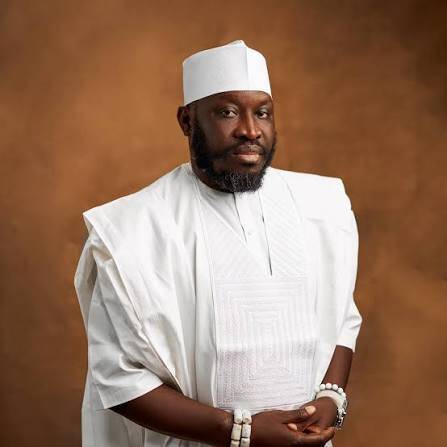
From the outset, Ropshik framed his ambition as a calling, not a calculation. Dressed in an all‑white kaftan and matching cap, he arrived at the venue in Abuja’s high‑brow political district accompanied by scores of loyalists and grassroots supporters, a deliberate show of the organic backing he claims to have garnered across Plateau’s 17 local government areas. In an emotional address, he traced his journey from the dusty paths of Garram village in Kanke Local Government Area, where he was born into a humble family, to the boardrooms of Abuja where he built Kefiano Group and Kefiano Autos, a major automobile dealership. “There are moments in life when you look back at where you came from, and all you can do is thank God for the journey. From Garram village in Kanke, from a humble beginning, from a young boy who had dreams but did not know what the future held, I could never have imagined that I would one day stand at this defining moment,” he said.
The PDP chieftain was careful to distance his ambition from the vanity of political office. “After deep reflection, prayers, and sincere conversations, I have made the bold but humble decision to offer myself to serve as governor of Plateau State — not because of position, not because of ambition, but because I truly believe our state can become much more, and our people deserve much more,” Ropshik declared. His words struck a deliberate contrast with the perception of career politicians who, in his view, have reduced governance to a scramble for perks. By adopting the language of a “servant‑leader,” Ropshik sought to position himself as an outsider bearing a fresh covenant with the electorate, one that is rooted in enterprise rather than entitlement.
But behind the spiritual rhetoric lies a hard‑nosed political strategy. Ropshik’s decision to pick the nomination forms places him on a direct collision course with the incumbent governor, Caleb Mutfwang, who is also eyeing a second term in office. Mutfwang, a PDP governor, has faced mounting criticism over his handling of insecurity, which remains the most visceral issue in Plateau politics. Ropshik seized on that vulnerability immediately. “Our state is blessed, but our people are hurting. Insecurity has taken too many lives, destroyed livelihoods, and created fear in our communities. If given the mandate, I will prioritise the protection of lives and property as the foundation for every other development,” he asserted. To translate that promise into action, he proposed a “people‑driven security architecture” that would weave together community intelligence, traditional institutions and formal security agencies into a cohesive shield. “We will deploy a people‑driven security architecture that involves communities, traditional institutions, and security agencies working together. Plateau must be safe again for farmers, traders, students, and investors,” he said.
The security promise is not a rhetorical ploy. For years, Plateau State has been haunted by cycles of communal violence, particularly in Mangu, Barkin Ladi, Riyom and Bassa local government areas. Farming communities have been repeatedly attacked, leaving hundreds dead and thousands displaced. Entire harvests have been abandoned, disrupting the state’s agricultural economy and fuelling a humanitarian crisis. In this environment, any credible aspirant must present a concrete vision for restoring peace. Ropshik’s emphasis on a community‑driven model — which would empower local hunters, vigilantes and traditional rulers — taps into a growing frustration with security agencies that often arrive after the damage has been done. He also promised to invest in intelligence gathering and to tackle “youth unemployment as a security risk,” drawing a direct line between economic exclusion and the recruitment of angry young men into criminal networks.
However, Ropshik insisted that security alone is not enough. He called for a fundamental economic shift, urging Plateau to move away from what he described as “economic dependence” and instead pivot toward productivity, enterprise and innovation. He identified agriculture, business, tourism, technology and industry as the key pillars that would drive this new economy. “I believe Plateau must move beyond dependence and step boldly into an era of enterprise, innovation, productivity, and opportunity. I see a Plateau where our youths become creators, where our women are empowered, and where our economy thrives on sustainable pillars,” Ropshik said. Given his background as a successful entrepreneur and the operator of a 250‑hectare mechanised farm, these pledges carry a weight that purely political aspirants often lack.
Ropshik’s profile extends far beyond the average politician. He is the founder of Kefiano Group and Kefiano Autos, a leading car dealership in the Federal Capital Territory. He also maintains a footprint in agribusiness and has a well‑documented record of philanthropy. Among his most celebrated gestures is the renovation of the Accident and Emergency unit at the Jos University Teaching Hospital (JUTH), a project that reportedly upgraded the facility to one of the best standards in the country. He has also consistently donated food items to widows and orphans and launched youth empowerment schemes aimed at fostering self‑reliance. For voters weary of empty campaign promises, Ropshik’s ability to point to tangible achievements outside government may prove a potent weapon.
Nevertheless, his path to the PDP ticket is anything but guaranteed. The party’s internal leadership crisis, which was only partially settled by a recent Supreme Court ruling recognizing the Abdulrahman Mohammed‑led faction, has left the structure in a state of flux. Ropshik himself has waded into that crisis, urging party stakeholders to “close ranks and embrace unity, discipline and reconciliation” in the aftermath of the court’s decision. “The recent judicial pronouncement by the Supreme Court that invalidated the Ibadan convention, thereby recognising the Abdulrahman‑led leadership, represents a critical constitutional moment that demands maturity, restraint and institutional discipline from all stakeholders,” he said earlier in the week. He has also advised party members to recognise and cooperate with the leadership currently acknowledged by the Independent National Electoral Commission (INEC), pending a full review of the judgement. These interventions suggest that Ropshik is not merely a candidate but also a player in the high‑stakes battle for the soul of the PDP in Plateau.
The governor’s camp has yet to issue a formal response to Ropshik’s declaration, but political observers expect a fierce primary contest. The PDP’s nomination process will test the strength of the party’s internal democracy, and Ropshik’s camp is already mobilizing support across the 204 electoral wards of the state. He has made it clear that he will not rely on handouts or godfatherism, but on a coalition of youths, women and grassroots movements. “I come to you not as one who has all the answers, but as one of you, with faith, sincerity, and a genuine heart to serve,” he concluded, repeating his appeal for prayers, trust, and support.
The 2027 gubernatorial election in Plateau is still sixteen months away, but the race has already begun to take shape. With Ropshik’s entry, the PDP primary has become a two‑pronged contest between an incumbent seeking re‑election and a businessman‑philanthropist who claims divine preparation. For the people of Plateau, the choice will ultimately come down to a question of performance versus promise, and whether the violence that has stained their hills can finally be tamed by a new kind of leader. Kefas Ropshik has thrown his hat into the ring. The battle for the Rock of Jos has just gotten a lot more interesting.
📩 Stone Reporters News | 🌍 stonereportersnews.com
✉️ info@stonereportersnews.com | 📘 Facebook: Stone Reporters News | 🐦 X (Twitter): @StoneReportNew | 📸 Instagram: @stonereportersnews
Add comment
Comments