

Reported by: Ijeoma G | Edited by: Oravbiere Osayomore Promise.
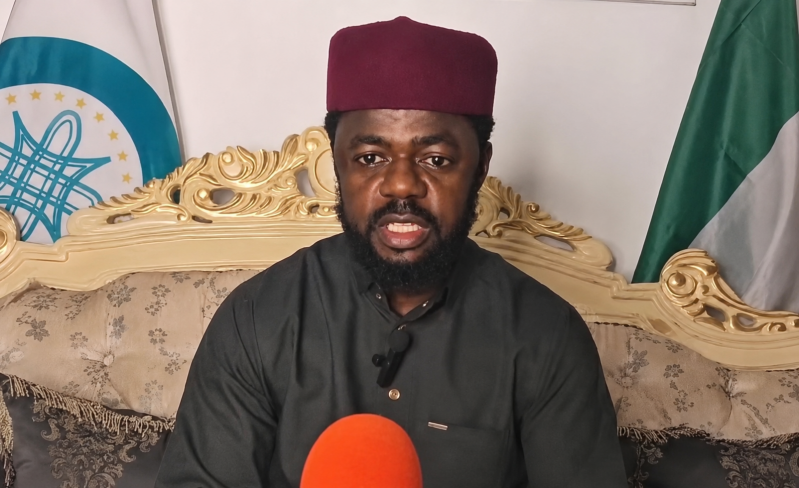
The president of a prominent northern youth group has launched a blistering attack on former Labour Party presidential candidate Peter Obi, dismissing his presidential ambition as a fantasy and accusing him of using a deceptive “one‑term” promise to hoodwink northern voters ahead of the 2027 elections. In a statement that has gone viral across social media, Abdul Danbature, president of Arewa Youths, declared that Obi’s pledge to serve only four years if elected is a political gimmick designed to manipulate the region’s electorate into backing an “unwinnable” ticket.
Danbature, whose group has previously campaigned for President Bola Tinubu’s re‑election and demanded the sacking of the defence minister over rising insecurity, said Obi’s proposal to limit himself to a single term lacks constitutional force and cannot be trusted. “Peter Obi you can only be Nigerian president in your dream. Your four years tenure promised if you become president is a scam to deceive Northern Nigerians,” Danbature was quoted as saying. His remarks, widely shared on X (formerly Twitter) and other platforms, triggered immediate backlash from supporters of the former Anambra governor and renewed a fierce national debate over the value and enforceability of pre‑election tenure pledges.
Obi has repeatedly declared that if elected in 2027 he will serve only one four‑year term, repeating on several occasions that he would not stay beyond that period “even with a gun to my head”. The promise was cemented after the Nigeria Democratic Congress, the party he recently joined, zoned its presidential ticket to the South for a single term before rotating the office back to the North in 2031. The arrangement is designed to reassure northern political interests who fear that a prolonged southern presidency could permanently distort the country’s informal power‑rotation system.
Yet for many northern political figures, the memory of 2010‑2011 still casts a long shadow. After the death of President Umaru Musa Yar’Adua in 2010, his southern successor, Goodluck Jonathan, completed the late president’s tenure and then contested and won a full term in 2011. That episode, perceived in many northern circles as a breach of an unwritten rotational understanding, has bred deep scepticism toward informal political commitments. The National President of the Northern Youth Council of Nigeria, Isah Abubakar, captured this mood, noting that the region now approaches such promises with a “once bitten, twice shy” mentality. He argued that memories of the 2011 transition remain fresh among many northerners who believe the region was politically disadvantaged after Yar’Adua’s death.
Danbature’s attack taps directly into that reservoir of distrust. By characterising Obi’s tenure pledge as a “scam”, he echoed a wider conservative northern view that any pre‑election promise to limit oneself to a single term is legally unenforceable. Under the Nigerian Constitution, a president has the right to seek re‑election after a first term, and no legal mechanism exists to compel a sitting president to step down based on a campaign assurance.
The youth leader’s remarks, carried extensively on platforms such as Gistlover, drew swift condemnation from many Nigerians who argued that no single region should dictate the outcome of a national election. One user, @Rita_mila3040, asked bluntly: “So who do you think will make a better president?” Another, @Inosabithem, lamented the persistent regional division in Nigerian politics, writing, “All these north, south east and west something just dey worry una.” Several commentators insisted that the decision on who becomes president ultimately belongs to Nigerians at the polls, not to any sectional group. @Eromani_OES commented, “So northern youths decides who will be president of Nigeria? Sounds terrible.” Similarly, @obuakus wrote, “Northerners now feel they can decide the election result.”
Others, however, used the controversy to re‑examine Obi’s political record and his shifting party allegiances. The Presidency has already signalled that it will weaponise the “trust deficit” in the 2027 campaign. Bayo Onanuga, the president’s special adviser on information and strategy, dismissed Obi’s one‑term vow by pointing to the former governor’s history of party defections and past sworn pledges that were later abandoned. Onanuga recalled that while still in the All Progressives Grand Alliance, Obi had placed himself under a self‑curse, vowing never to leave the party that made him governor, only to depart later. “If you believe Peter Obi’s promise to serve only one term as president, you’ll believe anything,” Onanuga wrote on X.
Contrary to Danbature’s portrayal of a united northern rejection of Obi, political opinion across the region is sharply fractured. A survey of northern stakeholders conducted by several news outlets shows a clear generational and ideological split. Youth organisations and reform‑minded politicians have welcomed Obi’s proposal as a reasonable compromise that could reduce political tensions and offer an alternative to the old‑guard elite. Many younger northern voters, frustrated by poverty, unemployment, and what they see as the failure of traditional political leaders, find Obi’s message of fiscal discipline and inclusive governance appealing.
A Kano State coordinator of the Kwankwasiyya Diaspora, Dr Muhammad Hamisu, expressed confidence in the former governor’s word. “We Northerners believe in his promise to serve only one term. We remain optimistic because we believe Peter Obi is a man of integrity who will keep his promise,” he said. On the other hand, influential conservative figures remain unconvinced. Murtala Abubakar, a political analyst and youth leader, described the pledge as “a political gimmick designed to secure electoral sympathy”. He argued that the promise lacks legal and moral binding force because no constitutional mechanism exists to compel compliance once a president is elected.
The National President of the Northern Youth Council of Nigeria, Isah Abubakar, noted the major weakness of Obi’s proposal lies in the contradiction between constitutional reality and verbal political promises. Once sworn into office, he said, a president possesses the constitutional right to seek another term, while powerful political interests surrounding the presidency could pressure the incumbent to remain in office beyond the initial pledge. His position reflects a broader sentiment among conservative northern blocs that view the proposal as an electoral tactic rather than a dependable political covenant.
Danbature’s broadside is not an isolated outburst. The Arewa Youth Assembly, a separate group, has already declared that President Tinubu must be allowed to complete a full eight‑year southern tenure and warned northern politicians against contesting the 2027 presidential election. The assembly argued that allowing the South to complete its cycle under Tinubu is in the interest of national unity, cohesion and continuity of governance. It has pledged massive support for Tinubu’s re‑election and praised the administration’s economic and security reforms.
Obi’s camp, meanwhile, has largely avoided responding directly to the youth leader’s insults, preferring to let the discourse focus on economic and governance issues. The Obidient movement, his formidable grassroots support network, has continued to mobilise across the country, arguing that the real scam is not Obi’s tenure pledge but the decades of elite impunity and state capture that have left Nigeria impoverished. Yet the attack from a figure who claims to speak for northern youths cannot be easily dismissed. As the 2027 election cycle intensifies, the battle for the soul of the North’s electorate is only just beginning, and the accusation that Peter Obi is selling a dream rather than a credible plan will be a recurring refrain from his opponents.
📩 Stone Reporters News | 🌍 stonereportersnews.com
✉️ info@stonereportersnews.com | 📘 Facebook: Stone Reporters News | 🐦 X (Twitter): @StoneReportNew | 📸 Instagram: @stonereportersnews
Add comment
Comments