

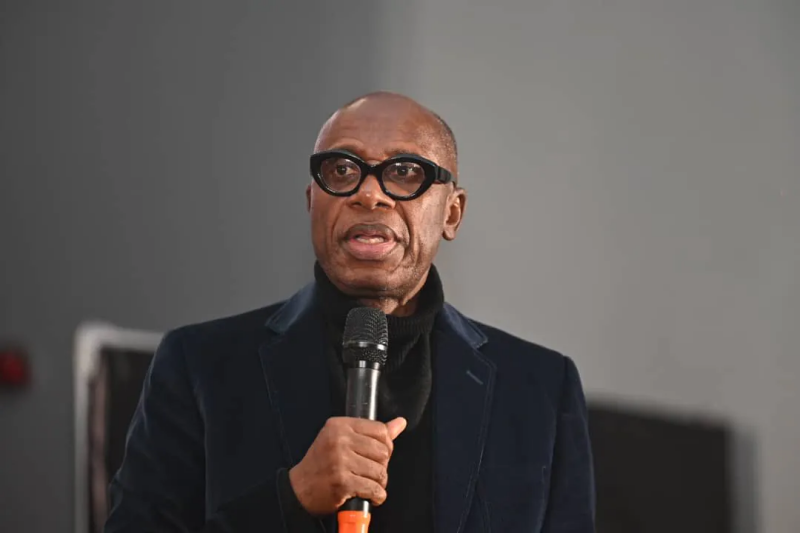
Former Rivers State Governor and African Democratic Congress (ADC) vice-presidential candidate Rotimi Amaechi has challenged claims that Nigeria's 2027 elections have already been predetermined, questioning why political actors would continue campaigning, spending money and allegedly intimidating opponents if the outcome were certain.
Speaking in remarks attributed to him at the inauguration of the ADC Presidential Campaign Council, Amaechi urged opposition supporters not to be discouraged by suggestions that the ruling All Progressives Congress (APC) could not be defeated. His comments come amid growing disagreements between the ADC and figures associated with President Bola Tinubu's administration over electoral credibility and political activities in Rivers State.
“If they say they have already rigged the election, why are they in Port Harcourt? Why are they paying money? Why are they threatening people?”
The remarks, circulated as part of Amaechi's message to opposition supporters, question the credibility of claims that the election's outcome has already been secured. However, the specific quotation has not been independently confirmed against a complete recording of his speech.
Reports of the campaign council's inauguration in Abuja on October 10 confirm that Amaechi addressed intimidation and urged ADC members to remain focused on the forthcoming elections. They also confirm that he drew on his previous experiences of political confrontation while campaigning as an opposition figure.
Amaechi, who served as governor of Rivers State between 2007 and 2015 and later as Minister of Transportation under former President Muhammadu Buhari, has become a prominent figure in the ADC's campaign for the 2027 presidential election.
The party is fielding former Vice-President Atiku Abubakar as its presidential candidate, with Amaechi as his running mate.
At the campaign council inauguration, the former governor called for unity among party members following disagreements associated with the ADC's internal selection process.
He urged members to concentrate on the general election rather than allow earlier disputes to weaken the campaign.
According to a report by Nigeria Info FM, Amaechi argued that opposition politicians should not regard incumbency as proof that a governing party cannot lose an election.
He also recounted experiences from previous campaigns, including occasions when he alleged that security restrictions prevented him from travelling freely.
In one account, Amaechi described being stopped at Akure Airport and advised by a military officer to leave because his safety could not be guaranteed.
He cited those experiences to explain why opposition campaigners should anticipate difficulties while continuing to participate in the democratic process.
The comments have gained additional attention because of an increasingly public disagreement between Amaechi and the Minister of the Federal Capital Territory, Nyesom Wike.
Both men previously governed Rivers State and have remained political rivals despite changes in their respective party affiliations.
Wike recently criticised Amaechi over statements made during an ADC town hall meeting in Benin City, Edo State.
The minister accused the former governor of making inflammatory comments about people intending to vote for Tinubu in the forthcoming presidential election.
He also warned that Amaechi could encounter difficulties campaigning in Rivers State if he continued making remarks that Wike considered offensive to the president's supporters.
The warning prompted a response from the Rivers State chapter of the ADC.
In a statement issued in Port Harcourt, the party rejected the suggestion that Wike could determine whether Amaechi or other opposition politicians were permitted to campaign in the state.
The ADC maintained that political participation and peaceful campaigning were rights protected under Nigeria's democratic system.
Its Rivers State Publicity Secretary, Chizy Enyi, argued that no individual political officeholder possessed the authority to prevent opposition candidates from seeking votes.
The party also urged security agencies to pay attention to statements that could be interpreted as threats against lawful political activities.
Wike's remarks, meanwhile, formed part of his criticism of Amaechi's campaign language, which he described as provocative.
The minister called on the Independent National Electoral Commission and other relevant authorities to respond to what he considered inflammatory political statements.
The disagreement illustrates the competing concerns being raised by political actors ahead of the election.
While the ADC has focused on allegations of intimidation and restrictions on opposition activities, Wike has criticised the language used by Amaechi against the president and his supporters.
Neither set of allegations, by itself, establishes that electoral malpractice has occurred or that any political party has predetermined the election's outcome.
Amaechi has also discussed the possibility of electoral manipulation in separate public appearances.
During an October 2 interview on Channels Television, he expressed concern about public frustration with economic conditions and warned against attempts to undermine the credibility of the forthcoming election.
In that interview, he argued that widespread hardship had increased the importance of allowing Nigerians to express their political preferences through voting.
He also criticised the Tinubu administration's economic record, particularly the effects of petrol subsidy removal on household expenses.
The Presidency and APC representatives have disputed aspects of Amaechi's criticism and defended the administration's record.
The wider political debate has included disagreements about inflation, infrastructure, public finances and the government's economic reform programme.
These issues are expected to remain prominent as parties present competing policy proposals to voters.
On October 15, the ADC Presidential Campaign Council separately accused the APC of attempting to weaken multiparty democracy through its political recruitment and campaign arrangements.
In a statement attributed to campaign council spokesperson Kola Ologbondiyan, the ADC alleged that the ruling party was exerting pressure on opposition governors and other political figures.
The allegations were presented as the ADC's position and have not been independently established as findings of unlawful conduct.
The ruling party's campaign activities and efforts to attract political support do not, without additional evidence, establish electoral fraud.
Similarly, claims that the 2027 election has already been rigged require verifiable evidence before they can be reported as fact.
Nigeria's Independent National Electoral Commission remains the institution legally responsible for organising federal elections, administering voting procedures and declaring results.
Political parties, candidates, observers and citizens also have roles in monitoring electoral conduct and raising concerns through lawful channels.
The credibility of the forthcoming election will depend on the implementation of electoral procedures, the conduct of political participants and the handling of any complaints arising during the process.
For Amaechi, the central message of his remarks is that opposition supporters should not regard claims of inevitable victory by an incumbent party as a substitute for an actual electoral result.
His questions about campaign spending and alleged threats challenge the political messaging surrounding the contest rather than demonstrate that specific acts of vote buying or intimidation have occurred.
The ADC has continued encouraging its members to remain organised and participate in the electoral process despite disagreements with the ruling party.
The latest exchange also places renewed attention on the need for political actors to campaign without threats, violence or unlawful interference.
As preparations for the 2027 elections continue, Amaechi's remarks underline the disagreement between the ADC and its political opponents over electoral confidence, campaign freedoms and the responsibilities of those seeking public office.
For voters, the outcome remains undecided and will be determined through the electoral process, subject to applicable laws and any judicial proceedings arising from disputes.
📩 Stone Reporters News | 🌍 stonereportersnews.com ✉️ info@stonereportersnews.com | 📘 Facebook: Stone Reporters News | 🐦 X (Twitter): @StoneReportNew | 📸 Instagram: @stonereportersnews
Add comment
Comments