

Reported by: Ijeoma G | Edited by: Oravbiere Osayomore Promise.
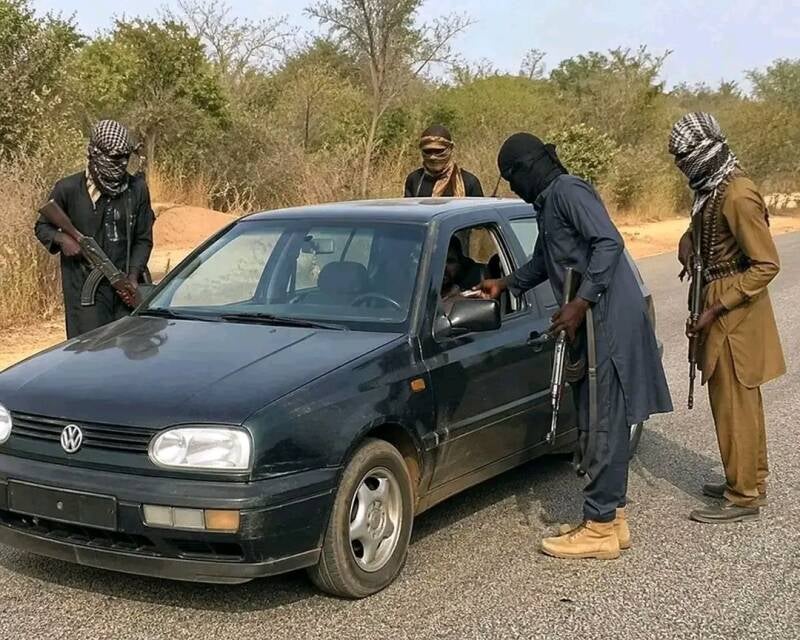
Bandits operating along the Sheme–Kakumi road in Katsina State intercepted a commercial vehicle traveling from Kakumi to Abuja on Thursday, April 23, 2026, robbing all passengers of their mobile phones and other valuables in a brazen daylight attack that has once again exposed the deep insecurity plaguing one of the state’s key transit corridors. The incident occurred along the Sheme–Kakumi axis, a road that connects several local government areas including Kankara, Bakori, and Funtua. Eyewitnesses reported that the attackers, who were armed with rifles and machetes, emerged from the bush and blocked the road, forcing the driver to stop. They then systematically ordered each passenger to hand over their phones, money, and any other items of value, before fleeing back into the surrounding forest. No casualties were reported, but the psychological trauma on the passengers, many of whom were traders and families heading to the Federal Capital Territory, was severe.
Residents of the affected communities, speaking to local reporters on condition of anonymity, said that this was not an isolated incident but part of a prolonged and escalating pattern of attacks across Kakumi, Guga and Kandarawa, all of which lie along the vital transit routes linking Kankara, Sheme and Bakori. “We have lost count of how many times these bandits have stopped vehicles on this road,” said a community elder from Kakumi. “They take phones, money, and sometimes they kidnap passengers for ransom. People are afraid to travel. Those who must travel now use the road only during the day, and even then, they are not safe.” The elder added that the bandits are so bold that they sometimes mount checkpoints at multiple points along the road, effectively controlling the corridor for hours at a time.
The attack on the Abuja‑bound vehicle follows a series of similar incidents that have intensified over the past six months. In March 2026, bandits abducted 14 passengers from two buses along the same Sheme–Kakumi–Funtua highway, demanding ransoms that ran into millions of naira before releasing the victims weeks later. In February, a trader was shot dead when he attempted to resist a robbery at a checkpoint near Guga village. The victims are often left stranded for hours after their vehicles are damaged or their drivers flee, and many have reported being forced to walk kilometres to the nearest town with no means of communication because their phones were taken.
The persistent insecurity has forced many travelers to abandon the road altogether. Commercial drivers who once plied the Sheme–Kakumi route have diverted to longer, more expensive alternatives, deepening the economic hardship on local communities that depend on trade with cities like Katsina and Abuja. Farmers from Kakumi and Guga have also reported being unable to transport their produce to markets, leading to post‑harvest losses and dwindling incomes. “This road is our lifeline. Without it, we cannot sell our goods, we cannot visit our families, we cannot get to hospital,” said a woman from Kandarawa who identified herself as Aisha. “The bandits have taken everything from us.”
Community leaders in the affected areas have repeatedly called on security agencies to intervene. In December 2025, a delegation of traditional rulers from Kankara and Bakori met with the Katsina State Commissioner of Police to demand the establishment of a permanent military post along the Sheme‑Kakumi axis. The delegation also proposed a revival of community policing initiatives and the deployment of mobile phone signal boosters, since the area has very poor network coverage, making it difficult for victims to call for help. However, residents say that despite these appeals, the security situation has only worsened. “They promised to send more patrols, but we rarely see them,” a youth leader from Guga told reporters. “And when we do see them, they are in a convoy speeding through, not stopping to check anyone.”
The Katsina State Government has previously attempted dialogue with bandit leaders in the area. In 2024, the state brokered a peace accord with some militant groups operating in the region, offering them amnesty and integration into a government‑backed vigilante programme in exchange for an end to attacks. The accord held for a few months, but violence resumed after hardline factions rejected the deal. Residents now express deep scepticism about any future negotiations. “We have tried talking to them. It didn’t work. We need the military to clear these forests and put an end to this nightmare once and for all,” said a farmer from Kakumi.
The Federal Government’s Operation FANSAN YAMMA, which is focused on the North‑West and North‑Central zones, has recorded successes in other parts of Katsina State, including the neutralisation of several bandit commanders and the rescue of kidnapped victims. However, the mountainous terrain and dense forest reserves around the Kankara‑Bakori axis have proven difficult to dominate. Security analysts note that the bandits operate in small, agile units, using motorcycles to move quickly and retreat into hideouts that are not easily accessible by military vehicles. The lack of reliable intelligence from local communities, partly due to fear of reprisals, also hampers operations.
The attack on the Sheme–Kakumi road has drawn sharp criticism from civil society organisations in Katsina. The Katsina State chapter of the Civil Liberties Organisation (CLO) issued a statement on Friday describing the situation as “a complete breakdown of security” and called on Governor Dikko Umar Radda to declare a state of emergency in the affected areas. The group also demanded the immediate resignation of the local government chairmen of Kankara and Bakori, accusing them of failing to provide leadership or coordinate with security agencies. The Katsina State Government has not yet responded to the latest incident, but a government source told this reporter that security agencies had been directed to intensify patrols and that a coordinated operation was being planned.
For the passengers who survived the robbery on the Sheme–Kakumi road, the trauma is still fresh. One of them, a middle‑aged businessman who gave his name only as Musa, said he was traveling to Abuja to purchase goods for his shop when the attack happened. “They took my phone, my money, and even my shoes. I had to walk barefoot for two hours before a Good Samaritan gave me a ride to the next town. I am still shaking,” he said. Musa added that he would not be using that road again, regardless of the cost or inconvenience. “It’s not worth dying for,” he said.
The communities of Kakumi, Guga, and Kandarawa are now urging the federal and state governments to act urgently, not with promises but with boots on the ground. They want a permanent military presence, regular patrols, and a functioning communication network along the entire stretch of the Sheme–Kakimi–Funtua highway. Until then, the road will remain a death trap, and the people will continue to live in fear. The attack on the Abuja‑bound vehicle was just one of many. The question is: how many more vehicles must be ambushed before someone in power decides to finally act?
📩 Stone Reporters News | 🌍 stonereportersnews.com
✉️ info@stonereportersnews.com | 📘 Facebook: Stone Reporters News | 🐦 X (Twitter): @StoneReportNew | 📸 Instagram: @stonereportersnews
Add comment
Comments