

Reported by: Ijeoma G | Edited by: Oravbiere Osayomore Promise.
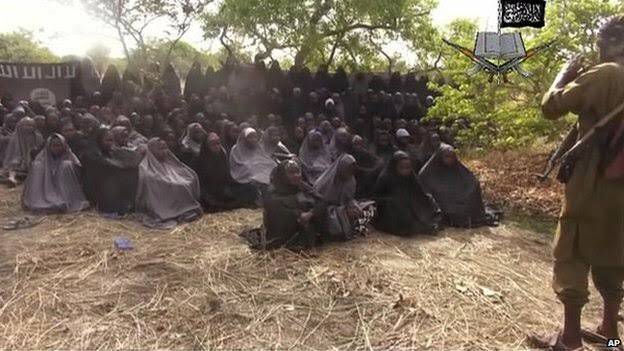
A faction of Boko Haram has reportedly selected 68 women from a group of 416 abducted victims in Borno State, with plans to distribute them among its members in a development that has sent fresh waves of terror through already traumatised communities. The alarming disclosure was made on Thursday by the President of the Borno South Youth Alliance (BOSYA), Samaila Ibrahim Kaigama, who told SaharaReporters that he was directly contacted by one of the insurgents detailing their next line of action amid what they described as government inaction. According to Kaigama, the contact occurred around 8:00 p.m. on April 23, 2026, when individuals identifying themselves as members of Jama’atu Ahlis Sunna Lidda’awati wal-Jihad (JAS) — the mainstream Boko Haram faction — reached out regarding the abducted Ngoshe victims. “During the communication, they claimed that they have selected 68 women out of the reported 416 captives and intend to distribute them among their members, similar to previous abduction cases,” Kaigama said. The terrorists also indicated that between 50 and 60 individuals could be targeted for execution based on their internal selection process.
The development has heightened concerns over the fate of hundreds of women, children, and other vulnerable individuals still held by the insurgents in Borno State. Kaigama described the situation as a grave humanitarian emergency, urging immediate intervention from Nigeria’s security apparatus, including the National Security Adviser (NSA), the Department of State Services (DSS), and military authorities. “Given the seriousness of these claims and the immediate danger to innocent lives, we strongly believe that all relevant security agencies should urgently become involved,” he said. He called on authorities to deploy all lawful means to gather intelligence, verify the threats, and secure the safe release of the captives. “This is beyond politics. This is a humanitarian emergency involving innocent citizens whose lives may depend on urgent intervention,” Kaigama stressed. The BOSYA president reaffirmed the group’s commitment to advocating for the safe return of all abducted Southern Borno indigenes through lawful and peaceful means.
The mass abduction occurred on March 4, 2026, when insurgents attacked a military base and the surrounding Ngoshe community in Gwoza Local Government Area of Borno State. The attackers killed an unspecified number of soldiers and civilians, set properties ablaze, and dragged away over 416 residents, primarily women and children. The attack displaced thousands of people, with many fleeing to the neighbouring town of Pulka. The abduction drew wider attention after a faction of Boko Haram released a video on April 20 demanding a ransom of N5 billion from the federal and Borno State governments. The terrorists also issued a 72-hour ultimatum, warning that failure to comply could endanger the lives of the captives, and that the victims could be relocated to different locations where they might never be seen again.
The latest communication from the insurgents threatens to add a new layer of horror to the already grim situation. The forced “marriage” of abducted women and girls is a well-documented tactic of Boko Haram, used to reward fighters, indoctrinate captives, and produce a new generation of insurgents. Human rights groups have documented thousands of such cases over the course of the insurgency, with many victims forced to convert to Islam, engage in domestic servitude, and endure repeated sexual abuse. The threat to execute some of the remaining captives also raises the stakes considerably, as it suggests the insurgents are hardening their position in the face of military pressure.
The selection of 68 women for distribution comes just days after a military offensive on insurgent hideouts led to the escape of 12 captives. On Wednesday, April 22, ten women and two men reportedly fled their captors in the Sambisa Forest amid the chaos triggered by military bombardment. The escapees trekked for days before reaching military troops in Gwoza. A community source from Pulka confirmed that the escapees were in safe custody, and BOSYA shared a video of the freed captives. The escapees were identified as Aisha Audu (20), her 18‑month‑old sister Hajara Audu; Aisha Idrisa (17) and her 4‑month‑old sister Hafsat Idrisa; Aisha Abubakar Bama (22) and her 2‑month‑old daughter Salma Abubakar; Maryam Umar (11 months); Zainabu Umar Mbasuwa (22); and three children, Musa Umar (7), Suleiman Umar (9), and Aisha Abubakar (17). Aisha Musa (10) was also among those who regained freedom.
Despite the escapes, 404 victims remain in captivity, their fate hanging in the balance. The 72‑hour ultimatum issued by the terrorists has now elapsed, with no official response from either the insurgents or government authorities. Observers say the silence has heightened anxiety among residents, many of whom fear for the safety of their loved ones still in captivity. Families in affected communities continue to live in fear, uncertain about the next move by the insurgents, especially amid threats to relocate the captives or harm them.
Kaigama appealed to the federal government and the Borno State government to take immediate steps to engage with the insurgents, either through military action or negotiations, to secure the release of the remaining 404 captives. He also called on the international community and humanitarian organisations to step in and provide support for the affected families. “We have hundreds of women and children whose lives are at risk. The government cannot afford to ignore this. Every day that passes without action puts these innocent souls in greater danger,” he said.
Security analysts warn that the situation highlights the persistent vulnerability of rural communities in Borno, where attacks and mass abductions continue to disrupt lives and livelihoods. They note that beyond the immediate concern for the abductees, the incident has deepened mistrust and fear among residents, with many calling for more proactive and decisive measures to prevent further attacks and secure the release of those still held. As uncertainty lingers, attention remains fixed on the response of authorities and the next steps that could determine the fate of hundreds still in captivity. For now, the families of the 404 abducted residents can only wait and pray, hoping that the government moves before the insurgents carry out their threats.
📩 Stone Reporters News | 🌍 stonereportersnews.com
✉️ info@stonereportersnews.com | 📘 Facebook: Stone Reporters News | 🐦 X (Twitter): @StoneReportNew | 📸 Instagram: @stonereportersnews
Add comment
Comments