

Published by Oravbiere Osayomore Promise.
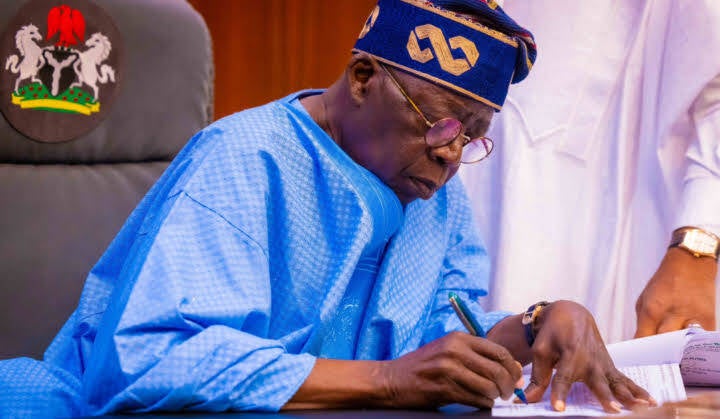
President Bola Ahmed Tinubu has approved a N2 billion relief package for victims of the March 29, 2026, massacre in Angwa Rukuba, Jos North Local Government Area of Plateau State, as he challenged political, traditional and religious leaders from the state to return home with “open minds” and a firm commitment to end the cycle of violence that has claimed hundreds of lives over the years. The announcement came at a three‑hour interactive session held in the State House, Abuja, on Tuesday, 28 April 2026, bringing together a 32‑member delegation led by Governor Caleb Mutfwang – including nearly all living former governors of the state – for what the President called a “search for a permanent solution to a recurring conflict”.
The March 29 attack, carried out by gunmen at a busy junction in Jos North, claimed at least 28 lives, including students and personnel of the University of Jos, and triggered a wider humanitarian crisis in a state that has suffered repeated waves of communal violence for decades. In the weeks that followed, fresh assaults were recorded in Riyom, Barkin Ladi, Bokkos and Kanam local government areas, casting further doubt on government assurances that the tragedy would not be repeated. The Abuja meeting fulfilled a promise Mr Tinubu had made during a brief condolence visit to Plateau on 2 April, when he stood at the Yakubu Gowon Airport and vowed to “convene extensive talks with stakeholders” on the state’s security situation.
Unfolding under tight security, the session quickly moved beyond scripted speeches. The Minister of Humanitarian Affairs and Poverty Alleviation, Dr Mohammed Dorro, who announced the N2 billion relief, said the funds would be disbursed directly to affected families through the National Emergency Management Agency in collaboration with the Plateau State Government, prioritising medical care, temporary shelter and livelihood support. But the President’s tone was less that of a benefactor than of an auditor. “No protocols, no hindrances – we are here to speak our minds and find a permanent solution,” he told the gathering. He then issued what many delegates described as a “homework” assignment: the leaders must revisit the government White Papers that had gathered dust in ministry cabinets, study past recommendations, and return with “implementable resolutions”.
“If people are being recruited to provoke anger, conflict and killings, it is you, the leaders, that should first examine yourselves,” President Tinubu declared, turning the spotlight on those who had for years presided over a state where indigeneship disputes, religious rivalry, ethnic tension and farmer‑herder clashes have interlocked to create a seemingly intractable crisis. He insisted that Plateau’s “receptiveness to other tribes” must be restored and that leaders must “stop the situation where people are recruited to instigate tribal conflict and killings”. The President also directed the state government to identify and name “agent provocateurs” so that they could face prosecution, and urged Governor Mutfwang to draw on the pool of all living former governors in the search for solutions.
Speaker after speaker acknowledged the depth of the state’s wounds. Youths from both Christian and Muslim communities pledged to work together for peace, while the Gbong Gwom Jos, HRM Da Jacob Gyang Buba, appealed for the deployment of additional troops, the installation of surveillance cameras, the fast‑tracking of the return of internally displaced persons to their homes, and ultimately the establishment of state police – a request President Tinubu linked to the ongoing national conversation on security decentralisation. The attendance of former governors Senator Simon Lalong, Senator Jonah Jang, Chief Joshua Dariye and Sir Fidelis Tapgun underscored the historic weight of the moment, with Mr Mutfwang noting that it was the first time all surviving former chief executives of the state had gathered for a single purpose.
Yet, for all the speeches and pledges, the shadow of previous unfulfilled resolutions hung over the room. After the March 29 massacre, President Tinubu had personally consoled grieving families, describing his visit as a “promise to act”. Barely 24 hours after he left Jos, however, gunmen struck another community in the state, killing one person and injuring several others. That pattern – high‑level interventions followed by fresh violence – has long frustrated residents who feel that security has been left to a reactive, piecemeal approach. The President’s charge to implement the White Paper, therefore, was less a suggestion than a demand for accountability. “To stop creating orphans, widows and widowers, there must be enduring peace,” Mr Tinubu said.
The relief funds, while welcome, will not be the first federal disbursement to victims of Plateau’s recurring crises. In December 2023, the government ordered urgent humanitarian relief, and in 2024 the Presidential Victim Support Fund set aside ₦250 million for peacebuilding and psychosocial assistance. Earlier this month, the APC national chairman, Prof. Nentawe Yilwatda, visited Angwan Rukuba and donated ₦15 million; Apostle Joshua Selman also contributed relief materials valued at over ₦200 million. Yet the attacks have not stopped. The delegation’s commitment to “review the gazette” marks a departure from the usual cycle: for the first time, all living former governors are being asked to co‑own a peace plan, not just to endorse it from the sidelines.
The meeting ended with an instruction: the leaders are to go back home, convene their own leadership summit, and present a concrete feedback to the President. “Pretend that I’m there or pretend that I’m absent because you are still going to give me feedback,” Mr Tinubu said. The N2 billion relief is immediate; the deeper assignment is structural. Whether Plateau will finally break from its cycle of bloodshed depends on whether those who have held power over the decades can now hold themselves accountable. As one youth representative at the meeting put it, “We have been promised too many times. Let this be the last.”
📩 Stone Reporters News | 🌍 stonereportersnews.com
✉️ info@stonereportersnews.com | 📘 Facebook: Stone Reporters News | 🐦 X (Twitter): @StoneReportNew | 📸 Instagram: @stonereportersnews
Add comment
Comments