

Reported by: Ijeoma G | Edited by: Oravbiere Osayomore Promise.
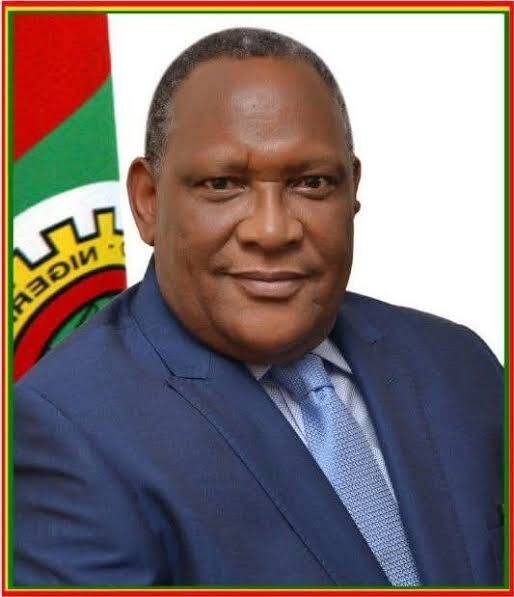
President Bola Tinubu has sacked the chief executive of Nigeria’s midstream and downstream petroleum regulator after barely four months in office, in a decision announced on Wednesday, 29 April 2026. The removal of Mr Saidu Mohammed as the Authority Chief Executive of the Nigerian Midstream and Downstream Petroleum Regulatory Authority (NMDPRA) was done “in the public interest”, according to a State House statement issued by the President’s Special Adviser on Information and Strategy, Bayo Onanuga. Mohammed’s dismissal came amid a fierce dispute over the price of aviation fuel (Jet A1), which had threatened to shut down the country’s airline industry, and renewed complaints by the Dangote Refinery that the regulator was issuing import licences for petroleum products despite having claimed none had been issued since the beginning of the year.
The decision is part of a larger leadership shake‑up. Mr Tinubu simultaneously nominated Mr Rabiu Abdullahi Umar, a long‑standing executive of the Dangote Group, as Mohammed’s replacement, pending confirmation by the Senate. Umar’s nomination is remarkable because the new nominee currently serves as Group Chief Commercial Officer at Dangote Industries Limited and previously held the position of Group Sales and Marketing Director at Dangote Cement. Until the Senate confirms the appointment, the most senior official of the NMDPRA will manage the authority in an acting capacity.
The ousted NMDPRA boss had taken office in December 2025 only after his predecessor, Farouk Ahmed, resigned amid corruption allegations levelled by Africa’s richest man, Aliko Dangote. Mohammed’s brief tenure was immediately overshadowed by an explosive row over the price of jet fuel. In a letter dated 14 April 2026, the Airline Operators of Nigeria (AON) warned that the price of Jet A1 had shot up from about N900 per litre in February to N3,300 per litre – a staggering 300 percent surge that they said was “astronomical and artificial” and bore no relation to the rise in crude oil prices. Global crude prices had indeed climbed after Iran reportedly blocked the Strait of Hormuz following an escalation of the US‑Israel conflict in the Middle East. But the AON argued that local fuel marketers were using the global volatility as a pretext for unjustified increases.
As the crisis deepened, the AON threatened a total shutdown of domestic flights, which would have paralysed the economy. The federal government scrambled to respond. Last week, President Tinubu approved a 30 percent relief on airlines’ debts to aviation agencies and ordered fuel marketers, airlines and regulators to agree on a “fair” fuel price within 72 hours to prevent a sector‑wide shutdown. In an attempt to impose order, the NMDPRA then set an indicative price cap, pegging aviation fuel at between N1,760 and N1,988 per litre in Lagos and N1,809 to N2,037 per litre in Abuja, based on market fundamentals. However, the Authority’s directive did not sit well with the Dangote Refinery, which publicly disclosed that its own ex‑gantry price for jet fuel was N1,879 per litre – broadly in line with the government’s target. The refinery also alleged that the NMDPRA was secretly issuing import licences to marketers, a claim that Dangote’s camp said amounted to economic sabotage.
The latest leadership change therefore carries deep political and commercial weight. Umar’s nomination – a Dangote insider taking the helm of the regulator that oversees the billionaire’s main competitor – is a bold move by the President. Analysts are divided. Some argue that Umar, with more than 25 years of experience in energy, manufacturing, and infrastructure, brings badly needed operational expertise and a track record of turning around large projects. He holds a degree in Accounting from Bayero University and is an alumnus of Harvard Business School. Others warn that the appointment could be read as a signal that the NMDPRA is being captured by one commercial interest, raising questions about regulatory independence.
“Markets in the downstream petroleum sector are highly sensitive to regulatory credibility and policy consistency,” said Professor Emeritus of Petroleum Economics Wumi Iledare. “Frequent changes at the top, particularly within very short tenures, risk undermining those very objectives.” His comment reflects broader unease among investors who have watched the NMDPRA go through three chief executives in four months. The speed of the turnover suggests that the country’s downstream regulatory space is being shaped as much by a power struggle between the government and dominant private interests as by a coherent policy direction.
The dismissal of the beleaguered chief executive while he was representing the country at an official engagement in Germany only added to the sense of turmoil. According to a Daily Post report, Mohammed was sacked while leading an NMDPRA delegation to a pipeline technology conference in Berlin, underscoring the abrupt and high‑stakes nature of the decision.
In his resignation letter, Mohammed had been asked to step aside as the government sought to resolve the fuel crisis. But his removal goes deeper. It reflects the accumulated pressure of an aviation sector on the brink of collapse, a powerful refinery demanding a level playing field, and a president determined to show he can shake up unresponsive bureaucracies. Whether the appointment of a Dangote executive will end the import‑licence dispute and stabilise fuel prices remains an open question. But for now, the President has sent the clearest signal yet: in his “Renewed Hope” agenda, even the highest‑ranking regulators are not immune to the axe when the economy is in peril.
📩 Stone Reporters News | 🌍 stonereportersnews.com
✉️ info@stonereportersnews.com | 📘 Facebook: Stone Reporters News | 🐦 X (Twitter): @StoneReportNew | 📸 Instagram: @stonereportersnews
Add comment
Comments