

Reported by: Oahimire Omone Precious | Edited by: Oravbiere Osayomore Promise.
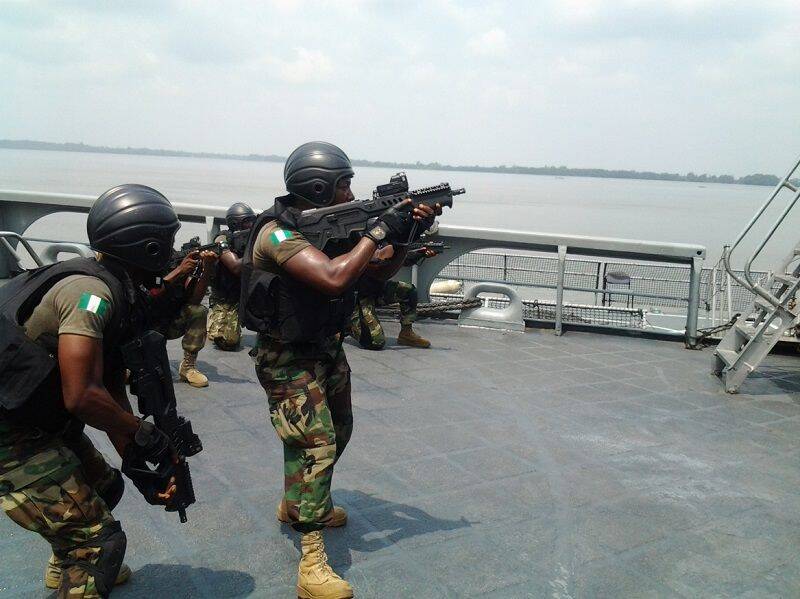
The Nigerian Navy has imposed a 13-hour movement restriction along the Calabar–Oron water channel as part of intensified efforts to curb rising criminality in the area. The measure, which limits vessel operations during specified hours, is aimed at tackling incidents such as piracy, smuggling, and other unlawful activities that have recently increased along the route. The Navy stated that the restriction will enhance surveillance and improve response times, while also assuring legitimate waterway users that steps are being taken to restore safety and security. In a statement on Sunday, May 3, 2026, the Director of Naval Information, Navy Captain Abiodun Folorunsho, said: "To consolidate operational gains and choke criminal activity, a 13-hour restriction on maritime movement from 5:00 p.m. to 6:00 a.m. has been enforced within the operational area."
The decision came on the heels of a major offensive by personnel of Nigerian Navy Ship Victory and Forward Operating Base Ibaka, who stormed Dayspring Island following a recent surge in kidnappings and related criminal activities.The rapid offensive forced suspected militants to abandon their positions and flee upon contact with advancing naval troops. Maintaining relentless pressure, Nigerian Navy personnel, in conjunction with troops of the Nigerian Army 13 Brigade, secured key waterways and denied the criminals freedom of movement.Exploitation of the area led to the discovery and destruction of a militant hideout linked to a notorious suspect known as "Juju" in the Idung axis. The suspect fled in disarray, abandoning two boats fitted with outboard engines, which were immediately seized. The hideout was subsequently demolished to eliminate its future use as a criminal sanctuary. Further tightening the noose, troops tracked and apprehended one suspected informant providing support to the militant network. The suspect is currently in custody, undergoing interrogation, and will be handed over to the appropriate authorities for prosecution.
Captain Folorunsho further explained: "Prior to the intervention, militant elements operated with impunity, conducting kidnappings and extorting riverine communities. The sustained naval onslaught has now degraded their operational capability, disrupted their logistics, and confined their activities deep within the creeks."The operation was anchored on the establishment of a forward security outpost at Idung 1, also known as Peacock Crossing, providing a tactical foothold for sustained dominance of the creeks and adjoining waterways.This strategic positioning allows naval personnel to maintain constant surveillance and respond rapidly to any suspicious activity along the vital transport corridor.
The Calabar–Oron water channel is a critical economic and social transport corridor in the Niger Delta, connecting Cross River State to Akwa Ibom State. Thousands of passengers and large quantities of commercial goods traverse this inland waterway daily, as road alternatives are longer and often in poor condition. However, the route has increasingly become a hotspot for criminal activities including piracy, kidnapping, smuggling, and armed robbery, despite previous assurances from security agencies.Prior Navy claims in February 2025 that the Calabar water channels had been rid of piracy now appear premature, given the surge in attacks that followed.The persistent insecurity has crippled livelihoods, driven up transport costs, and left many passengers afraid to use the waterway for essential travel.
The immediate trigger for the naval crackdown was a brazen pirate attack on Friday, April 17, 2026, when heavily armed men ambushed a commercial ferry travelling from Calabar to Oron. The pirates seized control of the vessel mid‑sea at gunpoint and whisked away at least 15 passengers to an unknown destination.Among the abducted were young people reported to be prospective candidates for the 2026 Unified Tertiary Matriculation Examination, whose academic futures were suddenly thrown into jeopardy.Eyewitness accounts and reports from local fishermen indicated the attackers were well‑organized and struck with terrifying precision. Families were left in anguish, and fear spread rapidly across coastal communities in Akwa Ibom and Cross River states.The attack came just five days before the UTME was scheduled to begin, adding to the distress of parents and students who had prepared for months.
The Senate responded with unusual urgency. On Thursday, April 23, 2026, lawmakers condemned the attack and directed security agencies to immediately rescue the victims.The resolution followed a motion of urgent national importance moved by Senator Ekong Sampson, who drew attention to the hijacking of the commercial passenger boat. Lawmakers expressed grave concern over the incident, noting that several of those abducted were prospective UTME candidates, raising fears over their safety and academic future.The Senate ordered a comprehensive investigation into rising maritime insecurity in the Niger Delta and mandated its committees on navy, marine transport, and national security and intelligence to investigate the persistent security breaches on inland waterways.It further called on the Chief of Naval Staff, the Inspector‑General of Police, and other relevant security agencies to launch coordinated search‑and‑rescue operations to ensure the safe release of the victims.The upper chamber also urged the Nigerian Maritime Administration and Safety Agency to intensify surveillance, patrols, and intelligence‑gathering efforts across the waterways and adjoining creeks.
The Navy's 13-hour restriction is expected to have significant consequences for local communities. Many residents of riverine settlements rely on the waterway for fishing, transporting farm produce to markets, and accessing healthcare facilities in larger towns. With boats effectively grounded for nearly half the day, economic activity will take a direct hit. Small‑scale fish traders, who typically set out before dawn to bring fresh catches to market, may find their livelihoods severely constrained. Fishermen who have worked these creeks for generations expressed frustration at the restriction, even as they acknowledged the necessity of security action. "We understand why the Navy has to do this, but how do we feed our families if we cannot go out at night like we have always done?" asked a fisherman from a coastal community who spoke on condition of anonymity. The Navy, however, has stressed that the restriction is temporary and necessary to break the cycle of impunity that has allowed criminal networks to flourish. "The sustained naval onslaught has now degraded their operational capability, disrupted their logistics, and confined their activities deep within the creeks," Captain Folorunsho reaffirmed. The Nigerian Navy remains resolute and will sustain this aggressive posture, ensuring that all criminal elements are flushed out and the maritime environment remains secure for lawful activities.For the families of the 15 abducted passengers, including the young UTME candidates, the wait for their safe return continues as the search operation remains ongoing.The Joint Admissions and Matriculation Board has not yet announced whether special arrangements will be made for the affected students.
📩 Stone Reporters News | 🌍 stonereportersnews.com
✉️ info@stonereportersnews.com | 📘 Facebook: Stone Reporters News | 🐦 X (Twitter): @StoneReportNew | 📸 Instagram: @stonereportersnews
Add comment
Comments