

Reported by: Oahimire Omone Precious | Edited by: Oravbiere Osayomore Promise.
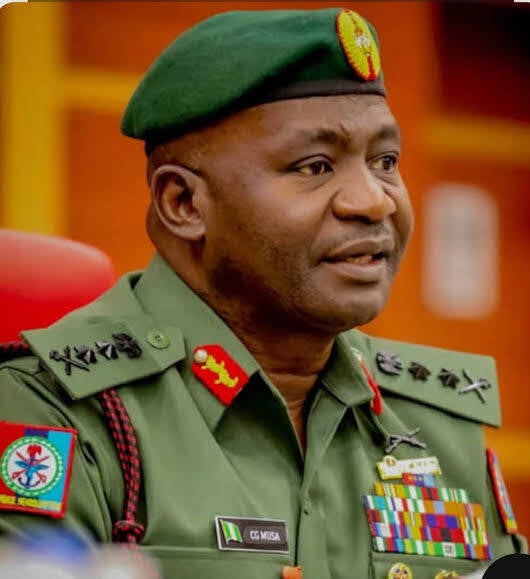
The Defence Minister of Nigeria, Christopher Gwabin Musa, has returned from a high‑level security conclave in the Chadian capital with a firm message: the window for solo military action is closed, and only a unified, sustained regional assault can break the backbone of terrorist networks that have turned the Lake Chad Basin into one of Africa’s most volatile killing grounds. Musa, a retired General, gave the assurance on Wednesday, May 6, 2026, after attending the emergency meeting of Ministers of Defence from Troop Contributing Countries (TCCs) of the Multinational Joint Task Force (MNJTF) in N'Djamena. The closed‑door session, held under the auspices of the Lake Chad Basin Commission (LCBC), brought together defence chiefs from Chad, Cameroon, Benin and Nigeria, alongside senior military commanders and intelligence officials.
In a statement issued by Enderline Chukwu, Deputy Director of Information and Public Relations at the Ministry of Defence, Musa said Nigeria remains fully committed to the collective security framework that has, in recent months, demonstrated the only viable path to degrading the insurgency. “The fight against terrorism knows no borders. A threat to any member state is a threat to all. Nigeria will continue to stand shoulder‑to‑shoulder with our brothers and sisters in the region to ensure that the Lake Chad Basin is no longer a safe haven for criminals,” the minister was quoted as saying.
The N'Djamena parley came on the heels of multiple cross‑border attacks attributed to remnants of Boko Haram and Islamic State West Africa Province (ISWAP), who have increasingly exploited porous borders to regroup, resupply, and launch reprisals against civilian populations and military outposts. According to security sources, intelligence presented at the meeting indicated that insurgent cells had recently begun shifting tactics, moving from conventional hit‑and‑run raids to more sophisticated ambushes along key supply routes connecting Chad, Niger, and Nigeria. The defence chiefs were presented with reports by their respective Chiefs of Defence Staff and heads of intelligence agencies, highlighting both the operational gains recorded by the MNJTF in the past six months and the persistent gaps that continue to hamper a decisive victory.
Foremost among the challenges discussed were crippling funding limitations, uneven troop deployment, and the evolving threat environment. Musa noted that while the MNJTF had successfully cleared several strongholds along the Lake Chad islands, the lack of consistent funding for logistics, surveillance technology, and troop welfare had slowed momentum. He called on member states to honour their financial commitments to the joint force and urged international partners to step up support for the regional counter‑insurgency campaign. The minister also made a pointed appeal for enhanced intelligence sharing, particularly on the movement of foreign fighters and the trafficking of small arms and light weapons across the Sahel.
The meeting was not merely a strategy session; it was also a platform for member states to reassess the operational effectiveness of the MNJTF and coordinate future offensives. Reports from the field painted a picture of steady but fragile progress. Insurgent control over territory has been significantly reduced compared to the peak of the insurgency in the mid‑2010s, but the terrorists have adapted by embedding themselves in remote communities and using civilians as human shields. The meeting therefore emphasised the need for a multi‑dimensional approach that combines kinetic military action with community engagement, economic rehabilitation, and the restoration of basic services in liberated areas.
Musa commended the government and people of Chad for hosting the meeting and acknowledged their leadership role within the MNJTF framework. “Chad has consistently paid the highest price in this fight. Its soldiers have fought and fallen in defence of not just Chadian territory but the entire Lake Chad Basin. We owe them our deepest respect and unwavering solidarity,” the minister said. The participating ministers also expressed appreciation to the President of Chad and Chairman of the LCBC Summit for his support in advancing regional peace and security efforts. The meeting concluded with an agreement to hold more frequent consultations at both the ministerial and technical levels, and to establish a joint monitoring mechanism to track the implementation of decisions taken.
Observers note that the renewed sense of urgency in N'Djamena mirrors a broader strategic shift across the Sahel, where military juntas in Mali, Burkina Faso, and Niger have re‑evaluated their foreign alliances while intensifying internal security operations. For Nigeria, the challenge is to sustain the momentum of the MNJTF while concurrently addressing insurgency in the North‑East and banditry in the North‑West. The Defence Minister’s presence in Chad, alongside his counterparts from Benin, Cameroon, and the host nation, signals Lagos’s determination to prevent the Lake Chad Basin from becoming a forgotten front.
The MNJTF was established in 2015 as a regional force to defeat Boko Haram and restore stability to the Lake Chad region. It comprises troops from Nigeria, Niger, Chad, Cameroon, and Benin. Over the years, the force has been credited with recapturing large swathes of territory and disrupting the insurgency’s command structure. However, funding shortfalls and occasional gaps in intelligence sharing have limited its operational effectiveness. The N'Djamena meeting was intended to close those gaps and realign the coalition’s strategy in the face of a resilient and adaptive enemy.
As Nigeria prepares for the 2027 general elections, the security situation across the federation remains a major concern for voters. The Defence Minister’s renewed pledge to regional cooperation is therefore not just a diplomatic gesture but a critical component of the government’s broader strategy to secure the country’s borders and protect its citizens. Whether the promises made in N'Djamena will translate into tangible results on the ground depends on the speed and sincerity of implementation. For now, Minister Musa has struck a tone of cautious optimism: the coalition is intact, the strategy is coherent, and the fight continues.
📩 Stone Reporters News | 🌍 stonereportersnews.com
✉️ info@stonereportersnews.com | 📘 Facebook: Stone Reporters News | 🐦 X (Twitter): @StoneReportNew | 📸 Instagram: @stonereportersnews
Add comment
Comments