

Reported by: Ijeoma G | Edited by: Oravbiere Osayomore Promise.
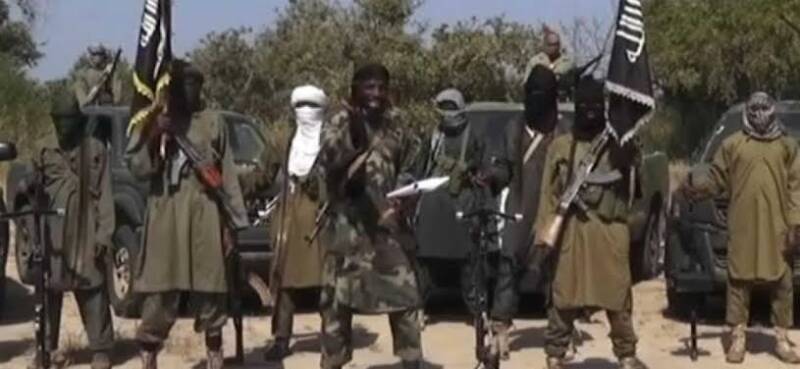
Nearly five months after 416 women and children were dragged from communities in southern Borno State, the JAS faction of Boko Haram has agreed to release 50 of the abducted victims, but only under a controversial conditional arrangement that critics say could set a dangerous precedent. The fragile deal, brokered by the Borno South Youth Alliance (BOSYA) after weeks of delicate negotiations, also came with a chilling warning from the insurgents. According to a voice message obtained by SaharaReporters, a Boko Haram spokesman speaking in Hausa said the remaining captives may face execution if the government does not show more seriousness. “Those they can keep will be kept, while those they cannot may face execution, with such acts possibly recorded and shared,” BOSYA president Samaila Ibrahim Kaigam disclosed on Tuesday.
The mass abduction occurred in December 2025 when fighters from the Jama’atu Ahlis-Sunna Lidda’Awati Wal-Jihad faction raided several farming communities in the southern part of Borno State, rounding up women and children and marching them into the bush. Efforts by security agencies to locate and rescue the hostages have been largely unsuccessful, with the rugged terrain and the insurgents’ tactic of constantly moving captives frustrating military operations. In April 2026, Boko Haram issued a 72-hour ultimatum to the Nigerian government, demanding immediate negotiations. When that deadline passed, the group announced it had scattered the captives across locations as far as 200 kilometres apart, making any mass rescue even more difficult.
The proposed release of 50 victims, announced by BOSYA president Kaigam on Tuesday evening, came after what he described as sustained, careful, and extensive discussions and mediation over several weeks. “We wish to inform Nigerians and Southern Borno indigenes that, through sustained, careful, and extensive discussions and mediation over the past weeks, JAS (Boko Haram) has agreed to a proposed arrangement for the possible release of 50 women and children,” Kaigam stated. He praised the Nigerian Army for their role in the negotiations, noting that their efforts were more commendable than those of many political officeholders. “We sincerely commend the efforts of the Nigerian Army, who, from all indications, have shown persistence and commitment more than many political figures in working toward the freedom of these hostages,” he said.
However, the terms of the release are far from straightforward. According to BOSYA, the insurgents demanded that families of the victims and well-wishers contribute an unspecified amount of money to secure the freedom of the 50 hostages. “Families of victims and well-wishers will contribute a certain amount of money (not specifically fixed). Once donations are gathered, the available amount will be presented. If the leadership is pleased with the effort, they will release the 50 hostages,” Kaigam explained. He added that contributors would have their names recorded alongside their relatives, who would be prioritized for release. The group’s leadership also acknowledged BOSYA’s efforts, stating that this was a form of recognition that BOSYA had put in more work than elected political figures representing the state, Southern Borno zone, and local governments.
The voice message from the Boko Haram spokesperson revealed deep logistical obstacles. “All of the women have been scattered, it will be hard to see two women in the same place. Before we can gather them is another work on its own. Since the ultimatum we gave them has elapsed, there is no talk again. Before we can gather them in one place is a work. I don’t have time to gather them right now. Some of the women were taken far away, close to 200 kilometres. How can I gather such people?” the spokesperson said. This admission suggests that even if the financial arrangement is satisfied, the physical act of assembling the captives for release could take days or weeks, during which the security situation could shift.
The development has drawn a mixed response from families of the victims. Some have expressed cautious optimism that at least a fraction of their loved ones might soon be freed. Others have voiced anger that the government has not done more to secure the unconditional release of all captives. One resident of Gwoza, who asked not to be named, told Stone Reporters News, “Why should we pay again? We have already lost everything. The government must do its job. These are citizens of Nigeria, not pawns for negotiation.” Meanwhile, human rights organisations have warned that any payment to the insurgents, whether framed as “contributions” or not, could fund further abductions and embolden the terrorists to seize more civilians.
BOSYA has called on Nigerians, especially the people of Southern Borno State, as well as the international community, to urgently support efforts aimed at securing the release of the victims. “We therefore call on the general public of Nigeria, Southern Borno indigenes, and the international community to assist in these efforts,” Kaigam urged, expressing hope for the safe return of the 50 women and children with complete public accountability. However, the group also disclosed that the insurgents had previously set a five-day deadline before relocating the captives to undisclosed locations outside Nigeria, a deadline that has now passed, further complicating rescue operations and increasing concerns for the safety of those still held.
The Nigerian government has not yet issued an official statement on the BOSYA‑brokered arrangement. The Ministry of Humanitarian Affairs, which has previously coordinated hostage rescue efforts, did not respond to inquiries. Meanwhile, the Defence Headquarters, which has consistently maintained a policy of not negotiating with terrorists, may find itself in a difficult position if the arrangement moves forward without official sanction. Analysts suggest that the government faces a painful choice: officially distance itself from the arrangement and potentially lose the chance to free 50 captives, or tacitly allow the private negotiation to proceed, thereby undermining its own stated policy.
The abducted women and children were taken from communities in southern Borno in December 2025. They have been held for nearly 150 days, during which time the Nigerian military has conducted aerial surveillance and ground operations to locate them, without success. The involvement of BOSYA, a local youth alliance, underscores the breakdown of trust between affected communities and official security structures. Many families have grown frustrated with what they perceive as a slow and ineffective government response, pushing them to seek alternative channels of negotiation. For the 50 women and children whose names may appear on the release list, there is a fragile glimmer of hope. For the other 366, the warning from Boko Haram is as clear as it is terrifying: the window of opportunity is closing, and the next sound they hear may not be the footsteps of rescuers but the click of a recording device preparing to broadcast their deaths to the world.
📩 Stone Reporters News | 🌍 stonereportersnews.com
✉️ info@stonereportersnews.com | 📘 Facebook: Stone Reporters News | 🐦 X (Twitter): @StoneReportNew | 📸 Instagram: @stonereportersnews
Add comment
Comments