

Reported by: Ijeoma G | Edited by: Oravbiere Osayomore Promise.
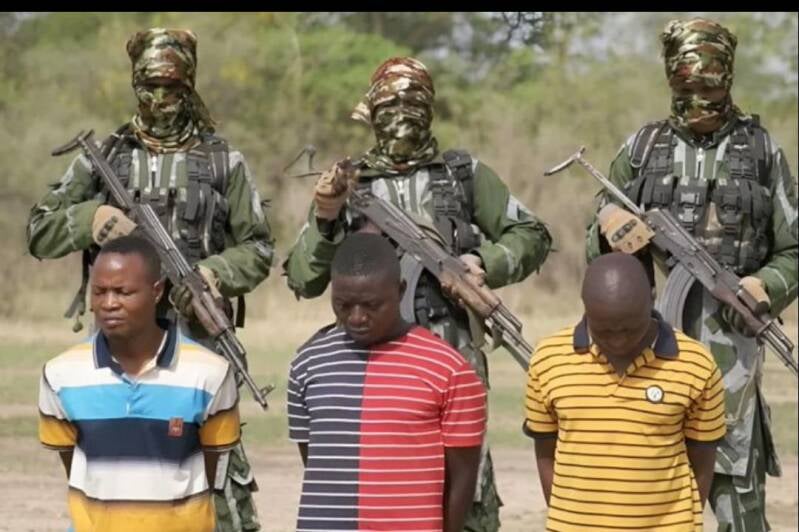
MAIDUGURI, Nigeria — A faction of Boko Haram insurgents has executed at least seven captives who attempted to flee from a forest hideout in Borno State, beheading the victims in front of other hostages before displaying their bodies as a gruesome deterrent, multiple sources confirmed on Wednesday. The chilling killings, which occurred on Tuesday evening inside a camp operated by the Jama’atu Ahlis‑Sunna Lidda’Awati Wal‑Jihad (JAS) faction, underscore the relentless brutality of a group that continues to hold over 400 women and children captive in harsh, life‑threatening conditions.
According to accounts gathered by the Borno South Youth Alliance (BOSYA), a community‑based organization that has been engaged in mediation efforts for more than two months, the victims were captured after their escape attempt failed and were immediately executed in the presence of other abductees, including women and children who were forced to watch. BOSYA President Samaila Ibrahim Kaigama told reporters that he has been in direct communication with the captors in an effort to secure the release of the remaining hostages, but repeated appeals to state and federal authorities for coordinated intervention have not received a response. “We have tried every possible intervention and humanitarian process available, yet the 416 women, children, and a few men in captivity have largely been abandoned to their fate,” the group said in a statement.
A disturbing video obtained by civil society organizations reportedly shows armed fighters, including minors, surrounding the victims before the executions were carried out. The footage, which has been deemed too graphic for public release, reveals the beheadings and the subsequent display of bodies within the camp as a warning to others who might contemplate fleeing. Sources described that the victims, said to be more than seven, were caught while attempting to flee captivity, and the terrorists carried out the executions in front of other abductees, intensifying fear among the remaining captives. The video was shared not to promote terrorism but to draw urgent attention to the deteriorating situation and the plight of those still held, BOSYA emphasized.
The executed captives were among dozens of abducted civilians held by the JAS faction, which is still holding about 416 women and children in captivity, primarily from the Ngoshe community in Gwoza Local Government Area. The abductions occurred earlier this year during a coordinated attack on the community, and while some captives managed to escape in previous incidents, the majority remain with the terrorists. According to multiple sources, conditions inside the hideout are appalling, with severe food shortages, physical abuse, forced labor, and ongoing threats of execution. Some children have become sick and died from starvation and lack of medical care, with the terrorists reportedly burying the deceased victims within the camp area.
In an exclusive interview, one survivor described the dire situation in haunting detail: “Our people are dying slowly every day from hunger and sickness while the government does nothing. The children cry until they have no voice left.” Another warned, “The captors show no mercy. They use the beheadings as entertainment to break the rest of us. We are living in hell on earth.” A third added, “BOSYA is our only hope, but without government action, more graves will be dug in these mountains. Our women and daughters are suffering things no human should ever face.” These accounts paint a devastating picture of a humanitarian catastrophe unfolding in the remote mountain hideouts of northeastern Nigeria.
The Federal Government has maintained a policy of not negotiating with terrorists, but critics argue that this approach has left civilians trapped between the state’s refusal to pay ransoms and the terrorists’ escalating violence. The situation has been further complicated by the sheer number of captives, making any potential rescue operation extraordinarily risky. The Nigerian military has conducted ground and air operations in the region, but the rugged terrain of the Mandara Mountains, where some of the camps are believed to be located, has made access difficult. The abductions have drawn international concern, with human rights organizations calling for urgent intervention to prevent further deaths.
The killings came just days after Boko Haram released a video daring the Nigerian government to attempt a forceful rescue of the 416 abducted victims, raising fears that the terrorists may be using the captives as human shields while preparing for further attacks. The group has a long history of such tactics, having previously threatened to marry off abducted women and execute captives when demands were not met. In late April, the faction issued a 72‑hour ultimatum to the government, threatening to move the captives to unknown locations if their demands were not met. While some captives escaped, the majority remain in captivity, their fate uncertain.
The international community has also faced criticism for not doing enough to address the crisis. The United Nations and humanitarian organizations have called for increased funding for aid programs in the region, but access to conflict zones remains a major challenge. The Nigerian government has repeatedly stated that it is doing everything possible to secure the release of the captives, but the lack of visible progress has fueled anger and despair among affected communities. BOSYA has appealed to Nigerians across all regions, political actors, and international organizations to urgently intervene in securing the release of the captives, warning that time is running out and more lives will be lost without immediate action.
The beheadings come at a time when terrorist groups in the Lake Chad region are regrouping and adapting their tactics. The JAS faction, one of the two main Boko Haram splinter groups, has increased its focus on mass abductions as a source of revenue and leverage against the government. The group has also exploited the vast, ungoverned spaces of the Lake Chad basin to establish new camps, making it difficult for security forces to track and engage them effectively. The ongoing humanitarian crisis in the region, exacerbated by climate change and economic instability, has further fueled recruitment for extremist groups.
As the sun set on Borno State on Wednesday, the families of the executed captives and the 416 still held in captivity waited in agony, their hopes pinned on a government that has yet to respond. The beheadings served as a grim reminder that for every day that passes without a resolution, the terrorists grow bolder, and the victims grow weaker. The blood of the innocent, as one survivor put it, is on those who choose silence.
📩 Stone Reporters News | 🌍 stonereportersnews.com
✉️ info@stonereportersnews.com | 📘 Facebook: Stone Reporters News | 🐦 X (Twitter): @StoneReportNew | 📸 Instagram: @stonereportersnews
Add comment
Comments