

Reported by: Ijeoma G | Edited by: Oravbiere Osayomore Promise.
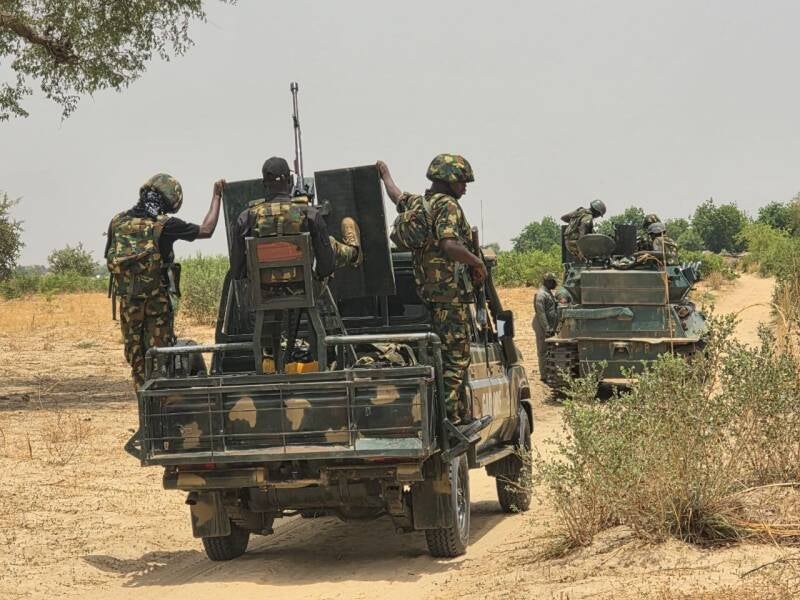
Troops of the Nigerian Army have arrested 11 suspects and dismantled a suspected terror logistics network following a coordinated raid on hideouts in Sabon Birni Local Government Area of Sokoto State. The operation, which targeted locations believed to be serving as supply hubs for terrorist elements operating in the region, was carried out at approximately 11:00 a.m. on May 17, 2026, by troops of the 8 Division Garrison. According to military sources, the raid was intelligence-driven and focused on disrupting the chain of supplies that has enabled persistent attacks and banditry across the North-West. Security analyst and counter-insurgency expert Zagazola Makama disclosed the development in a post on his X handle on May 19, confirming that the operation dealt a significant blow to the logistical capabilities of criminal networks in the area.
During the raid, troops recovered one locally fabricated pistol loaded with 10 rounds of 7.62mm NATO ammunition, alongside quantities of suspected hard drugs. The presence of illicit substances among the seized items points to a pattern increasingly observed by security forces across the North-West, where terrorist groups rely on drug trafficking as a source of financing and as a means of controlling their fighters. The recovered pistol, though locally made, was found loaded and ready for use, underscoring the immediate threat posed by the suspects. The raid reportedly targeted multiple hideouts within Sabon Birni, with the 11 suspects arrested from different locations during the coordinated operation. All suspects and recovered items have been handed over to the Nigeria Police Force for further investigation and possible prosecution.
The operation in Sabon Birni comes amid a broader military push to degrade terrorist networks across the North-West. Just one day earlier, on May 18, 2026, a separate joint operation involving the Armed Forces of Nigeria and the United States military reportedly led to the neutralisation of Abu‑Bilal Al‑Minuki, a high‑value terrorist commander, in what former Army spokesman Brigadier General Sani Usman described as a turning point in the anti‑terror war. The sustained offensive, conducted under the umbrella of Operation FANSAN YAMMA, has seen troops record significant gains in recent weeks, including the killing of scores of bandits, the rescue of kidnapped victims, and the recovery of weapons and rustled livestock across Sokoto, Katsina, Zamfara, and Kebbi states.
Sabon Birni, the local government area where the raid took place, has been a hotspot of insecurity in Sokoto State. The area shares borders with Zamfara State and the Niger Republic, making it a porous corridor for the movement of arms, ammunition, and fighters. In recent months, the Lakurawa terrorist group, which has established a presence in parts of Sokoto and Kebbi, has been blamed for a series of attacks on remote communities, including the attempted torching of a Nigerian Immigration Service facility on May 15. Troops operating under Operation FANSAN YAMMA have responded with a series of clearance operations, neutralising suspected Lakurawa members and recovering weapons in both Sokoto and Katsina states.
The May 17 raid also aligns with a wider counter‑terrorism strategy that targets logistics chains rather than only frontline fighters. Military analysts have long argued that disrupting the supply of food, fuel, drugs, and ammunition is often more effective in degrading terrorist organisations than direct combat engagements. By arresting logistics suppliers and seizing the materials that sustain their operations, the armed forces aim to choke terrorist groups from within, forcing them to abandon their hideouts or risk being hunted down. The presence of hard drugs among the recovered items suggests that the suspects may have been involved not only in supplying ammunition but also in narcotics trafficking, a revenue stream that has become increasingly common among criminal networks in the region.
The coordination between the Nigerian Army and the Nigeria Police Force in this operation is noteworthy. After the raid, the suspects and all recovered items were transferred to the police for further investigation and prosecution. This collaboration reflects a growing recognition within Nigeria’s security architecture that military operations must be followed by credible judicial processes to ensure that arrested suspects face the full weight of the law. In the past, many suspects arrested during military raids were either released without trial or held indefinitely, undermining public confidence in the security system. The handover to the police suggests a commitment to due process, though the effectiveness of that process will depend on the speed and transparency of subsequent legal proceedings.
As of the time of this report, the identities of the 11 suspects have not been released by the military, and it remains unclear whether they are linked to specific terrorist groups such as Lakurawa, bandit militias, or other criminal organisations operating in the North-West. The Nigeria Police Force is expected to conduct further interrogations to determine the extent of their network and identify any high-value targets who may have been receiving supplies through the arrested suspects. The investigation may also shed light on the broader logistics architecture that has enabled bandits and terrorists to sustain their operations despite repeated military offensives.
The raid in Sabon Birni is a reminder that the fight against terrorism and banditry in northern Nigeria is not only a battle of bullets but also a battle of supply chains. Every ammunition pouch seized, every drug consignment intercepted, and every logistics supplier arrested weakens the ability of terrorist groups to wage war against the state and terrorise innocent communities. As troops of the 8 Division Garrison continue their operations across Sokoto, the message to those who profit from terror is clear: the military is coming for the fighters, but it is also coming for the networks that keep them armed and drugged.
For the residents of Sabon Birni, the raid may bring a measure of relief. For months, communities in the local government area have lived in fear of attacks, with many farmers unable to tend their fields and children kept out of school. The arrest of 11 suspects involved in supplying logistics to terrorist elements does not end the threat, but it does demonstrate that the security forces are making progress in cutting off the lifelines that sustain violence. Whether that progress translates into lasting peace will depend on sustained pressure, continued intelligence gathering, and the successful prosecution of those who choose to profit from terror.
📩 Stone Reporters News | 🌍 stonereportersnews.com
✉️ info@stonereportersnews.com | 📘 Facebook: Stone Reporters News | 🐦 X (Twitter): @StoneReportNew | 📸 Instagram: @stonereportersnews
Add comment
Comments