

Reported By Mary Udezue | Edited by: Jevaun Rhashan
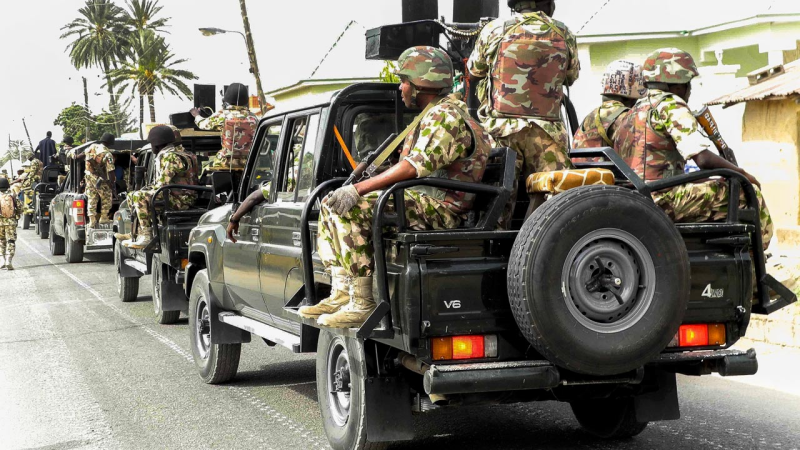
Major General Bemgha Koughna, the General Officer Commanding (GOC) of the Nigerian Army 8th Division and Commander Sector 2 of the Joint Task Force North West under Operation FANSAN YAMMA, survived a deadly ambush by suspected Lakurawa terrorists near Mayama Hill in Kebbi State while on an official visit to frontline troops earlier this year. The attack reflects escalating militant activity in the north-western region where the group has been operating.
According to military and security sources, the convoy carrying Major General Koughna came under heavy fire from armed fighters believed to be members of the Lakurawa faction — a militant Islamist group that emerged from self-defence origins and became radicalised over time. The ambush was launched as the senior commander’s convoy passed through the forested and volatile axis near Mayama Hill, an area known for pockets of insurgent activity.
Troops responding to the attack engaged the assailants in a fierce firefight. The Nigerian Army’s escort force, under the leadership of the GOC and trained for such encounters, reacted with disciplined tactical manoeuvres and superior firepower. During the encounter, at least five suspected terrorists were neutralised, forcing the remaining attackers to retreat into the surrounding bushland.
Following the engagement, soldiers conducted a systematic sweep of the area to secure the site and collect intelligence. Recovered items included a mix of weapons and operational equipment believed to belong to the insurgents: one OJC gun, one PKT machine gun, two AK-47 rifles, four AK-47 magazines, additional ammunition, ₦840,000 in cash, two mobile phones and five motorcycles — all of which will be analysed to trace logistics networks and operational patterns.
The ambush did not result in any serious injuries to the major general or his entourage, according to official accounts, and the convoy was subsequently stabilised. Following the incident, military authorities confirmed that troops remained deployed in the area to maintain dominance and prevent further attacks. They emphasised their ongoing commitment to degrading militant capabilities and enhancing civilian protection in the North-West region.
The attack occurred within a broader context of rising insecurity across parts of Kebbi State. The Lakurawa group, originally founded as a local self-defence outfit, has evolved into a more radicalised militant formation with links to the Islamic State in the Sahel Province (ISPS) and has carried out other violent operations in the state, including mass killings and raids on villages. Analysts say the group’s expansion is partly attributable to weakened border controls and limited state presence in remote forested corridors, allowing militants to regroup and exploit security gaps.
Civil society and political commentators have reacted strongly to the ambush. The African Democratic Congress (ADC) in Kebbi State publicly demanded accountability and transparency from government authorities, questioning the state’s preparedness and intelligence capabilities given that a high-ranking army commander could be attacked in a volatile zone. The ADC argued that if senior military figures can be ambushed, ordinary civilians, traders and students remain highly vulnerable.
The military’s official public relations office, including Lieutenant Colonel Olaniyi Osoba, Acting Deputy Director of Army Public Relations for the 8 Division, issued statements affirming the troops’ success in repelling the assault and reinforcing the importance of continued vigilance. Security experts describe the counter-ambush operation as a testament to improved combat readiness among Nigerian Army units assigned to Operation FANSAN YAMMA but warn that sustained violence and militant adaptability require longer-term intelligence and security reinforcement strategies.
Beyond this incident, recent violence in the region has included other attacks on civilians, such as assaults on mosques and communities in Maiyama Local Government Area, highlighting the severity of the militant threat. These attacks have resulted in multiple fatalities and reflect complex insurgent dynamics in the North-West.
As investigations continue, authorities are expected to deepen their operational response against militant formations in Kebbi and neighbouring states, including intelligence-led raids, enhanced troop deployments and expanded coordination with state and community security structures to curb the threat posed by the Lakurawa group and affiliated militants.
📩 Stone Reporters News | 🌍 stonereportersnews.com
✉️ info@stonereportersnews.com | 📘 Facebook: Stone Reporters | 🐦 X (Twitter): @StoneReportNew | 📸 Instagram: @stonereportersnews
Add comment
Comments