

Published by Osasere Edomwonyi Ikpoba
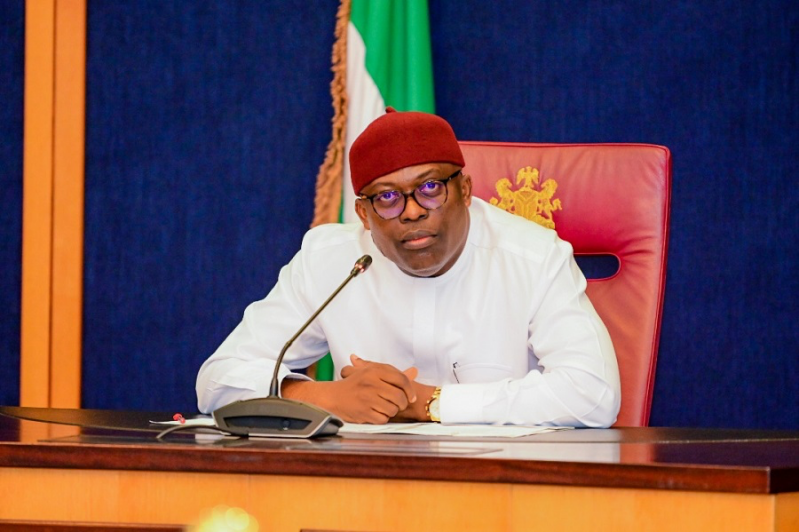
The Rivers State House of Assembly has passed the 2026 Appropriation Bill for a second reading, ending a protracted two-month legislative standoff that had stalled the N1.854 trillion budget and raised serious concerns about governance in the oil-rich state. The bill, tagged the “Budget of Resilience for Growth and Development,” was presented by Governor Siminalayi Fubara on July 10, 2026, but had remained in legislative limbo amid intense political friction between the executive and the Martin Amaewhule-led Assembly.
Lawmakers gave the bill its second reading on Tuesday, September 1, 2026, following what sources described as a decisive intervention by former Governor and current FCT Minister Nyesom Wike. Speaker Martin Amaewhule recalled that the budget had been before the House for about six weeks and noted that various House committees had been dissecting the components of the budget estimate during that period. He urged the committees to ensure that all Ministries, Departments, and Agencies were invited to the budget defence session as the legislative process moves forward.
Leading the debate after the second reading, Majority Leader Major Jack emphasised the revenue framework of the estimate, stressing that with proper legislative input, the bill would engender speedy development for the state. The proposed budget provides for total expenditure of N1.854 trillion, with approximately N413.1 billion earmarked for recurrent spending and about N1.405 trillion allocated to capital projects covering infrastructure, education, healthcare, and economic development. This represents a 24.49 percent increase over the adjusted 2025 budget.
The budget's passage for second reading comes after weeks of anxiety among residents, political observers, and economic analysts over the unprecedented delay. The 2026 Appropriation Bill was presented shortly after the Assembly approved the state's 2026–2028 Medium Term Expenditure Framework, which itself had faced delays. However, the legislative process stalled amid allegations that lawmakers loyal to former Governor Nyesom Wike were demanding additional financial benefits and official vehicles before approving the budget. Sources alleged that the 27-member pro-Wike bloc was demanding an additional N500 million each, amounting to N13.5 billion, on top of an earlier N1 billion reportedly allocated to each lawmaker. The lawmakers were also reportedly asking for new Toyota Hilux vehicles, with the 27 vehicles estimated at N2.7 billion.
Prior to the Assembly granting approval for the MTEF, each of the 27 lawmakers allegedly received N400 million, followed by another N600 million at the presentation of the 2026 budget, bringing the total to N1 billion per lawmaker. Governor Fubara, described by insiders as a shrewd accountant, has insisted on the earlier agreement of N1 billion for each lawmaker, which he maintains he has already fulfilled. The governor is reportedly resisting the alleged fresh demands.
The breakthrough came after Fubara, accompanied by elder statesman Dr Sam Sam Jaja, held talks with Wike in Port Harcourt. The executive session, hosted at Wike's private residence, occurred amid rising anxiety regarding the reluctance of the pro-Wike legislators to enact the financial plan. Also present at the meeting were Senator Magnus Ngei Abe, Chairman of the Rainbow Coalition's Reconciliation Committee, and Hon. Kingsley Chinda, the APC governorship candidate in the state. Two major issues were tabled during the three-hour meeting: the continued delay in the passage of the 2026 budget and the proposed composition of the Rainbow Coalition campaign team for the 2027 elections. Fubara expressed dissatisfaction over the detrimental fallout of the prolonged delay, arguing that the stalemate was slowing the delivery of democratic dividends to Rivers people.
The delay had already raised concerns over governance and project implementation across the state. Some projects, including the multi-billion-naira Ring Road, were reportedly either stalled or proceeding at a limited pace because of the absence of appropriated funds. The proposed N41.4 billion allocation to the House of Assembly had also attracted criticism from some residents and stakeholders questioning the size of the allocation. Commentators had begun suggesting that Rivers State was becoming an "ungoverned state" due to the absence of a financial plan. The state, once noted for passing its annual budgets in a matter of hours or days, now found itself without a budget for many months. The 32-member House had not passed one budget since it came into being, and the standoff threatened to extend through to May 2027 when lawmakers would vacate their seats.
The political crisis in Rivers State dates back to October 2023, when the House moved to impeach Governor Fubara just five months after he assumed office. The conflict led to a fractured Assembly, with three lawmakers forming their own camp and passing budgets until 2025, when the Supreme Court ruled those budgets illegal. A state of emergency was subsequently declared, and the National Assembly took over lawmaking, passing the 2025 budget. Governor Fubara returned from suspension and remained quiet until July 2026, when he submitted the medium-term expenditure plan.
With the second reading now passed, the budget moves to the committee stage for detailed legislative scrutiny and oversight. However, the political tensions that have dogged the budget process are far from fully resolved. The Rainbow Coalition, an amalgam of different political parties and pressure groups driven by Wike as the main political vehicle in Rivers ahead of the 2027 elections, continues to shape the political landscape. The coalition is queuing behind the APC for the re-election of President Bola Ahmed Tinubu.
For the people of Rivers State, the second reading passage offers a glimmer of hope that the N1.854 trillion budget—with its ambitious capital projects in infrastructure, education, and healthcare—may finally be implemented. But with political loyalties still sharply divided and outstanding demands reportedly unresolved, the journey from legislative approval to actual project execution remains fraught with uncertainty. The coming weeks will determine whether this "Budget of Resilience" can truly deliver on its promise, or whether the political calculations that delayed it for two months will continue to overshadow governance in Nigeria's oil heartland.
📩 Stone Reporters News | 🌍 stonereportersnews.com
✉️ info@stonereportersnews.com | 📘 Facebook: Stone Reporters News | 🐦 X (Twitter): @StoneReportNew | 📸 Instagram: @stonereportersnews
Add comment
Comments