

Published by Osasere Edomwonyi Ikpoba
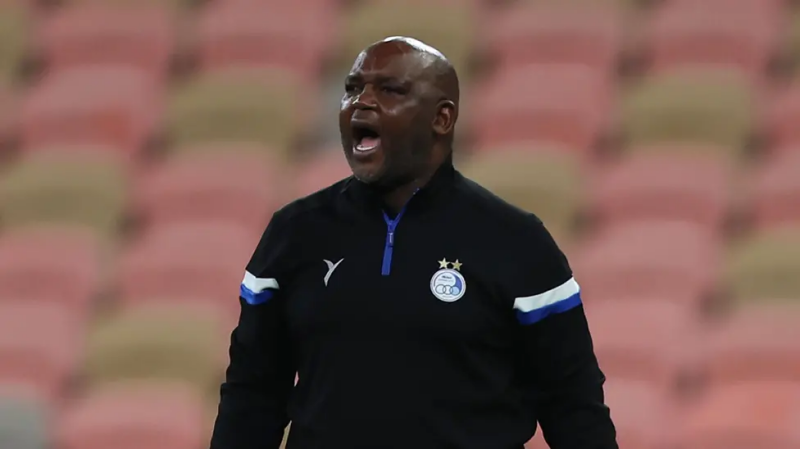
The South African Football Association has officially confirmed the return of Pitso Mosimane as head coach of the national team, bringing the 62-year-old tactician back to the Bafana Bafana dugout for a second permanent stint, 14 years after his controversial first tenure ended in disappointment. Mosimane was officially unveiled at a press conference at SAFA House in Johannesburg on Tuesday, September 1, 2026, ending weeks of speculation and negotiation that had kept the nation in suspense. He takes over from Belgian Hugo Broos, who stepped down after his contract expired at the end of July, following a five-year reign that restored some pride to South African football.
The appointment comes 24 days after SAFA's National Executive Committee initially approved Mosimane as the preferred candidate to succeed Broos. SAFA President Danny Jordaan had indicated at the time that the organisation needed to "tie up some loose ends" before making the announcement official. Those loose ends ultimately involved finalising Mosimane's contract and assembling his technical team, which includes fitness coach Kabelo Rangoaga and performance analyst Musi Matlaba, both of whom have worked with him previously. The length of his contract has not been disclosed, but it is understood to run until the 2030 World Cup, which will be co-hosted by Morocco, Portugal, and Spain.
Mosimane's return to the national set-up is laden with history and expectation. He first took charge of Bafana Bafana on an interim basis in 2006, ahead of the arrival of Brazilian Carlos Alberto Parreira, guiding the side through seven matches with three wins, three draws, and a single defeat. He then served as an assistant coach under Parreira and Joel Santana through the 2010 World Cup, before being elevated to the top job for a second time following the tournament. His first permanent spell, which ran from July 2010 to June 2012, ended in disappointment. South Africa failed to qualify for the 2012 Africa Cup of Nations after a costly misunderstanding of the head-to-head rule, with the team mistakenly believing a draw against Sierra Leone in their final group match would be enough to secure qualification. That error was compounded by a 1-1 home draw against Ethiopia in a 2014 World Cup qualifier, which ultimately led to his dismissal. In 16 matches during that permanent spell, he recorded six wins, seven draws, and three defeats.
However, the Mosimane who returns to the Bafana hotseat in 2026 is a vastly different figure from the one who left in 2012. In the intervening 14 years, he has established himself as one of Africa's most decorated and respected coaches. "A lot has happened since the last time I was the coach fourteen years ago," Mosimane reflected at his unveiling. "Back then I had not won anything yet. It has been a long journey and I'm happy to say I have won 21 medals in the fourteen years since I coached Bafana Bafana". His glittering club career includes a CAF Champions League triumph with Mamelodi Sundowns in 2016, followed by two more with Egyptian giants Al Ahly in 2020 and 2021. He also won the CAF Super Cup three times, making him the most successful black coach in CAF club competitions with six continental titles. After his success in Egypt, Mosimane went on to coach in Saudi Arabia, the United Arab Emirates, and Iran, before returning to South Africa.
His immediate task, however, is formidable and leaves little time for sentiment. Mosimane has just 23 days to prepare the national team for their first 2027 Africa Cup of Nations qualifier, a home fixture against Guinea on September 26. Four days later, Bafana will travel to neutral Egypt to face Eritrea. South Africa have been drawn in Group D alongside Guinea, Eritrea, and tournament co-hosts Kenya, who are coached by another South African, Benni McCarthy. Because Kenya automatically qualify as co-hosts, only one other side from the pool will advance to the 24-team finals, intensifying the pressure on Mosimane to deliver from the outset. Bafana will also play home and away fixtures against Kenya in November, before completing their campaign against Guinea and Eritrea in March next year.
Mosimane inherits a team that has experienced a resurgence under Broos. The Belgian led South Africa to a third-place finish at the 2023 Africa Cup of Nations and, more significantly, guided them to the knockout stages of the 2026 FIFA World Cup—the first time the nation had progressed beyond the group stage since hosting the tournament in 2010. That achievement has raised expectations considerably. "You have to accept and acknowledge the good work that has been done, and you have to work from that platform," Mosimane said. "If we are all honest as coaches, there is always room for improvement. You've seen Bafana Bafana play at the AFCON and the World Cup and a lot of people have the opinion that they could've played even better. The moment you think it can't get any better then we are arrogant. I think there's a lot of room for improvement".
Speaking at his unveiling, Mosimane struck a notably humble and reflective tone, acknowledging the weight of the responsibility he now carries. "I know that this is bigger than Pitso Mosimane. I accept this role with great humility," he said. "I take this responsibility knowing that I still have something to give in football, especially in my country". He also steered clear of engaging with critical comments made by his predecessor. Broos had reportedly suggested in Belgian media that Mosimane could take the team backwards by five years, with agents potentially influencing squad selection. Mosimane declined to respond directly, instead focusing on the task ahead.
The new coach's first major decision will be his squad selection for the upcoming qualifiers, with an announcement expected in the coming days. He takes over a Bafana Bafana side that has broken into the top 55 in the world rankings, and while his continental pedigree is undisputed, the pressure to translate club success into international achievement is immense. For a nation that has endured decades of underachievement punctuated by brief moments of hope, Mosimane's return represents both a gamble and an opportunity. His legendary status in South African football—earned through trophies, tactical acumen, and an unshakeable self-belief—will be tested once more on the international stage. The qualifiers begin in less than a month. The clock is already ticking.
📩 Stone Reporters News | 🌍 stonereportersnews.com
✉️ info@stonereportersnews.com | 📘 Facebook: Stone Reporters News | 🐦 X (Twitter): @StoneReportNew | 📸 Instagram: @stonereportersnews
Add comment
Comments