

Published by Osasere Edomwonyi Ikpoba
The Federal Government has issued a powerful call for the Economic Community of West African States to intensify engagement with the three breakaway nations of the Alliance of Sahel States, describing them as "brothers and sisters" with shared challenges and aspirations, in a significant diplomatic move that could reshape the fractured regional landscape. The appeal came as the regional bloc welcomed new leadership, with Nigeria urging the incoming management to prioritise dialogue over isolation in addressing the political and security crises that have fractured West Africa.
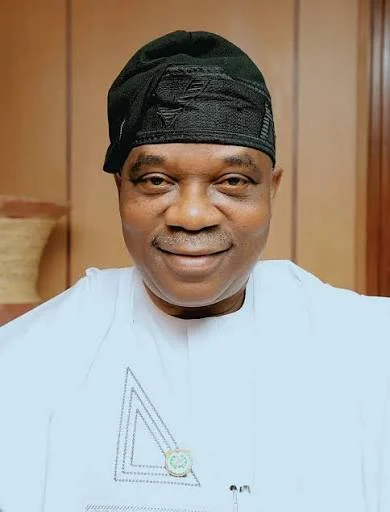
Minister of State for Foreign Affairs, Ambassador Sola Enikanolaiye, made the declaration on Tuesday in Abuja at the handover ceremony for outgoing and incoming statutory appointees of ECOWAS institutions. Representing President Bola Tinubu at the ceremony, Enikanolaiye reaffirmed Nigeria's unwavering commitment to the progress, growth and stability of the regional bloc. He stressed that peace and security remained the foundation of economic integration, and emphasised the urgent need for ECOWAS to strengthen dialogue with the AES countries comprising Burkina Faso, Mali and Niger.
The minister urged the new leadership to remain committed to the vision of the founding fathers of a united, peaceful, prosperous and integrated West Africa. He also called on the incoming management to prioritise the implementation of ECOWAS Vision 2050, titled "The ECOWAS of Peoples: Peace and Prosperity for All," identifying free movement, intra-regional trade and investment, infrastructure development, food and energy security, youth and women's empowerment, and job creation as areas requiring greater attention. Enikanolaiye further called for financial probity, accountability, cost-effectiveness and prudent management of the regional organisation's resources, noting that ECOWAS must justify the investments made by Nigeria and other member states through the Community Levy.
The statement comes at a critical juncture for West African regional integration. Burkina Faso, Mali and Niger formally exited ECOWAS on January 29, 2025, following disagreements with the regional bloc over sanctions and the timeline for returning to civilian rule after a series of military coups. The three military-led countries have since deepened military, political and economic cooperation under the AES framework, moving closer to Russia while most ECOWAS members remain allied to the West. Despite their political differences, both blocs face common security threats, including terrorism, violent extremism, insurgency, arms trafficking and other cross-border crimes, particularly in the Sahel and the Gulf of Guinea.
The call for re-engagement has been echoed by Nigeria's Defence establishment. Earlier in August, Nigeria's Minister of Defence, General Christopher Gwabin Musa, called for a unified security alliance between ECOWAS and the AES to defeat terrorism, dismantle cross-border criminal networks, and restore regional stability. Speaking upon his arrival in Cotonou, Benin Republic, for a three-day working visit aimed at harmonising regional defence strategies, General Musa harped on the need for joint regional action to combat insurgency and secure the Gulf of Guinea. Addressing defence officials, the Minister emphasised that confronting West Africa's complex security landscape requires an inclusive, coordinated front.
General Musa urged ECOWAS and AES leadership to find common ground to insulate land borders from insurgent spillover and strengthen maritime security along the Gulf of Guinea. "There is a need for a unified security alliance between ECOWAS and the Alliance of Sahel States to defeat terrorism, dismantle cross-border criminal networks, and restore regional stability," he was quoted as saying. Benin's Minister of National Defence, Gildas Agonkan, commended Nigeria for its anchor role in stabilising the sub-region, citing its swift interventions in safeguarding democratic governance and describing Nigeria as an indispensable partner in the fight against transnational crime.
The diplomatic overture has not been without tension. Relations between the AES and ECOWAS have remained fraught, with the three Sahel states issuing a strong rebuke to President Tinubu in August over comments he made regarding regional security. Despite the public rebuke, AES leaders have indicated they remain open to working with Nigeria, expressing a preference for "continued engagement with Nigeria in a 'joint and shared fight' against insecurity".
The handover ceremony that provided the platform for Nigeria's call also marked a significant transition in ECOWAS leadership. The new President of the ECOWAS Commission, General Birame Diop, a former Senegalese Minister of Defence and former Chief of the General Staff of the Senegalese Armed Forces, assumed office following his appointment by the Authority of Heads of State and Government at its 69th Ordinary Summit in Sierra Leone. Diop succeeds Dr Omar Alieu Touray of The Gambia, whose four-year tenure has ended. A Nigerian, Anthony Ogunjimi, will serve as the new Vice-President of the ECOWAS Commission.
Enikanolaiye commended the outgoing leadership for their service and congratulated the incoming leadership, urging them to lead with "vision, integrity, efficiency and service to community citizens". He further declared: "Nigeria remains committed to working constructively with the new leadership and all Member States towards a stronger, more integrated and people-centred ECOWAS". The ceremony was attended by the Chairman of the ECOWAS Council of Ministers, Cheikh Niang; members of the Permanent Representatives Committee; the Chairman of the ECOWAS Business Council, Aliko Dangote; staff of ECOWAS institutions; and members of the press.
The push for re-engagement reflects a growing recognition within Nigeria's foreign policy establishment that the fragmentation of West Africa serves no one's interests. With terrorism and insurgency spreading across the Sahel and threatening to spill over into coastal states, the imperative for a coordinated regional response has never been more urgent. The AES countries, despite their political divergence from ECOWAS, remain integral to the region's security architecture. Nigeria's call for dialogue represents a pragmatic acknowledgment that isolation has failed, and that the path to stability lies in conversation, not confrontation. Whether the new ECOWAS leadership under General Diop will heed that call remains to be seen. But for now, Nigeria has made its position clear: the door to re-engagement remains open, and the AES countries are, and will always be, brothers and sisters in the West African family.
📩 Stone Reporters News | 🌍 stonereportersnews.com
✉️ info@stonereportersnews.com | 📘 Facebook: Stone Reporters News | 🐦 X (Twitter): @StoneReportNew | 📸 Instagram: @stonereportersnews
Add comment
Comments