

Reported by: Ijeoma G | Edited by: Oravbiere Osayomore Promise.
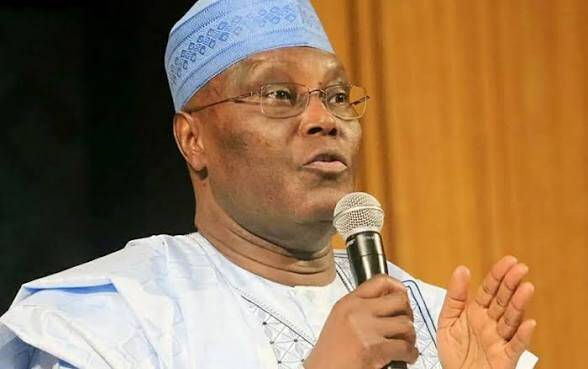
The administration of President Bola Tinubu has given Nigerian workers renewed hardship, not the hope it promised during the 2023 election campaign, former Vice‑President Atiku Abubakar declared in a devastating assessment released to mark Workers’ Day. In a statement posted on his X handle on Thursday, 30 April 2026, Atiku said the 2026 commemoration should have been a moment to celebrate the dignity of labour, but instead had become a painful reminder of broken promises and a growing burden on the shoulders of the workforce that keeps the country running. The former vice‑president and chieftain of the African Democratic Congress (ADC) delivered his verdict as the Nigeria Labour Congress (NLC) and the Trade Union Congress (TUC) prepared to lead workers onto the streets of Abuja and several state capitals on May Day, with labour threatening a massive showdown over the non‑implementation of the minimum wage and the soaring cost of living.
“A slogan betrayed. ‘Renewed Hope’ – those two words carried the dreams of millions of Nigerians who trooped to the polls in 2023,” Atiku wrote. “They were words that promised a departure from the suffering of previous years; a promise that the government would finally work for the people. Today, as we assess nearly three years of the Tinubu administration, it is painfully clear that what was renewed was not hope, but hardship. What was refreshed was not the fortunes of the Nigerian people, but the pockets of those in power.” The former vice‑president argued that workers across all sectors – teachers, nurses, civil servants, artisans and factory hands – have borne the brunt of rising inflation, worsening living conditions and declining purchasing power. “The Nigerian worker – the teacher, the nurse, the factory hand, the civil servant, the artisan – has been the primary victim of an administration that, by all observable evidence, is far more interested in increasing the revenue at its disposal than in improving the lives of the citizens it governs,” he said.
Atiku acknowledged that he had long advocated for the removal of the fuel subsidy, describing it as a necessary step to stop a fiscal haemorrhage that had enriched a cabal of middlemen. But he condemned the manner in which the Tinubu government executed the policy as “irresponsible and callous.” He recalled that on the day of the president’s inauguration, with no preparation, no social safety nets, no cushioning mechanisms and no transition plan for ordinary Nigerians, the subsidy was abruptly scrapped. “The price of fuel skyrocketed. Transportation costs doubled and tripled overnight. The cost of food and basic goods hit the roof. The Nigerian worker, who was already struggling to survive on a salary eroded by years of inflation, was suddenly confronted with a cost of living that made mere survival feel like a luxury,” Atiku said. He contrasted that approach with what a responsible government would have done: spent months preparing the population, establishing safety nets, empowering the most vulnerable and ensuring that the pain of reform was shared equitably. “This administration did none of that. It simply removed the subsidy and left the Nigerian worker to drown,” he added.
The former vice‑president also questioned the utilisation of funds saved from the subsidy removal. He noted that trillions of naira had ostensibly been saved, but ordinary citizens had seen no tangible benefit. “Nigerians, who had suffered the immediate consequences of the removal, were right to ask: Where has this saved money gone? What has been done with it to improve their lives?” he wrote. He alleged that, instead of being channelled into healthcare, education or programmes that would directly benefit the people, the bulk of the federal government’s share appeared to be financing the controversial $11 billion Lagos‑Calabar Coastal Highway project. Atiku charged that the contract was not subjected to competitive bidding or due process, but was awarded to a company owned by a man President Tinubu himself had publicly acknowledged as his business partner. “This is not governance, it is the brazen conversion of public resources for private enrichment,” he declared. He also faulted the decision to float the naira, saying it had triggered a sharp depreciation that wiped out whatever purchasing power workers had managed to preserve after years of inflation. “Imported goods, including medicines, food items and educational materials, became unaffordable. Some medicines are no longer on the shelves,” he said.
Atiku called on the government to prioritise policies that directly ease the burden on workers, including wage adjustments, targeted social interventions and investments in critical sectors. “Economic reforms must be people‑centred. Growth that does not translate into improved living conditions for workers is neither inclusive nor sustainable,” he said. He reaffirmed his solidarity with the workforce and urged the government to listen and act decisively. “On this Workers’ Day, I stand in solidarity with every Nigerian worker. Their resilience is remarkable, but resilience should not be mistaken for endurance of endless hardship. The time to act is now.”
His criticism came against a backdrop of nationwide labour unrest. The NLC and TUC had directed workers in states that have not fully implemented the 2024 National Minimum Wage Act to abandon ceremonial stadium gatherings and instead take their protests to the streets on May Day. In Borno, local government workers staged a protest over non‑implementation of the N70,000 minimum wage, while labour centres across the country reported that the real value of the basic wage had been eroded by persistent inflation. A worsening cost‑of‑living crisis, driven by fuel price hikes, currency depreciation and rising food inflation, overshadowed the official commemorations despite the existence of a statutory minimum wage.
President Tinubu’s government has defended the reforms as necessary to stabilise the economy and attract investment. The presidency has also pointed to recent measures such as discounted food distribution and a 30 per cent debt relief for airlines as evidence of intervention. But for Atiku and the millions of workers he claims to speak for, the verdict is clear: the hope that was promised has turned into a heavy new burden.
📩 Stone Reporters News | 🌍 stonereportersnews.com
✉️ info@stonereportersnews.com | 📘 Facebook: Stone Reporters News | 🐦 X (Twitter): @StoneReportNew | 📸 Instagram: @stonereportersnews
Add comment
Comments