

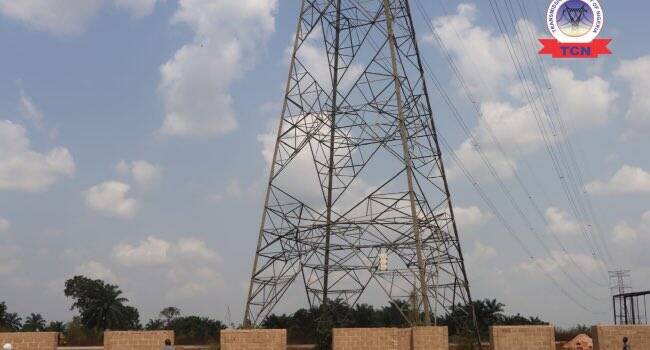
The Transmission Company of Nigeria (TCN) says it has arrested suspects caught vandalising its facilities along the Nkalagu–Abakaliki 132kV single circuit transmission line in Ebonyi State, in a development the operator says underscores continuing threats to critical electricity infrastructure across the country.
The Transmission Company of Nigeria, a key agency responsible for managing the national power transmission grid, confirmed that the incident occurred along one of its high-voltage corridors serving the South-East region, a network that is essential for wheeling electricity from generation stations to distribution companies serving households and businesses.
It said the suspects were apprehended during a surveillance-driven operation after security personnel observed unusual activity around the transmission infrastructure. Officials stated that a rapid response team was deployed to the location, leading to the arrest of individuals allegedly attempting to tamper with vital components of the 132kV line.
According to the company, vandalism of transmission facilities has remained a recurring challenge in Nigeria’s power sector, frequently causing disruptions to electricity supply, increasing maintenance costs, and placing additional strain on already stretched national grid infrastructure.
Officials of the Transmission Company of Nigeria noted that repeated attacks on power infrastructure not only affect grid stability but also have broader economic implications, as industries, hospitals, and households depend heavily on reliable electricity supply for daily operations and productivity.
The Nkalagu–Abakaliki 132kV transmission line is part of a wider network supporting electricity distribution across the South-East geopolitical zone, linking key transmission substations that facilitate power flow between generation plants and end users in urban and rural communities.
It has also become part of ongoing national security concerns, as vandalism of critical infrastructure is treated as an offence under Nigerian law, particularly following the designation of power assets as critical national infrastructure requiring heightened protection.
Security agencies working with the transmission operator have in recent years intensified efforts to curb vandalism through patrols, intelligence gathering, and collaboration with host communities located along vulnerable transmission corridors.
Authorities say such cooperation has contributed to the detection and disruption of several attempted thefts and sabotage incidents targeting electricity infrastructure across multiple states, including rural areas where transmission lines are often isolated.
Despite these interventions, operators continue to report incidents of vandalism, prompting renewed calls for stronger enforcement, improved surveillance technologies, and greater community awareness regarding the protection of national assets.
In Ebonyi State, where the latest arrest occurred, officials have previously expressed concern over the vulnerability of transmission infrastructure due to its extensive reach through remote and less populated areas, which can complicate rapid security response efforts.
Investigations into the arrested suspects are ongoing, with authorities expected to determine the full extent of their involvement, while the Transmission Company of Nigeria reaffirmed its commitment to safeguarding the national grid and ensuring uninterrupted power delivery across the country.
Under Nigeria’s legal framework, acts of vandalism targeting electricity transmission assets are treated as serious criminal offences, particularly following the classification of such infrastructure as critical national assets. Offenders, once convicted, may face significant prison sentences and additional penalties intended to deter sabotage of essential public utilities. Law enforcement agencies have increasingly treated attacks on transmission lines as threats to national security, given their direct impact on economic activity, public safety, and essential service delivery across multiple sectors.
The South-East region of Nigeria, where the Nkalagu–Abakaliki transmission corridor operates, relies heavily on stable electricity supply to support small and medium-sized enterprises, manufacturing activities, and essential services such as healthcare and education. Interruptions caused by vandalism can result in production losses, increased operational costs, and reduced investor confidence in the region’s infrastructure stability. Energy stakeholders have consistently warned that repeated attacks on transmission infrastructure could slow down industrial growth and hinder broader economic development across affected communities.
The Transmission Company of Nigeria has over time expanded its security framework to include real-time monitoring systems, coordinated patrols with security agencies, and engagement with local communities along transmission corridors. These measures are aimed at improving early detection of suspicious activity and reducing response time during incidents. The company has also invested in public awareness campaigns to encourage citizens to report vandalism, while working closely with law enforcement agencies to ensure prompt arrest and prosecution of offenders involved in sabotage of the national grid.
Authorities maintain that protecting electricity transmission infrastructure remains essential for national development, as reliable power supply underpins industrial productivity, public service delivery, and overall economic stability. They stress that sustained collaboration between government agencies, security forces, and local communities is necessary to reduce incidents of vandalism and safeguard critical infrastructure. The latest arrest in Ebonyi State is being viewed as part of ongoing enforcement efforts aimed at strengthening deterrence and reinforcing the message that sabotage of national assets will attract strict legal consequences.
Community leaders in areas traversed by high-voltage transmission lines have repeatedly been urged to strengthen local vigilance and report suspicious activities near critical infrastructure. Authorities say that local intelligence remains one of the most effective tools in preventing vandalism, especially in remote locations where formal security presence may be limited. Engagement with traditional rulers, youth groups, and civil society organisations has been identified as an important component of broader infrastructure protection strategies across Nigeria.
Recent improvements in monitoring technology have enabled transmission operators to detect abnormal activity along power corridors more quickly, using a combination of surveillance systems, patrol coordination, and remote alerts. These systems allow for faster deployment of security teams when potential threats are identified, reducing the likelihood of successful vandalism. Operators say continued investment in technology-driven surveillance is critical to strengthening resilience across the national grid and improving overall infrastructure security performance in high-risk areas.
Energy sector analysts note that stable electricity supply remains a cornerstone of economic stability in Nigeria, influencing productivity across manufacturing, services, and digital sectors. They argue that safeguarding transmission infrastructure is not only a technical necessity but also a strategic economic priority. Continued disruptions, they warn, can undermine investor confidence and slow down development plans, particularly in regions that depend heavily on grid-connected power for industrial and commercial growth. Investigations and monitoring continue nationwide.
📩 Stone Reporters News | 🌍 stonereportersnews.com
✉️ info@stonereportersnews.com | 📘 Facebook: Stone Reporters News | 🐦 X (Twitter): @StoneReportNew | 📸 Instagram: @stonereportersnews
Add comment
Comments