

Reported by: Ijeoma G | Edited by: Oravbiere Osayomore Promise.
Nigerian soldiers engaged in counter-insurgency operations in the North-East have voiced strong opposition to an alleged directive requiring them to work alongside former Boko Haram members recently reintegrated into society under the Borno State Government's deradicalisation programme . The development, according to serving military personnel who spoke to SaharaReporters and other news outlets, has triggered unease within frontline formations, with many troops fearing that the arrangement could expose military operations to sabotage and intelligence leaks .
The soldiers, who spoke on condition of anonymity, alleged that some former Boko Haram fighters who publicly renounced violence and pledged allegiance to the Nigerian state during recent reintegration exercises have been attached to local security groups that support military operations against insurgents across parts of Borno State . The personnel maintained that the move forms part of efforts by the Borno State Government to demonstrate the effectiveness of its rehabilitation and reintegration initiative, which has faced criticism from victims of insurgency, members of the public, and some security operatives .
According to the sources, military authorities and troops on the ground remain sceptical about the sincerity of several former insurgents despite their participation in rehabilitation programmes . One soldier told SaharaReporters, "The government wants to prove that the reintegration programme is working, so some of these 'repentant' Boko Haram members are being attached to security groups that work with troops in operations. But many of us are uncomfortable with the arrangement because there have been cases in the past where information leaked and operations were compromised. Trust is a major issue" .
Another military source said troops have deliberately kept some of the former insurgents at separate locations within military facilities because of fears that they could still maintain links with active terrorist cells operating in the region . "We don't trust them completely. There have been too many incidents in the past. That is why they are often given separate accommodation. Yet now there is pressure for us to work closely with them during our missions," the source said .
Recurring attacks on military commanders by insurgents have further heightened suspicions about possible information leaks. "You can see how these Boko Haram fighters have been killing our commanders. That should tell you there is a leak in information about their movements. Yet the government is asking us to trust these people and work with them. It won't work," a soldier added . The soldiers argued that instead of compelling troops to collaborate with former Boko Haram fighters, the Nigerian government should focus on providing better equipment, intelligence support, and welfare packages for personnel risking their lives in the fight against terrorism .
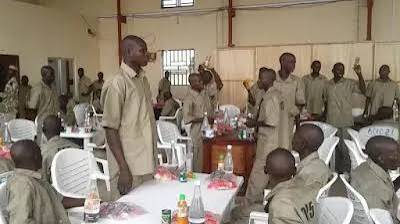
The concerns come barely two weeks after the Borno State Government reintegrated 720 former insurgents, alongside 992 spouses and 2,050 children, into various communities under its "Borno Model" deradicalisation and rehabilitation programme . The beneficiaries were among former insurgents who surrendered to security forces and subsequently underwent rehabilitation at the Hajj Camp in Maiduguri before being formally returned to society . Speaking during the reintegration ceremony, the Special Adviser to Governor Babagana Zulum on Security and member of the state's Deradicalisation, Rehabilitation and Reintegration Committee, retired Brigadier General Abdullahi Ishaq, described the programme as a critical component of Borno's non-kinetic strategy against insurgency . He said the initiative, which began in July 2021, was founded on forgiveness, rehabilitation, and community acceptance of former insurgents willing to renounce violence .
The soldiers have urged the Federal Government to prioritise the provision of improved equipment, intelligence support, and welfare packages for troops rather than compelling them to collaborate with former insurgents . They warned that the alleged directive has heightened anxiety among soldiers who fear that sensitive operational information could be exposed to insurgent groups still active across Borno State and neighbouring areas . The Nigerian military has not issued an official statement on the matter, but the opposition from frontline troops underscores the deep-seated mistrust that continues to undermine efforts to integrate former insurgents into the broader security architecture.
As the debate over the "Borno Model" intensifies, the soldiers' rejection of the move highlights the delicate balance between rehabilitation and security in the fight against insurgency. For now, troops on the ground remain adamant: trust, once broken, is not easily restored, and the cost of misplaced confidence could be measured in lives lost and missions compromised.
📩 Stone Reporters News | 🌍 stonereportersnews.com
✉️ info@stonereportersnews.com | 📘 Facebook: Stone Reporters News | 🐦 X (Twitter): @StoneReportNew | 📸 Instagram: @stonereportersnews
Add comment
Comments