

Reported by: Oahimire Omone Precious | Edited by: Oravbiere Osayomore Promise.
President Donald Trump signed an executive order on Monday, August 10, 2026, calling for a dramatic reduction in the number of childhood vaccines recommended by the federal government, slashing the routine immunization schedule from 17 diseases to 11 and directing that the combined measles, mumps and rubella (MMR) vaccine be separated into three individual shots administered during separate medical visits. The order, signed in the Oval Office with Health and Human Services Secretary Robert F. Kennedy Jr. at his side, represents the administration's most aggressive attempt yet to reshape America's vaccine policy. But medical experts and legal scholars immediately dismissed the order as having no binding legal authority, warning that it ignores decades of scientific evidence, could increase disease risk, and is likely to be blocked by the same federal court that froze the administration's previous vaccine overhaul.
The executive order, titled "Delivering Gold Standard Childhood Vaccine Recommendations for Americans," reduces the number of universally recommended childhood immunizations from 18 diseases (as recommended by the CDC in 2024) to 11. Under the new framework, all children would still receive vaccines for measles, mumps, rubella, diphtheria, tetanus, pertussis, polio, Hib, pneumococcal disease, HPV and varicella (chicken pox). However, vaccines for hepatitis A, hepatitis B, meningococcal B, meningococcal ACWY, dengue, rotavirus, influenza and COVID-19 would no longer be universally recommended for all children. Instead, these would be recommended only for high-risk populations or after shared clinical decision-making between parents and doctors. The order also recommends that all vaccines be administered during separate medical visits rather than in combination, and directs the HHS to improve vaccine research and safety monitoring.
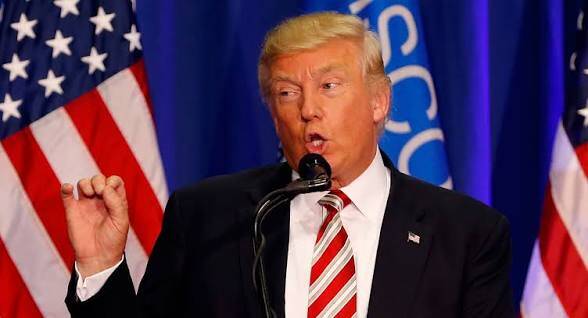
Speaking from the Oval Office, Trump framed the order as a response to rising autism rates, repeatedly suggesting without evidence that vaccines may be linked to the condition. "Decades ago, children received only a small fraction of the vaccines required today. In those times, people were much healthier, and of course, the high rates of autism now observed did not exist," Trump said, flanked by Kennedy, who has long promoted debunked claims linking vaccines to autism. "So there's a reason for such epidemic rates of autism, and we're going to bring it back to where it was," the president added. Trump also claimed the MMR shot could be "quite lethal" and argued that children were being injected with more vaccines than they could handle. Pressed on his reasoning for recommending that infants receive shots over five separate doctor visits, Trump said he had done it with his own children and "had no problem". "Nothing bad can happen from what we're doing," he said of changes that health experts have long warned will reduce immunization rates.
The order has been met with swift and fierce condemnation from the medical community. The American Medical Association warned that altering a proven vaccination schedule "without credible evidence risks weakening public confidence and putting children's health at risk". The American Academy of Pediatrics said current vaccine recommendations are "based on decades of research and systematic tracking of real-world experiences". The American College of Physicians called the changes "problematic and deeply concerning," warning they could increase costs for families and place a greater burden on parents needing to schedule multiple appointments. Republican Senator Bill Cassidy, a doctor who previously expressed hesitancy over confirming Kennedy to the HHS post, wrote on X: "This executive order is wrong. The President does not have the expertise to make these changes. Vaccines are overwhelmingly safe. Vaccines are effective. Vaccines DO NOT cause autism". Cassidy added that breaking up vaccines "will mean children have to get more shots to get the same protection, not fewer shots. It will increase hesitancy and make children less safe".
Legal experts have also questioned whether the order carries any enforceable weight. Vaccine recommendations in the United States are made by the Advisory Committee on Immunization Practices, a panel of experts that advises the CDC, and are then adopted by the agency's director. Only states have the authority to require vaccinations for children to enter school or day care. The president cannot legally circumvent the ACIP, which is empowered by Congress to make vaccine recommendations, said Dorit Reiss, an expert on vaccine policy and law at the University of California College of the Law, San Francisco. "This is not likely to address the court's concern, and is not a legally valid way to fill the statutory requirements about vaccine recommendations, it's just not," Reiss said. Attempts to enforce the order are likely to run into the same legal challenges that froze the administration's previous attempt at implementing a shorter vaccination schedule in March 2026. That ruling is part of a continuing lawsuit brought by medical organizations that argued the administration did not follow proper procedure and made "arbitrary and capricious" decisions.
The order comes as the United States contends with a measles outbreak that experts warn could result in the country losing its measles elimination status. Public health experts have raised concerns that spacing out shots as Trump suggests can lead to an increased risk that children become infected with a vaccine-preventable disease before returning for another visit. Dr. Michael Osterholm, who directs the Center for Infectious Disease Research and Policy at the University of Minnesota, told The New York Times: "There's no science behind these recommendations. It's all about ideology". The order is not expected to affect insurance coverage of the shots, but its primary effect, according to experts, will be to sow more doubt and confusion about vaccines among parents.
As the administration pushes forward with its latest attempt to overhaul vaccine policy, the scientific community, medical organizations and lawmakers have made their position clear: the order is not based on evidence, it is not legally binding, and it will not stand. But the damage, they warn, may already be done. In a country where vaccine hesitancy is already a significant public health challenge, an executive order from the president recommending fewer vaccines, even if unenforceable, carries enormous weight. And for parents navigating the confusion, the message from the White House is dangerously clear: trust us, not your doctors.
📩 Stone Reporters News | 🌍 stonereportersnews.com
✉️ info@stonereportersnews.com | 📘 Facebook: Stone Reporters News | 🐦 X (Twitter): @StoneReportNew | 📸 Instagram: @stonereportersnews
Add comment
Comments