

Reported by: Ijeoma G | Edited by: Oravbiere Osayomore Promise.
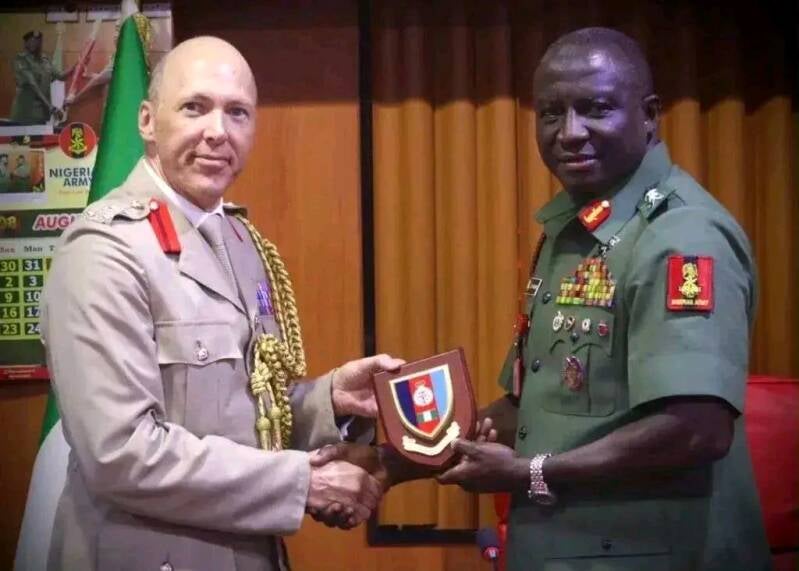
The United Kingdom has tabled a comprehensive defence package for Nigeria that includes the establishment of a military base, the deployment of advanced air defence and counter-drone systems, and a significant expansion of intelligence-sharing capabilities, in a move that signals a major deepening of the strategic partnership between both nations. The proposal was unveiled on Tuesday, August 11, 2026, when the British Defence Adviser to Nigeria, Brigadier Tom Harper, MBE, visited the Chief of Army Staff, Lieutenant General Waidi Shaibu, at Army Headquarters in Abuja. The discussions, described by both sides as a critical step in building a more adaptable and combat-ready Nigerian force, covered a wide range of support measures that could transform the country's ability to counter asymmetric threats across its troubled regions.
At the heart of the proposal is the "establishment of a reference Forward Operating Base within a cantonment environment," a move that would give the Nigerian military a permanent, UK-supported installation designed to enhance operational reach and force protection. Harper also outlined plans for the provision of counter-unmanned aerial systems, air defence systems, and the expansion of tactical Intelligence, Surveillance and Reconnaissance (ISR) capabilities to brigade level. The package further includes potential transfers of protected mobility vehicles and specialised ammunition support, according to a statement by the Acting Director of Army Public Relations, Colonel Appolonia Anele. These measures form part of the United Kingdom's continued commitment under the Security and Defence Partnership to strengthening Nigeria's operational and institutional capacity.
The proposed military base and hardware support come alongside a significant expansion of training programmes. Harper disclosed plans to "expand regional train-the-trainer programmes covering combat tactical drills, casualty care and advanced patrolling". In a move that underscores the regional dimension of the partnership, future Operation HADIN KAI training cohorts are expected to include personnel from Niger, Cameroon, and Chad alongside Nigerian troops. This initiative is designed to promote interoperability and strengthen collective regional capacity against shared security threats in the Lake Chad Basin and beyond.
The British proposal comes at a critical juncture for Nigeria's military, which is currently undergoing a significant expansion. Lieutenant General Shaibu highlighted that the Nigerian Army is growing from eight to 12 divisions, a development that he said would require corresponding investments in advanced training, instructor development, and Special Forces capabilities. The Chief of Army Staff identified asymmetric warfare and operations in dense and difficult terrain, particularly in the North-East, as significant operational challenges requiring enhanced intelligence, surveillance, reconnaissance, aviation capability, and round-the-clock domain awareness down to battalion level. Shaibu stressed that sustained engagement with trusted international partners was critical to accelerating the Army's transformation, particularly in capability development, professional military education, and technology integration.
The United Kingdom's proposal is the latest development in a rapidly deepening defence relationship between the two countries. The Fourth UK–Nigeria Security and Defence Partnership Dialogue, held in Abuja on June 23 and 24, 2026, had already set the stage for expanded cooperation. That dialogue, co-chaired by Nigeria's National Security Adviser Nuhu Ribadu and his UK counterpart Jonathan Powell, resulted in a joint communiqué that reaffirmed the UK's long-term commitment to Nigeria's Armed Forces, including efforts to counter threats from uncrewed air systems and improvised explosive devices. Both nations agreed to deepen operational cooperation in the Gulf of Guinea, enhance intelligence sharing, and establish a new structured framework for countering hybrid threats, including cyber-attacks and foreign information manipulation.
The August 11 proposal builds on those commitments by translating broad strategic agreements into concrete operational support. The offer of air defence systems and counter-drone technology is particularly significant, as Nigeria has faced increasing threats from uncrewed aerial systems used by terrorist groups and criminal networks. The proposed Forward Operating Base would provide a permanent UK-supported military installation, enhancing Nigeria's ability to project force and respond rapidly to emerging threats. The expansion of tactical ISR capabilities to brigade level would give Nigerian commanders real-time intelligence at the tactical edge, a capability that has been identified as a critical gap in counter-insurgency operations.
The proposal has been welcomed by the Nigerian military leadership. In his remarks, Lieutenant General Shaibu described the partnership as central to "building a more adaptable, combat-ready and resilient force capable of responding effectively to evolving national and regional security threats". He noted that the partnership remained central to strengthening operational effectiveness, force protection, intelligence capabilities, specialised training, and institutional capacity. The Army chief also underscored efforts to institutionalise operational lessons and preserve military heritage through the integration of historic campaigns into command curricula and the digitisation of military archives.
The deepening UK-Nigeria defence partnership reflects a broader strategic realignment as Nigeria confronts complex and evolving security challenges. From the Boko Haram insurgency in the North-East to banditry in the North-West and separatist agitation in the South-East, the Nigerian military is stretched across multiple fronts. The UK's offer of advanced hardware, intelligence support, and a forward operating base represents a significant vote of confidence in Nigeria's military transformation and a commitment to long-term partnership in stabilising the region. As Harper noted, the proposed measures are designed to equip the Nigerian Army to "anticipate, deter and decisively respond to emerging threats". The next steps will involve detailed discussions on implementation, procurement, and the operationalisation of the forward base. But the message from both London and Abuja is clear: the strategic defence partnership between Nigeria and the United Kingdom is entering a new and more ambitious phase.
📩 Stone Reporters News | 🌍 stonereportersnews.com
✉️ info@stonereportersnews.com | 📘 Facebook: Stone Reporters News | 🐦 X (Twitter): @StoneReportNew | 📸 Instagram: @stonereportersnews
Add comment
Comments