

Reported by: Ijeoma G | Edited by: Oravbiere Osayomore Promise.
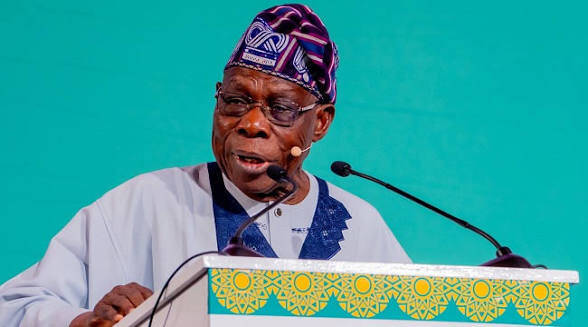
Former Nigerian President Olusegun Obasanjo has delivered a sweeping indictment of the democratic model practised across Africa, declaring that the continent has no genuine democracy but rather a borrowed and forced Western liberal system that has "caged Africans" and failed to deliver good governance. Speaking on Tuesday, August 11, 2026, as chairman of the Goodluck Jonathan Foundation Democracy Dialogue in Bauchi, the former leader warned that African countries must urgently develop a home-grown democratic model that reflects their history, culture and developmental realities, or risk continued political instability and underdevelopment.
Obasanjo, who has repeatedly voiced concerns about governance deficits on the continent, used the platform to challenge the very foundation of Africa's political order. "There is no democracy in Africa, but borrowed and forced Liberal Democracy that has caged Africans," he declared. The former president, who was speaking at the Ahmadu Bello International Conference Centre in Bauchi, insisted that "Is there African democracy? Let us not deceive ourselves. There's nothing like African democracy. We were given Western liberal democracy by our colonial masters".
Obasanjo said he had been "increasingly worried about the performance of democracy in Africa, and indeed in other regions of the world". He argued that the democratic model adopted by African countries lacked sufficient African context and had largely failed to meet the needs of the continent. "The democracy we practise has no African context," he said, likening the adoption of the Western model to wearing a dress that was not made to fit. "If you try to use what is not meant for you to serve your purpose, it's like a dress for which you are not measured".
The former president traced the roots of Africa's democratic crisis to the continent's colonial history, arguing that European powers had imposed a political system that was never designed to serve African societies. "Since our European Colonial Masters had nothing else to give us, what they are, we swallowed it, hook, stock, and barrel," he said. He questioned whether the imported system had delivered or would ever deliver for the continent: "Has it delivered, or is it delivering, or will it deliver? These are the questions that we must ask ourselves".
One of Obasanjo's most pointed criticisms was directed at the "winner-takes-all" culture that has come to define African politics. He argued that the first-past-the-post electoral system, inherited from Britain, had created a political environment in which opponents were treated as enemies rather than legitimate participants in governance. "When you talk about loyal opposition in an African setting, opposition means enemy," he said. "Then do you have a loyal enemy? So, what do you do with your enemy? You crush him and destroy him, and that is what we have".
He also attacked the disproportionate power that electoral victories confer on political leaders, noting that a candidate could win by a single vote and then exercise virtually total control over state resources and institutions. "If you beat me by one vote, then you take it all and whatever I have does not matter," he said. Obasanjo warned that this winner-takes-all dynamic had deepened political exclusion, marginalisation and conflict across the continent, making democracy a zero-sum game rather than a mechanism for inclusive governance.
The former president also took aim at the growing role of the judiciary in determining electoral outcomes, questioning whether it was democratic for millions of citizens to cast their votes only for a handful of judges to decide the final result. "Of what need is judiciary in government making? What purpose does it serve that when millions of people have voted, then five people will come to decide either in favour or against the decision of millions of people?" he asked. "Is that democracy? It cannot be democracy". He also questioned whether the judiciary remained truly independent or was being influenced by the executive, warning that a captured judiciary could not serve as a credible arbiter of political disputes.
Obasanjo also highlighted the corrosive influence of money in politics and lamented the limited representation of women in political leadership since the beginning of Nigeria's Fourth Republic. He called on African scholars, policymakers and political leaders to develop an inclusive, Afro-centric democratic model that prioritised good governance, equity, public welfare and community representation.
The dialogue, themed "Beyond Elections: Can Political Parties and the Judiciary Save African Democracy?", brought together a cross-section of African leaders, jurists, scholars and development partners. Former President Goodluck Jonathan, who founded the foundation, used the occasion to call on African countries to re-examine their democratic structures, warning that excessive concentration of power in the presidency was affecting governance and development on the continent. Jonathan suggested that elements of the Swiss system of government, where executive authority is exercised collectively rather than concentrated in a single individual, could provide useful lessons for some African countries in preventing the abuse of power.
Peter Obi, the presidential candidate of the Nigeria Democratic Congress for the 2027 election, also questioned the democracy being practised in Nigeria and other African countries, saying the institutions of government required overhaul. He warned that the weakening of electoral and judicial institutions was putting the country's democratic future at risk. Research Professor Karuti Kanyinga of the University of Nairobi, another speaker at the dialogue, warned that African democracy was being hollowed out from within because ruling parties and opposition parties had become almost indistinguishable.
Obasanjo's intervention at the Bauchi dialogue is the latest in a series of public statements in which he has expressed growing alarm about the trajectory of democracy in Africa. In March 2026, he called for a rethinking of democracy in Africa, urging leaders to adapt democratic systems to local realities while upholding accountability, transparency and inclusiveness. His remarks at the Goodluck Jonathan Foundation event reflect a deepening pessimism about the ability of the current democratic model to deliver for ordinary Africans, and a growing conviction that the continent must chart its own political path.
As Obasanjo made clear, the democracy that Africa inherited from its colonial masters has not served the continent well. The question now is whether African leaders have the courage and vision to build something new. "The democracy we practice has no African context, no African content," he said. "It will not fit and it will not serve your purpose". For a continent that has endured decades of political instability, economic stagnation and social upheaval, his call for a fundamental rethink could not come at a more urgent time.
📩 Stone Reporters News | 🌍 stonereportersnews.com
✉️ info@stonereportersnews.com | 📘 Facebook: Stone Reporters News | 🐦 X (Twitter): @StoneReportNew | 📸 Instagram: @stonereportersnews
Add comment
Comments