

Reported by: Ijeoma G | Edited by: Oravbiere Osayomore Promise.
The German government has formally accused Russia of orchestrating a brazen attempted "hybrid attack" on Leipzig/Halle Airport last month, prompting a series of sweeping diplomatic countermeasures that include the closure of Russia's consulate in Bonn, the cancellation of the Russian House cultural centre's lease in Berlin, and new sanctions targeting Moscow's shadow fleet. The announcement, made on Tuesday, September 1, 2026, by Interior Minister Alexander Dobrindt and Foreign Minister Johann Wadephul, marks a significant escalation in the ongoing tensions between Berlin and Moscow, as Germany joins a growing list of European nations confronting what it describes as a sustained campaign of hybrid warfare.
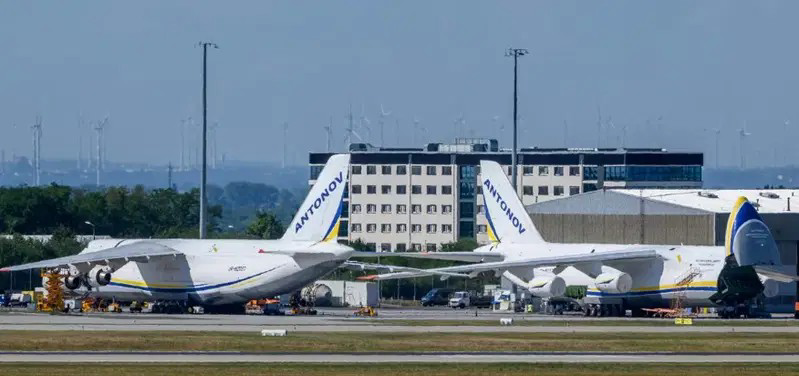
The incident in question occurred on August 4, 2026, when an explosive-laden drone was discovered near a parked Ukrainian cargo plane at Leipzig/Halle Airport, a critical logistics hub for military equipment and NATO operations. Police used a robot to defuse the device, which contained explosives and an ignition system that German investigators say bears the hallmarks of Russian hybrid operations. According to Dobrindt, after assessing the drone technology and other intelligence, "the government concludes that Russia is responsible for the hybrid attack in Leipzig on August 4". He blamed "low-level agents" for the operation and noted that "the drone configuration — various components, explosives and ignition systems — are known to us from other hybrid operations by Russia and its war against Ukraine".
German officials emphasised that the Leipzig incident should not be viewed in isolation. "We do not view the Leipzig incident in isolation, but rather see it in the context of other hybrid actions," Dobrindt said. "We assume that Germany is the target of further hybrid attacks by Russia. We are not at war, but we are a daily target of hybrid warfare". Germany has for months reported suspicious drone sightings over military and industrial sites, but the Leipzig incident was particularly alarming because the drone carried explosives. Another drone was reportedly found weeks later near the airport, also with traces of an explosive substance.
In response, Foreign Minister Johann Wadephul announced a series of punitive measures. Germany will close Russia's consulate in the former capital Bonn later this month, effective September 18, and cancel the contract for the Russian House, a cultural centre in Berlin that security services believe is both a hub for propaganda and espionage. "We are tightening entry controls for Russian nationals," Wadephul declared, adding that Germany would propose the listing of more Russian individuals for European Union sanctions. Germany also vowed to "increase pressure on the Russian shadow fleet," a term for the ageing oil tankers and cargo ships with opaque ownership that Russia uses to circumvent Western sanctions. The Russian ambassador to Berlin was summoned to the Foreign Ministry.
The European Union expressed "full solidarity" with Germany, with EU chief Ursula von der Leyen stating, "We are united in our resolve to stand against Russian aggression". NATO chief Mark Rutte said the alliance "will continue to strengthen our ability to deter and defend all Allies against any threat". Countries including Britain, France, Estonia, and Poland offered strong backing, while Sweden also summoned the Russian ambassador.
Russia has vehemently denied any involvement. Russian Foreign Ministry spokesperson Maria Zakharova called the accusations a "far-fetched and contrived pretext" for Berlin to escalate tensions, arguing that "as usual, no convincing or serious evidence has been presented whatsoever". President Vladimir Putin branded the sanctions move "another mistake, a serious one," saying it "clearly runs counter to the interests of the German people". The Russian embassy in Berlin warned that the measures would "not be without consequences".
The Leipzig/Halle Airport plays a pivotal role in the transport of military goods, serving as a base for Ukraine's Antonov Airlines and as a hub for NATO's Strategic Airlift International Solution (SALIS), which operates almost daily delivering equipment to NATO battle groups along the eastern flank. The incident is part of a broader pattern of hybrid attacks across Europe that Western officials have blamed on Russia, including approximately 200 incidents of sabotage and malign activity since the invasion of Ukraine. As Germany prepares for the 2027 elections, the government's firm stance against Russian hybrid warfare signals a new chapter in Berlin's security posture, one that Chancellor Friedrich Merz has framed as a necessary response to a nation that has "found itself in the crosshairs of hybrid attackers".
📩 Stone Reporters News | 🌍 stonereportersnews.com
✉️ info@stonereportersnews.com | 📘 Facebook: Stone Reporters News | 🐦 X (Twitter): @StoneReportNew | 📸 Instagram: @stonereportersnews
Add comment
Comments