

Reported by Ariajegbe Sylvia Esezobor
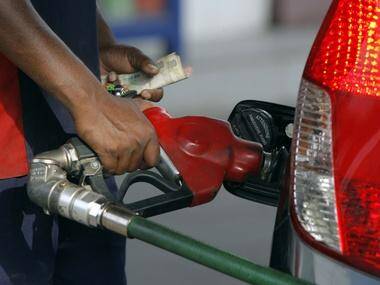
Petrol pump prices climbed to as high as N1,400 per litre across parts of Nigeria on Sunday, September 13, 2026, barely twenty-four hours after Dangote Petroleum Refinery raised its gantry price by N85 per litre. The refinery increased its Premium Motor Spirit gantry price from N1,265 to N1,350 per litre, a 6.7 per cent adjustment that took effect on Saturday, September 12. The decision, communicated to customers through a memo from the refinery’s Group Commercial Operations, directed marketers with existing loading arrangements to return their Automated Truck Certificates for repricing. Within hours, filling stations across Lagos, Ogun, Abuja and other states adjusted their pumps, with MRS stations selling at N1,400 per litre, NNPC Limited retail outlets at N1,375, and independent marketers matching the N1,400 mark. The development has heightened fears of another round of increases in transportation, logistics and production costs, with consumers bracing for the full impact in the coming days.
The increase is the fourth upward review of Dangote Refinery’s petrol gantry price since August 21. The refinery first raised its price from N1,165 to N1,185 per litre on August 21, moved it to N1,200 on August 26, then to N1,265 on August 29, and finally to N1,350 on September 12. In twenty-two days, the gantry price rose by N185 per litre, or approximately 15.9 per cent. Industry data showed that the PMS landing cost had already risen to about N1,311 per litre, meaning the refinery’s wholesale price now exceeds the cost of imported petrol. The surge in international crude oil prices above $100 per barrel, driven by supply concerns linked to the continuing conflict in the Middle East and disruptions around the Strait of Hormuz, has increased the cost of refined petroleum products and altered the economics of domestic fuel supply. Brent crude traded at about $104.60 per barrel over the weekend after earlier climbing above $107.
The impact on transport fares was immediate. In Lagos, a commercial driver plying the 7-Up Bus Stop, Ojota, to Victoria Island route increased his fare to N2,000 per passenger, blaming the latest adjustment. At the airport shuttle park in Ikeja, a bus conveying passengers from Ikeja to the NAHCO area charged N400 per person, up from N300. In Ogun State, the fare from Atan to Ojuore rose from N1,000 to N1,200. Commuters across major cities reported similar increases, with workers, students, traders and other Nigerians travelling daily to offices, schools and markets feeling the squeeze first. The National President of the Oil and Gas Services Providers Association of Nigeria, Mazi Colman Obasi, said the immediate trigger was the sharp rise in international crude oil prices. He noted that with Nigeria’s downstream market largely deregulated, pump prices are increasingly influenced by international crude prices, refined-product costs, freight, exchange rates and other supply-chain expenses. He warned that if crude prices remained above $100 per barrel, domestic petrol prices could come under additional pressure.
The Petroleum Products Retail Outlets Owners Association of Nigeria and the Independent Petroleum Marketers Association of Nigeria blamed the escalating United States-Iran conflict and the pricing of petroleum products by suppliers for the hike. PETROAN President Billy Gillis-Harry explained that retailers must sell according to what they buy from suppliers, insisting that retail outlets are not responsible for the increase. The associations have repeatedly called on the Nigerian National Petroleum Company Limited to strengthen domestic refining capacity to cushion the impact of global shocks.
For households, the pressure is showing in smaller food purchases, higher transportation costs and reduced spending on healthcare and education. A worker, Olabode Owoyemi, said he earned N130,000 in 2023, which he valued at about $433 at the time, when petrol sold for around N200 per litre. Today, he earns N300,000 but puts its dollar value at about $200, while petrol sells for around N1,300 per litre. Another Nigerian, Ayo Deji, illustrated the impact by comparing what N50,000 could buy previously with what it buys today. According to him, N50,000 previously bought about 263 litres of petrol but now buys only about 39 litres. Social commentator Peter Olawumi noted that N10,000 bought 40kg of cooking gas in 2011 but now buys only 6.9kg.
Businesses are caught in the same difficult cycle. Manufacturers are grappling with an intensifying energy-cost crisis, with spending on diesel and other alternative energy sources now consuming about half of production costs. Diesel crossed N2,000 per litre in Lagos and Ogun states, up from between N1,700 and N1,800 a few days earlier. The Manufacturers Association of Nigeria said production costs in the sector had risen by more than 400 per cent, with power-related expenses that previously accounted for about 40 per cent of operating costs now exceeding 50 per cent. Manufacturers’ expenditure on alternative energy rose from N782 billion in 2023 to N1.1 trillion in 2024 and further to N1.34 trillion in 2025. Spending in the first half of 2026 alone was already at par with the total recorded in 2025, underscoring the escalating cost of keeping factories running. The association warned that continued escalation in energy costs could force more firms to reduce production hours, cut jobs or shut down completely.
Ride-hailing operators are also struggling. Peter Obasi, who drives for inDrive, said fares displayed on the platform no longer cover his operating costs. He said he bought fuel at N1,400 per litre, describing the price as crazy. He explained that he often has to ask customers to add to the amount on the app, and if they refuse, he cancels the ride because it is not favouring his business.
Petroleum economist Professor Wumi Iledare said the justification for the latest increase could not be determined by comparing crude oil prices alone, noting that several components contribute to the final price of petrol. He said the movement in crude oil prices from $100 to $107 per barrel should be examined alongside the cost of refined products, logistics, primary margins, retail margins and distribution costs. He explained that petrol prices could rise faster than they decline because of the way costs are transmitted through the supply chain, describing the phenomenon as asymmetry in price transmission. He warned that eliminating the possibility of imported petroleum products could create a market dominated by a single supplier, giving the dominant refiner excessive influence over prices.
The increase has revived questions about the sustainability of Nigeria’s post-subsidy petroleum pricing regime and whether the emergence of large-scale domestic refining can significantly reduce the impact of global oil price volatility on Nigerian consumers. For now, households, transport operators and businesses are bracing for another round of cost increases, particularly if the upward movement in crude oil and product replacement costs persists. The coming weeks will show whether the government intervenes to cushion the impact or whether Nigerians must absorb yet another shock to their already stretched budgets.
📩 Stone Reporters News | 🌍 stonereportersnews.com
✉️ info@stonereportersnews.com | 📘 Facebook: Stone Reporters News | 🐦 X (Twitter): @StoneReportNew | 📸 Instagram: @stonereportersnews
Add comment
Comments