

Reported by: Oahimire Omone Precious | Edited by: Oravbiere Osayomore Promise.
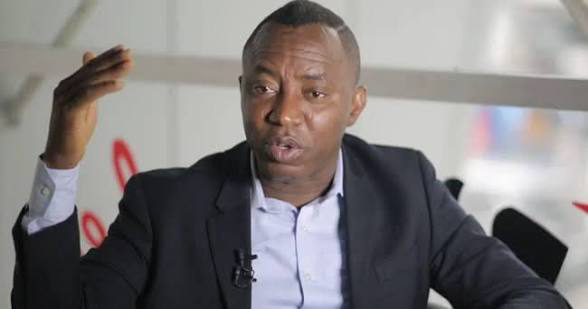
The African Action Congress presidential candidate, Omoyele Sowore, has described the opposition to his proposed ₦500,000 minimum wage for Nigerian workers as "wickedness" that has become an economic policy, in a statement that cuts to the heart of Nigeria's deepening inequality crisis. In a post on his official X handle on Monday, September 14, 2026, Sowore questioned why people earning as much as ₦30 million monthly would oppose a ₦500,000 minimum living wage for Nigerian workers, describing the situation as a disturbing reflection of a system that protects the wealthy while condemning the poor to starvation wages.
"The people earning a MAXIMUM WAGE of ₦30 MILLION every month are the loudest voices telling us that our ₦500,000 minimum living wage prescription for Nigerian workers is 'too much,'" Sowore wrote. "₦30 million for them is acceptable, but ₦500,000 for a Nigerian worker is inflationary?" He described as deeply troubling the fact that some low-income Nigerians were defending what he characterised as economic inequality on social media, arguing that paying workers a living wage should not be portrayed as an economic problem while significantly higher earnings remain acceptable for those at the top.
Sowore's intervention is the latest in a sustained campaign he has waged over the past several months to force a national conversation about the remuneration of Nigerian workers. In May 2026, he argued that a ₦500,000 minimum wage was not excessive for Nigerian workers, stressing that there was money for politicians and therefore there should be money for workers. In August, he led the #TakeItBack Movement in protests across Abuja and Lagos against the worsening economic situation, warning that Nigerian workers deserved nothing less than ₦500,000 per month. His position has been consistent and unflinching: the current minimum wage of ₦70,000 is grossly inadequate for workers to meet even their most basic needs.
"The current minimum wage of ₦70,000 is grossly inadequate for workers to meet even their most basic needs," Sowore said in a statement on September 4, 2026, adding the devastating observation that nobody, even a newborn baby, could live on ₦70,000. He has repeatedly pointed to the astronomical salaries and allowances of federal lawmakers, state governors, and political appointees, arguing that the same economic logic used to justify the suppression of workers' wages should apply to the excessive remuneration of the political class. "If a minimum wage of ₦500,000 per worker will cause inflation, why are Senators in Nigeria's National Assembly earning ₦30 million per month and always asking for more?" he asked.
The economic argument against a ₦500,000 minimum wage has been led by economists and policy analysts who warn that a more than seven-fold increase in the minimum wage could trigger a wage-price spiral, fuel inflation, and force small businesses to shed jobs. They argue that Nigeria's productivity levels cannot sustain such a significant increase and that the informal sector, which employs the vast majority of Nigerian workers, would be largely unaffected by a statutory minimum wage. These are legitimate concerns that cannot be dismissed, and Sowore has not provided a detailed fiscal framework for how the proposed wage would be funded or how the inflationary pressures would be managed.
But Sowore's counter-argument is equally compelling: the Nigerian economy is not a zero-sum game where the gains of the poor must come at the expense of the rich, or vice versa. The ₦30 million earned by a single senator every month is more than enough to pay the proposed ₦500,000 minimum wage to sixty Nigerian workers. The total annual remuneration of the 469 members of the National Assembly, including salaries, allowances, and constituency project funds, runs into hundreds of billions of naira. If the political class were to demonstrate even a fraction of the restraint that Sowore exercised as governor of Anambra State, there would be more than enough resources to fund a living wage for Nigerian workers without triggering runaway inflation.
The debate over the minimum wage is ultimately a debate about values and priorities. It is a question of what kind of society Nigerians want to build. Do they want a society where a senator earns ₦30 million a month while a teacher, a nurse, or a factory worker earns ₦70,000? Do they want a society where the wealthy are protected from the consequences of economic policy while the poor are told to tighten their belts? Sowore's answer is clear: the current system is not just economically unsustainable, it is morally indefensible. "Wickedness" becoming an economic policy is how he describes it, and his words resonate with millions of Nigerians who have watched the gap between the rich and the poor widen year after year.
As the 2027 elections approach, the minimum wage debate is likely to become a central campaign issue, particularly in a country where the cost of living has soared and the purchasing power of the average worker has been decimated by inflation and currency devaluation. Sowore's proposal may be ambitious, and the economic challenges of implementing it are formidable. But his willingness to challenge the status quo and demand a living wage for Nigerian workers has struck a chord that the political establishment cannot afford to ignore. The question now is whether the debate he has ignited will lead to meaningful change or whether it will be drowned out by the same voices that have defended Nigeria's wage inequality for decades.
📩 Stone Reporters News | 🌍 stonereportersnews.com
✉️ info@stonereportersnews.com | 📘 Facebook: Stone Reporters News | 🐦 X (Twitter): @StoneReportNew | 📸 Instagram: @stonereportersnews
Add comment
Comments