

Reported by: Ijeoma G | Edited by: Oravbiere Osayomore Promise.
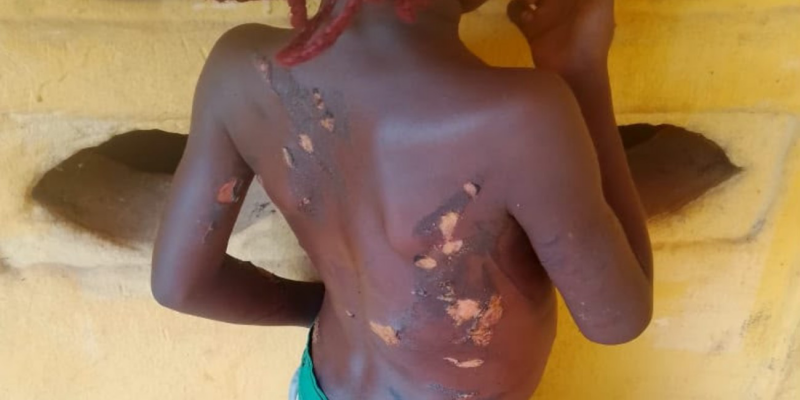
The seven-year-old girl was accused of taking meat from a pot. For that alleged offence, her mother pressed a hot knife against her skin, leaving wounds that police would later describe as "severe bodily injuries." The girl's name is Oluebube Ofoma. She is seven years old. And her mother, Ogechi Ofoma, 32, is now in a police cell at the Awada Police Station, facing the possibility of a long prison sentence for a crime that has shocked even the most hardened observers of Nigeria's child abuse crisis.
The Anambra State Police Command received the report in the evening of Sunday, September 13, 2026. The call came from the Ibollo community in Awada-Obosi, Idemili North Local Government Area, where neighbours and community security personnel had apparently been alerted to the sounds of a child in distress. When they arrived at the Ofoma residence, they found Oluebube with injuries so severe that the police spokesperson, SP Tochukwu Ikenga, would later confirm that preliminary information indicated the child had been subjected to "severe physical abuse, including injuries reportedly inflicted with a hot knife." The prompt intervention of the community security personnel and concerned residents led to the child's rescue and the arrest of her mother.
The Commissioner of Police, CP Nnanna Oji Ama, did not wait for a formal press inquiry. He immediately commenced collaboration with the Anambra State Commissioner for Women Affairs and Social Welfare, Esther Onyekesi, to ensure that the victim received urgent medical care, protection, and welfare support. In a statement issued on Monday, September 14, the police command said the investigation would be "thorough, professional, and uncompromising," adding that "the welfare, safety, and best interests of the child remain paramount." CP Ama commended the Ibollo community security personnel and residents whose "vigilance, courage, and public-spirited intervention" had helped save Oluebube from further harm. He assured the public that the command would continue to work with relevant agencies to protect vulnerable persons and ensure accountability in accordance with the law.
Esther Onyekesi, the Commissioner for Women and Social Welfare, described the alleged act as "inhumane and a gross violation" of the rights and dignity of a child. She commended the police for their prompt response and swift arrest of the suspect, noting that effective collaboration between security agencies and social welfare authorities remained crucial to addressing cases involving vulnerable persons. She reaffirmed the commitment of Governor Chukwuma Soludo's administration to creating a safer environment where children could grow free from violence and exploitation, warning that persons found culpable of violating the rights of children would face the full weight of the law. She also called on residents to remain vigilant and report suspected cases of maltreatment, molestation, neglect, or other threats to the safety of children to the appropriate authorities.
The case of Oluebube Ofoma is not an isolated incident in Anambra State. In June 2026, the Anambra State Police Command rescued 60 trafficked children and took another 60 cases of child abuse to court in a single month. In May 2026, five suspects were arrested for child abuse and sexual offences, including a father accused of infecting his daughter with HIV. In 2024, the state government rescued an 11-year-old girl, Happiness Nwafor, who had been brutalised by her guardian with a broken bottle, hot iron, and knife. And in 2026, the state's Gender-Based Violence Court sentenced a 59-year-old man to 10 years imprisonment for defiling a 14-year-old girl. The pattern is unmistakable: Anambra has a child abuse problem that is both deeply rooted and widely reported. Yet the cases keep coming.
What makes the Ofoma case particularly disturbing is the identity of the alleged perpetrator. This is not a stranger, a trafficker, or a guardian who took the child in out of pity. This is the child's mother. The person who carried her for nine months, who should have been her first protector, her first teacher, her first source of unconditional love. Instead, according to the police, she pressed a hot knife against her daughter's flesh over a piece of meat. It is a detail that defies comprehension. But it is also a reminder that child abuse in Nigeria is not always the work of monsters who lurk in the shadows. Sometimes, it happens in the kitchen, over dinner, in the ordinary moments of family life that should be the safest of all.
The police have promised a thorough investigation. The child is receiving medical care. The mother is in custody. But for the thousands of children across Nigeria who live with the daily threat of violence at the hands of the very people who are supposed to protect them, the rescue of Oluebube Ofoma is both a relief and a warning. It is a relief because she was saved. It is a warning because for every Oluebube who is rescued, there are countless others who are not. They suffer in silence, behind closed doors, in homes where the neighbours do not intervene and the authorities are never called. The question that now confronts Anambra State—and indeed the entire country—is not whether this mother will be prosecuted. The question is whether Nigeria is prepared to treat child abuse as the national emergency it has become.
📩 Stone Reporters News | 🌍 stonereportersnews.com
✉️ info@stonereportersnews.com | 📘 Facebook: Stone Reporters News | 🐦 X (Twitter): @StoneReportNew | 📸 Instagram: @stonereportersnews
Add comment
Comments