

Reported by: Oahimire Omone Precious | Edited by: Oravbiere Osayomore Promise.
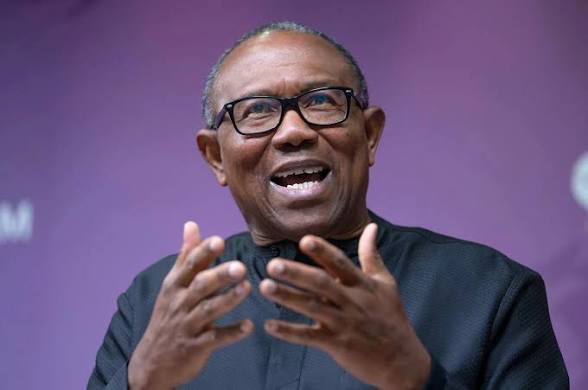
The Presidency has challenged the presidential candidate of the Nigeria Democratic Congress, Peter Obi, to honour his pledge to withdraw from the 2027 presidential race if claims that his administration left Anambra State with outstanding debts are proven. The challenge was issued by the Special Adviser to President Bola Tinubu on Information and Strategy, Bayo Onanuga, in a post on X on Wednesday, September 16, 2026, following fresh claims by the Anambra State Government about financial liabilities allegedly linked to Obi's tenure as governor.
Onanuga wrote, “Peter Obi claimed he left Anambra with a clean slate of debt and even threatened to quit the presidential race if his claims were proven otherwise.” He added that the state government had since “confronted him with facts and figures” on Water Corporation workers, teachers, pensions and gratuities. Onanuga also alleged that Obi borrowed for “frivolous things” while in office, and asked whether the former governor would follow through on his earlier threat to withdraw from the presidential race. “The ball is back in his court. Will he follow through on his threat by quitting the race?” he asked.
The dispute began after the Anambra State Commissioner for Information and Value Reorientation, Dr Law Mefor, issued a statement disputing Obi's claim that his administration left the state without outstanding liabilities. Mefor said Governor Chukwuma Soludo's administration had cleared about N22 billion in gratuity arrears inherited from previous administrations, and owed to retired state and local government employees and teachers. He said Obi's administration left outstanding loans, as well as arrears of salaries, pensions and gratuities, that subsequent administrations inherited.
According to the state government, eight external loans linked to projects implemented during or inherited by the Obi administration remain outstanding, with a combined balance of $92.35 million, put at N127.37 billion as of June 30, 2026. The loans covered malaria control, erosion management, healthcare, education, community development and agricultural value-chain development. Mefor said the government would not be drawn into a debate over which administration paid particular arrears, but maintained that some legacy liabilities dating back to previous administrations remained outstanding. He cited salary arrears owed to workers of the defunct Water Corporation, which he said persisted throughout Obi's tenure. He also alleged that Obi's administration verified and certified 16 months of salary arrears for primary school teachers but paid only five months.
Obi had earlier claimed his administration cleared more than N35 billion in historical gratuities and arrears and left office without outstanding salary, pension or gratuity obligations. He also disputed the government's claim about the ecological fund, saying more than N2.13 billion remained untouched in a First Bank account earmarked for the Oko/Umuchiana erosion crisis, in addition to over N75 billion in savings left behind by his administration. “If anybody can establish anything to the contrary, I will stop campaigning,” Obi said, challenging the state government or any other party to produce evidence contradicting his account.
The former governor, who served as Anambra State governor from 2006 to 2014, described the allegations as false, insisting that his administration cleared more than N35 billion in historical gratuities and arrears accumulated before he assumed office. He said at the time he handed over power, the state had no outstanding salaries, gratuities or pensions, while contractors whose projects had been duly executed and certified were also fully paid. Obi also challenged the claim surrounding the alleged N2 billion ecological loan, explaining that the money was released less than three months before the end of his tenure for the Oko/Umuchiana erosion crisis. According to him, he deliberately refused to spend the funds despite pressure to do so, choosing instead to leave the money for the incoming administration because it had been earmarked for a specific project.
The dispute has also drawn in the state government's claim that the account Obi identified was an Internally Generated Revenue Consolidated Revenue Account and not an ecological fund account. Mefor said the state government obtained a certified printout of the account and claimed that “from 2011 when the account was opened until date, there has never been any such amount—whether as inflow or balance—in the account.” Obi had challenged anyone who could establish that his account of the state's finances was incorrect, saying: “If anybody can establish anything to the contrary, I will stop campaigning.”
The Presidency's intervention adds a new dimension to a dispute that has been simmering for weeks and is now becoming a central issue in the lead-up to the 2027 general elections. The challenge places Obi in a difficult position. If he withdraws from the race, he would be honouring a pledge that he made publicly and that his supporters would expect him to keep. If he does not withdraw, the Presidency and the Anambra State Government will argue that he has been exposed as a politician who makes promises he does not intend to keep. Either way, the controversy has ensured that the question of Obi's financial record as governor will remain in the public eye for the foreseeable future.
The dispute comes amid heightened political realignments ahead of the 2027 general elections, with competing claims over the financial position inherited by successive administrations in Anambra State. For Obi, the challenge from the Presidency is a test of his credibility and his commitment to the standards of accountability that he has consistently demanded from others. For the Tinubu administration, it is an opportunity to portray the opposition candidate as someone whose record does not match his rhetoric. For the people of Anambra State, the debate over debts, savings and unpaid liabilities is a reminder that the management of public funds has consequences that outlast the tenure of any single administration. As the 2027 elections draw closer, the question of who is telling the truth about Anambra's finances will remain a contentious issue, and the answer may ultimately be determined not in press statements but in the court of public opinion.
📩 Stone Reporters News | 🌍 stonereportersnews.com
✉️ info@stonereportersnews.com | 📘 Facebook: Stone Reporters News | 🐦 X (Twitter): @StoneReportNew | 📸 Instagram: @stonereportersnews
Add comment
Comments