

Reported by: Ijeoma G | Edited by: Oravbiere Osayomore Promise.
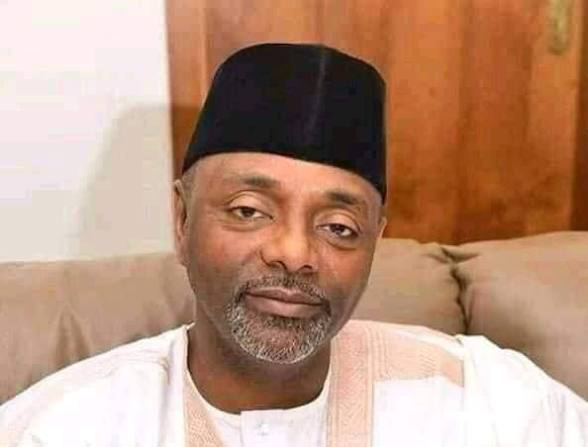
The Peoples Democratic Party in Kano State has named Alhaji Muhammad Sani Abacha, the eldest son of Nigeria's late military Head of State, General Sani Abacha, as its governorship candidate for the 2027 general elections, following the voluntary withdrawal of the party's earlier nominee, Muhammad Bello Dalhatu. The decision was taken on Wednesday, September 16, 2026, at an expanded state executive committee meeting held at the Nima Guest Palace in Kano, where the party conducted an affirmation and replacement primary that was witnessed by representatives of the Independent National Electoral Commission.
The Kano State PDP Chairman, Dr Bello Gambo Bichi, explained that the affirmation became necessary after Dalhatu, who had won the party's earlier primary, decided to step down following consultations among party stakeholders in Kano and at the party's national headquarters in Abuja. "The law says that as a result of withdrawal, a replacement primary must be held. That is what brought us here today. We have affirmed Muhammad Sani Abacha as the gubernatorial candidate of our great party in Kano State," Bichi said. The affirmation was followed by a replacement primary election in which Abacha was formally declared the winner by the chairman of the electoral panel, Dr Abba Abdullahi, who confirmed that the exercise followed the party's guidelines and relevant electoral regulations and that Abacha met all requirements for nomination.
Abacha's emergence marks a dramatic political comeback for a man who had contested the Kano governorship in three consecutive general elections and lost each time. In the 2023 governorship election, he came a distant third, trailing the All Progressives Congress and the eventual winner, the New Nigeria People's Party. His latest candidacy, however, is different, because it comes with a reconciliation agreement that party leaders say has finally resolved the internal divisions that have plagued the Kano PDP for years. As part of the unity deal, the party allocated the deputy governorship slot to the group led by former Minister of Special Duties, Kabiru Tanimu Turaki. The party subsequently named Alhaji Yusuf Ado Kibiya, a former factional chairman of the PDP and ex-Commissioner for Land and Agriculture in Kano State, as the deputy governorship candidate. "After wide consultation and reconciliation, we agreed to give the deputy governorship slot to the Turaki faction here in Kano. With this, there is no more faction in Kano PDP. We have reconciled," Bichi declared.
The reconciliation process extended beyond the governorship ticket. The party also replaced some of its National Assembly and State Assembly candidates to accommodate the Turaki faction, a move that party leaders said was designed to present a united front ahead of the 2027 polls. Bichi insisted that with the emergence of the new governorship candidate and his running mate, the party had been energised to defeat its rivals and win the next general election. "The party is now united and waxing stronger ahead of the polls," he said. The presence of INEC representatives at the affirmation and replacement primary added a layer of procedural legitimacy to a process that could have been challenged by rival factions.
Abacha's candidacy carries significant political symbolism. As the son of General Sani Abacha, who ruled Nigeria from 1993 until his death in 1998, he inherits a name that evokes deeply divided memories. For some, the Abacha era represents a period of authoritarian rule marked by human rights abuses and the suppression of dissent. For others, particularly in parts of northern Nigeria, it represents a time of stability, infrastructural development and a strong federal presence. Muhammad Sani Abacha has spent years trying to carve out his own political identity, separate from the shadow of his father. His repeated attempts to govern Kano State have been met with mixed electoral fortunes, and his latest candidacy will test whether the Abacha name still commands the kind of loyalty that can translate into votes at the ballot box.
The Kano governorship election is expected to be one of the most closely watched contests in 2027. Kano is Nigeria's most populous state and a critical battleground in the North-West. The ruling All Progressives Congress controls the state government, but the PDP's decision to field a candidate with deep name recognition and a reconciled party structure suggests that the opposition intends to mount a serious challenge. The APC's candidate for the 2027 election has not yet been formally announced, but the party is expected to field a strong contender to defend its hold on the state. The NNPP, which won the 2023 governorship, is also expected to be a factor, although its influence may have waned since the last election.
For Abacha, the road ahead is uncertain. He must convince a Kano electorate that has rejected him three times that he is now the right man for the job. He must hold together a party that has been fractured by years of internal disputes. He must present a vision for Kano that goes beyond his family name and resonates with voters who are grappling with poverty, unemployment and insecurity. The unity deal with the Turaki faction is a promising start, but it is only a start. The real work of campaigning, mobilising and persuading has just begun. As the 2027 elections draw closer, the people of Kano will be watching to see whether the son of the General can finally claim the prize that has eluded him for so long.
📩 Stone Reporters News | 🌍 stonereportersnews.com
✉️ info@stonereportersnews.com | 📘 Facebook: Stone Reporters News | 🐦 X (Twitter): @StoneReportNew | 📸 Instagram: @stonereportersnews
Add comment
Comments