

Reported by: Ijeoma G | Edited by: Oravbiere Osayomore Promise.
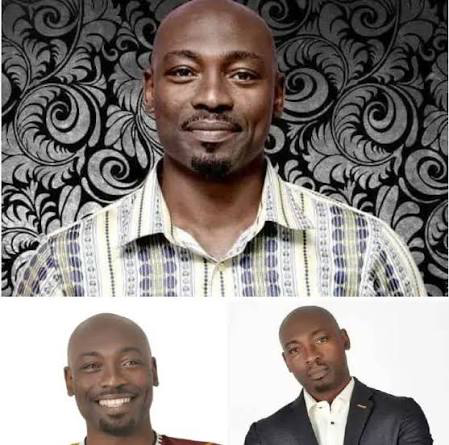
Veteran Nollywood actor Joseph Okechukwu has sparked a fierce national conversation after alleging that the Federal Government deliberately brought Chinese nationals into Nigeria in large numbers to destroy Igbo businesses. His comments came in reaction to the protest by Igbo traders at the Lagos International Trade Fair Complex, where demonstrators carried placards demanding the removal of Chinese merchants from retail trading spaces within the market.
In a social media post on Wednesday, September 16, 2026, Okechukwu questioned the motives behind what he described as the unchecked expansion of Chinese participation in Nigerian retail markets. "They brought Chinese people into Nigeria in large numbers to destroy Igbo businesses," he alleged. He further claimed that some Yoruba landowners were complicit in the process. "Yorubas are even giving their lands free to the Chinese just to destroy Igbo businesses. They don't know us Igbos." His assertion that Yoruba landlords were handing land to Chinese investors at no cost, with the alleged intention of undermining Igbo commercial dominance, has drawn sharp reactions across ethnic and political lines.
The actor, however, expressed optimism about the economic future of the South-East. "Manufacturing companies will soon start springing up everywhere in the South East," he said, adding that economic development in Ala Igbo must begin immediately. His message combined grievance with a call for regional self-reliance, urging Igbo traders and entrepreneurs to shift from dependence on external markets and supply chains towards building industrial capacity in their home region.
The protest at the Lagos Trade Fair Complex, which occurred on Monday, September 14, 2026, was driven by traders who alleged that Chinese businesses had moved beyond wholesale importing into direct retail trading, renting shops and building warehouses where they sold goods directly to consumers. One trader told reporters that Chinese businesses were undercutting local prices, contacting customers directly using phone numbers obtained from waybills, and rendering Nigerian retailers redundant. "We no longer make sales," he said. "If you import goods, they slash their prices lower than our own and sell to our customers." The protest was later suspended after intervention by the Traders Association leadership, local government officials, and the police, but the underlying tensions remain unresolved.
The police response to the protest has itself become a source of controversy. The Area E Commander, ACP Chike Oti, described the protesters as "miscreants" and "disgruntled fellows," announcing that arrests would be made. The Lagos State Commissioner of Police, Tijani Fatai, deployed officers to the market to maintain order, while the Amuwo-Odofin Local Government Chairman, Prince Lanre Sanusi, insisted there was no conflict between Nigerian and Chinese traders. The police framing of the protesters as miscreants rather than aggrieved business owners has angered many Nigerians, who argue that the state is prioritising the protection of foreign commercial interests over the survival of local traders.
The economic substance of the traders' grievance is not easily dismissed. Nigerian retail trade has long been protected by regulations that reserve certain categories of trading for citizens, but enforcement has been weak. Chinese manufacturers and wholesalers with access to cheaper credit, economies of scale, and direct import channels have increasingly encroached into retail spaces, squeezing out Nigerian middlemen. The complaint that Chinese businesses were obtaining customers' contact details from waybills and contacting them directly speaks to a deeper structural problem: the collapse of the traditional supply chain that sustained thousands of Nigerian traders. If wholesalers become retailers, the middleman is eliminated, and with him, the livelihoods of entire families.
The allegation of deliberate government involvement in bringing Chinese nationals into the country to destroy Igbo businesses is a serious claim that remains unverified. The Federal Government has not responded to Okechukwu's comments, and there is no public evidence to support the assertion that Chinese traders were imported for the specific purpose of destroying Igbo commerce. What is clear is that the trade fair protest has exposed genuine anxieties among Nigerian traders about their diminishing competitiveness in their own market, and that those anxieties are increasingly being expressed in ethnic terms.
Okechukwu's claim that Yoruba landowners were giving land to Chinese investors for free also raises questions about inter-ethnic relations in Lagos and the wider South-West. While tensions between Igbo traders and Yoruba landlords have historically existed in Lagos markets, particularly around rent, land allocation, and market leadership, the allegation of deliberate collaboration with foreign investors to undermine Igbo businesses is a significant escalation. It is a claim that, if left unaddressed, could deepen ethnic divisions at a time when the country is already grappling with political tensions ahead of the 2027 elections.
The actor's call for manufacturing investment in the South-East is, however, a constructive counterpoint to the sense of grievance. Igbo traders have long dominated distribution and retail networks across Nigeria and West Africa, but their dependence on imported goods makes them vulnerable to currency fluctuations, import restrictions, and the predatory pricing of foreign wholesalers. Building manufacturing capacity in the South-East would reduce that vulnerability and create local jobs. It is a message that resonates with a broader push by South-East leaders for industrialisation and regional economic integration.
The Lagos Trade Fair Complex remains calm following the suspension of the protest, but the underlying issues have not been resolved. Traders are still competing with Chinese merchants in retail spaces. The police are still threatening arrests. The government has not clarified its policy on foreign participation in retail trade. And the ethnic framing of the dispute continues to deepen. Okechukwu's intervention has added fuel to a fire that was already burning. Whether his allegations are substantiated or not, they have exposed a raw nerve in Nigeria's commercial life and raised uncomfortable questions about who benefits from the country's trade policies, and who pays the price.
Stone Reporters News | 🌍 stonereportersnews.com
✉️ info@stonereportersnews.com | 📘 Facebook: Stone Reporters News | 🐦 X (Twitter): @StoneReportNew | 📸 Instagram: @stonereportersnews
Add comment
Comments