

Reported by Ariajegbe Sylvia Esezobor
A first-of-its-kind international counter-terrorism operation coordinated by INTERPOL has identified 126 foreign terrorist fighters after analysing more than 108,000 facial images extracted from visual content published by jihadist groups, in a five-day exercise that harnessed artificial intelligence and facial recognition to disrupt terrorist networks operating in the digital domain.
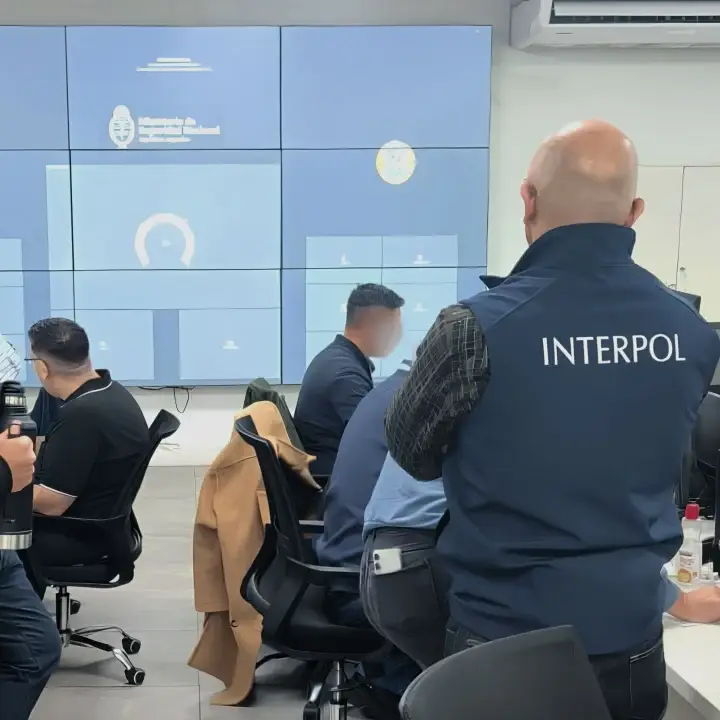
Operation Shams II, held from June 1 to 5, 2026, in Tunis, Tunisia, brought together 28 specialised officers and experts from 11 countries, including Nigeria, Côte d’Ivoire, Ghana, Iraq, Kenya, Malaysia, the Philippines, Qatar, Tajikistan, Tunisia, and Uzbekistan. Law enforcement officers extracted 108,076 facial images from visual material published by jihadist groups during the coordinated action. Programmed AI agents and advanced AI-generated scripts were used to automate parts of the data collection and investigative processes, enabling the system to deduplicate and quality-check the images, narrowing the dataset to 6,362 unique, high-quality facial images ready for processing through INTERPOL’s Facial Recognition System.
In addition to the images obtained from online platforms, officers from INTERPOL’s National Central Bureau in Baghdad, Iraq, provided a large intelligence dataset related to terrorism suspects, adding hundreds more images for extraction and processing. The AI-generated output was subject to review and verification by trained officers and analysts in accordance with INTERPOL’s Rules on the Processing of Data, a critical safeguard ensuring that the technology complemented rather than replaced human judgment.
To date, 126 foreign terrorist fighters have been identified from the images processed. The matches are expected to enrich existing intelligence on suspects, including potential locations and social networks, and the data is now being integrated into INTERPOL’s databases to reinforce global efforts to detect, track and disrupt terrorist movements worldwide. Investigative leads identified during the operation are already being used to support judicial procedures in participating countries, including one case targeting two currently detained suspected foreign terrorist fighters. With thousands more images yet to be processed, further comparisons are ongoing and may identify additional leads.
Beyond facial identification, Operation Shams II employed cutting-edge cryptocurrency tools to trace illicit funding, leading to three urgent requests to a Virtual Asset Service Provider to disclose customer data aimed at disrupting terrorist financing flows. Participating countries also met with representatives of the online gaming industry to address youth radicalisation in online environments, strengthening cross-sector cooperation and identifying opportunities to improve information sharing.
María Carmen Muñoz González, INTERPOL’s Director of Counter-Terrorism, said the success of Operation Shams II demonstrated the value of combining international law enforcement cooperation with responsible AI-assisted analytical capabilities. “The operational model provides a strong foundation for supporting future international law enforcement cooperation targeting criminal actors around the world,” she said.
The operation was carried out under the CT TECH+ Project, funded by the European Union’s Foreign Policy Instruments and supported by the United Nations Office of Counter-Terrorism. The involvement of the UN and the EU underscores the growing international consensus that counter-terrorism in the digital age requires both technological innovation and robust multilateral frameworks.
For Nigeria, participation in Operation Shams II signals a deepening engagement with international counter-terrorism mechanisms. Nigeria has long been on the front lines of the fight against jihadist groups, particularly Boko Haram and the Islamic State West Africa Province, which have operated in the Lake Chad Basin region for more than a decade. The country’s participation in a digital intelligence-sharing operation reflects a recognition that the battle against terrorism is increasingly fought not only on the ground but in the digital spaces where extremist groups recruit, radicalise and coordinate.
The identification of 126 foreign terrorist fighters represents a significant achievement, but it also highlights the scale of the challenge. The sheer volume of jihadist content published online, from which more than 108,000 facial images were extracted in just five days, illustrates the vast digital footprint that extremist groups maintain. The fact that only 6,362 images were deemed unique and high-quality enough for processing suggests that much of the content is duplicative, but it also points to the labour-intensive nature of the work and the critical role that AI played in filtering and prioritising leads.
The operation’s focus on cryptocurrency tracing and online radicalisation reflects an evolving understanding of how terrorist networks operate. Terrorist financing has increasingly moved into digital assets, exploiting the anonymity and speed of cryptocurrency transactions to move funds across borders. The three urgent requests to a Virtual Asset Service Provider indicate that INTERPOL and its partners are adapting their methods to this new reality. Similarly, the engagement with the online gaming industry recognises that radicalisation does not occur in isolation but in the same digital spaces where young people socialise, play and communicate.
The AI dimension of Operation Shams II has drawn particular attention. INTERPOL’s emphasis on human verification of AI-generated output addresses a central concern about the use of artificial intelligence in law enforcement: the risk of false positives and the potential for technology to entrench existing biases. By subjecting every AI-generated match to review by trained officers, INTERPOL has sought to balance the efficiency gains of automation with the accuracy and accountability that criminal investigations demand.
The participating countries span Africa, the Middle East, Asia and Southeast Asia, reflecting the transnational nature of the terrorist threat. The inclusion of Nigeria, Kenya, Ghana and Côte d’Ivoire points to growing recognition that African countries are both targets of and staging grounds for terrorist activity. The presence of Iraq, which provided a substantial intelligence dataset, underscores the continued relevance of conflict zones as sources of terrorist recruitment and movement.
The identification of 126 foreign terrorist fighters is a tangible outcome, but the operation’s broader significance lies in the model it establishes. By combining AI-assisted analysis with human verification, by integrating cryptocurrency tracing and by engaging the private sector on radicalisation, Operation Shams II offers a template for how international law enforcement can operate in the digital age. As thousands of images remain to be processed and further comparisons are ongoing, the operation may yet yield additional leads and identifications. What is already clear is that the fight against terrorism is no longer confined to battlefields or borders. It is being waged in the data, in the algorithms and in the online spaces where extremist networks seek to hide. For INTERPOL and its partners, Operation Shams II represents not just a successful mission but a proof of concept for a new era of counter-terrorism cooperation.
📩 Stone Reporters News | 🌍 stonereportersnews.com
✉️ info@stonereportersnews.com | 📘 Facebook: Stone Reporters News | 🐦 X (Twitter): @StoneReportNew | 📸 Instagram: @stonereportersnews
Add comment
Comments