

Reported by Ariajegbe Sylvia Esezobor
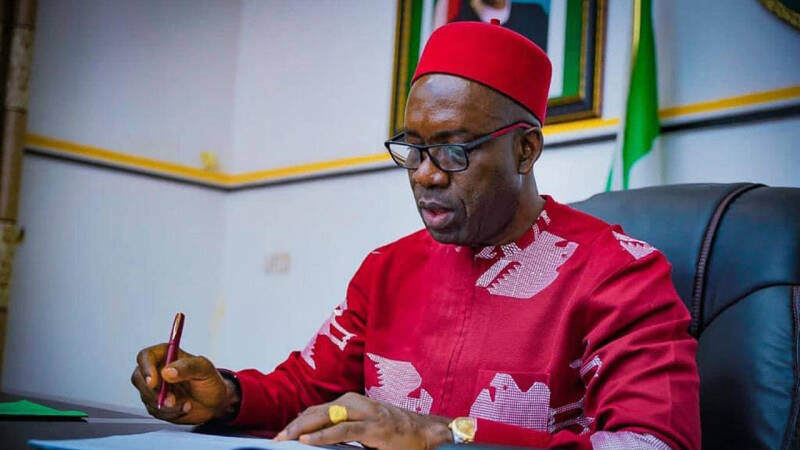
Anambra State Governor Chukwuma Soludo has granted a pardon to convicted native doctor Chidozie Nwangwu, popularly known as Akwa Okuko Tiwara Aki, and appointed him Ambassador for Youth Reformation, in a move that completes a judicial directive issued at his sentencing and signals a shift from punishment to what the state describes as correction and restoration.
Soludo signed the order for Nwangwu's immediate release on Friday, September 18, 2026, during an inspection visit to the Correctional Centre in Amawbia, where he also assessed the welfare and wellbeing of inmates. The governor subsequently inspected the custodial facility at Waterside, Onitsha, as part of a broader review of correctional facilities in the state. The pardon was announced by the Special Adviser to the Governor on Youth Reformation, Dr Nelson Omenugha, who said the governor had visited the prison in fulfilment of his duties when he made the announcement. "Thank you, Mr Governor, Prof. Charles Chukwuma Soludo, CFR, for graciously extending your hand of mercy to Chidozie Nwangwu and giving him a new responsibility as Ambassador for Youth Reformation," Omenugha said. "This is the heart of Youth Reformation: not just punishment, but correction, restoration, a new purpose and a new Onye Anambra."
Nwangwu's path to the pardon began in February 2025, when he was arrested by operatives of the Agunechemba Security outfit, a task force launched by the Soludo administration following the signing of the Anambra State Homeland Security Law 2025. The law, enacted to curb criminality linked to native doctors and fraudulent spiritual practices, declared certain categories of practitioners persona non grata and paved the way for the launch of Agunechemba and Operation Udo-ga-chi. Nwangwu was among eight native doctors arrested in 2025 and was charged with involvement in the promotion of money rituals, quick wealth, and the use of human parts for rituals.
He was convicted on February 27, 2026, by the Anambra State High Court sitting in Awka. The court sentenced him to two years imprisonment, ruling that part of the sentence would run concurrently with the period he had already spent in custody, leaving him with eleven months to serve. He was also fined sixty million naira. Justice Jude Obiorah, who presided over the case, ordered the demolition of Nwangwu's shrine in Oba, Idemili South Local Government Area, which the Anambra State Government subsequently executed. As part of the court's directives, Nwangwu was ordered to renounce Oke-ite and related charm practices, make public statements against such practices, and serve as an ambassador for youth reorientation upon completion of his sentence. He accepted the conditions and had been serving his prison term at the Nigeria Correctional Service facility in Amawbia until Soludo exercised the prerogative of mercy.
The court's sentencing framework, which tied the completion of Nwangwu's sentence to a youth reorientation role, made the pardon a logical extension of a judicial directive rather than a departure from it. Nwangwu was expected to take up the role prescribed under the court's directives, including publicly speaking against the practices he was previously associated with. The pardon formalises his transition from convict to ambassador and places him within the state's youth reformation architecture, which is overseen by Omenugha, a special adviser appointed in July 2026.
The pardon comes amid a broader crackdown on native doctors in Anambra State that has generated significant controversy. The Anambra State Government has framed the Homeland Security Law 2025 as a sanitation exercise rather than an attack on traditional religion, with officials arguing that the law targets fake and evil native doctors and false prophets who deceive the gullible populace. In July 2026, a native doctor known as Onyeze Jesus was sentenced to six years imprisonment and fined twenty million naira under the same law. However, the crackdown has sparked outcry from traditional medicine practitioners, who staged protests against what they described as selective justice and a witch-hunt by the Soludo administration. US-based pharmacist and activist criticised the governor over his comments linking native doctors to killings in Anambra, arguing that the law criminalised traditional practices such as Oke ite and Ibobo. In October 2025, Soludo outlined conditions under which he could consider the release of detained native doctors, stressing that due process must run its course before any pardon could be considered. The pardon of Nwangwu, who had been convicted and sentenced, fulfils the sequence Soludo had set out: conviction first, then pardon.
For Nwangwu, the pardon represents a remarkable turn in a public life that saw him rise to national prominence as one of Anambra's most flamboyant and controversial native doctors, only to be arrested, convicted, fined, stripped of his shrine and incarcerated. His new role as Ambassador for Youth Reformation places him at the centre of the state's efforts to steer young people away from the practices he once promoted. Whether his example will serve as a deterrent or a redemption narrative remains to be seen, but the state has framed the outcome as proof of its commitment to correction and restoration rather than retribution alone. Nwangwu is expected to make public statements discouraging the practices he was convicted of promoting, and his appointment is designed to lend the youth reformation programme a voice with credibility among those most at risk of being drawn into money rituals and quick-wealth schemes.
For Soludo, the pardon carries political and policy significance. It demonstrates that the Homeland Security Law is not merely punitive but capable of producing rehabilitated ambassadors, a narrative the administration will be keen to promote as it defends the crackdown against accusations of religious persecution. It also fulfils a judicial directive that might otherwise have become a source of embarrassment had Nwangwu remained in prison beyond the period the court intended him to serve. The governor's visit to the correctional facilities at Amawbia and Onitsha underscored his administration's stated focus on the welfare of inmates, a theme that aligns with the youth reformation agenda he has prioritised. As Nwangwu begins his new role, the attention now shifts to whether the ambassador can deliver the message the state expects, and whether his redemption will be accepted by the communities he is meant to influence.
📩 Stone Reporters News | 🌍 stonereportersnews.com
✉️ info@stonereportersnews.com | 📘 Facebook: Stone Reporters News | 🐦 X (Twitter): @StoneReportNew | 📸 Instagram: @stonereportersnews
Add comment
Comments