

Reported by Ariajegbe Sylvia Esezobor
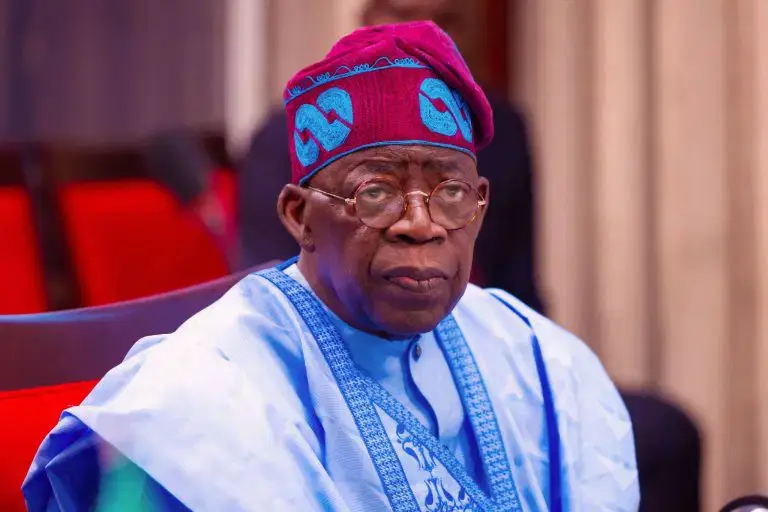
President Bola Tinubu will deliver a nationwide broadcast on October 1, 2026, as part of a deliberately modest programme of activities marking Nigeria's 66th Independence Anniversary, the Federal Government has announced, unveiling a schedule that places reflection and reform messaging ahead of the pomp and ceremony that have traditionally accompanied the occasion.
The Office of the Secretary to the Government of the Federation disclosed the plans on Thursday following the inauguration of an Inter-Ministerial Committee responsible for organising the anniversary in Abuja. The committee is chaired by the Secretary to the Government of the Federation, Senator George Akume, who was represented at the inaugural meeting by the Permanent Secretary, Political and Economic Affairs Office, Mrs Bekearedebo Augusta Warrens.
Akume said the anniversary provided an opportunity for Nigerians to reflect on the contributions, sacrifices and enduring legacies of the nation's founding fathers and heroines who worked for independence from colonial rule, noting that the achievements recorded since October 1, 1960, were built on the foundation laid by the country's nationalists. He said the celebration would also allow the administration to showcase its achievements and highlight efforts being undertaken to reposition the country through its reform initiatives, against the backdrop of the socio-economic challenges confronting the nation.
According to the programme unveiled by the committee, activities will commence with a World Press Conference on Thursday, September 24, followed by a Juma'at Service on Friday, September 25, and a Church Service on Sunday, September 27. An Independence Day Public Lecture is scheduled for Wednesday, September 30, while President Tinubu's nationwide broadcast will hold on Thursday, October 1. Akume emphasised that activities for this year's celebration would be low-key, urging members of the committee to work with urgency given the limited time before October 1.
The committee comprises senior government officials including the Minister of Finance and Coordinating Minister of the Economy, Taiwo Oyedele; the Minister of Information and National Orientation, Mohammed Idris; the Minister of Interior, Olubunmi Tunji-Ojo; the Minister of Foreign Affairs, Bianca Odumegwu-Ojukwu; the Minister of the Federal Capital Territory, Nyesom Wike; and the Minister of Budget and Economic Planning, Abubakar Atiku Bagudu. Others are the National Security Adviser, Nuhu Ribadu; the Special Adviser to the President on Policy Coordination, Hadiza Bala Usman; the Special Adviser on Information and Strategy, Bayo Onanuga; and the Special Adviser on Media and Public Communications, Sunday Dare. The Inspector-General of Police, Olatunji Disu; the Director-General of the Department of State Services, Adeola Ajayi; the Commander of the Guards Brigade, Brigadier General Adebisi Onasanya; and permanent secretaries from key ministries and offices are also members.
The decision to scale down the celebrations is consistent with a pattern that has defined Independence Day commemorations in recent years. The 65th anniversary in 2025 was marked by the cancellation of the traditional military parade, a decision that drew widespread criticism at the time. The Tinubu administration has preferred modest ceremonies that emphasise governance and reform messaging over public spectacle, a posture that officials argue reflects the economic realities facing ordinary Nigerians. The 2026 celebration, with its press conference, religious services, public lecture and broadcast, follows the same template.
The low-key approach has already drawn sharp criticism from the opposition. Demola Olarewaju, Special Assistant on Digital Media and Strategy to former Vice President Atiku Abubakar, said the ruling All Progressives Congress has reduced Independence Day to a private affair because public celebration would expose the government's failures. "Almost every Independence Day anniversary under APC since 2015 has been lowkey, because APC is a party of sadists," Olarewaju wrote on X. "Of course it'll be bad optics to be celebrating publicly while Nigerians are suffering under APC. So they celebrate it in private — and we're not invited." He argued that Independence Day belongs to the people, not the ruling party, and linked the muted celebrations to the hardship confronting ordinary Nigerians.
The Presidency has not issued a formal response to the criticism. Officials have consistently defended the modest approach as a reflection of the administration's focus on delivering governance rather than organising ceremonies. The decision to include a public lecture in the programme suggests the government intends to frame the anniversary as an occasion for substantive reflection on Nigeria's trajectory, rather than a purely ceremonial event. The religious services — a Juma'at Service and a Church Service — reflect the administration's emphasis on national unity across faith lines, a recurring theme in Tinubu's public messaging.
The 66th Independence Anniversary falls at a pivotal moment in Nigeria's political calendar. The 2027 general elections are less than four months away, with the presidential and National Assembly elections scheduled for January 16, 2027, and the governorship and state assembly elections for February 6. Tinubu is seeking a second term, and his Independence Day broadcast will be closely watched for signals about his campaign priorities and his assessment of the country's direction. The public lecture on September 30 is expected to address broader questions about governance, economic reform and national development, themes the administration has prioritised since assuming office in 2023.
For Nigerians, the anniversary offers a moment to take stock of a country that has travelled 66 years from independence. The achievements recorded since 1960 are undeniable — a resilient democracy, a vibrant civil society, a cultural influence that extends across the continent and beyond — but so are the challenges: persistent insecurity, economic hardship, infrastructural deficits and a cost-of-living crisis that has pushed millions into poverty. Akume acknowledged this duality in his remarks, saying the celebration would showcase the administration's achievements and reform efforts "against the backdrop of the socio-economic challenges confronting the nation." Whether Nigerians see in the October 1 broadcast a message of hope or a rehearsal of familiar promises will depend on how they assess the administration's record three years into its tenure. What is certain is that the programme unveiled on Thursday is a far cry from the elaborate parades and festivities of earlier decades. In a country where Independence Day was once marked with military parades, fireworks and national fanfare, the 66th anniversary will be a quieter affair — a reflection, perhaps, of the mood of a nation that is still searching for the full promise of its independence.
📩 Stone Reporters News | 🌍 stonereportersnews.com
✉️ info@stonereportersnews.com | 📘 Facebook: Stone Reporters News | 🐦 X (Twitter): @StoneReportNew | 📸 Instagram: @stonereportersnews
Add comment
Comments