

Reported by Ariajegbe Sylvia Esezobor
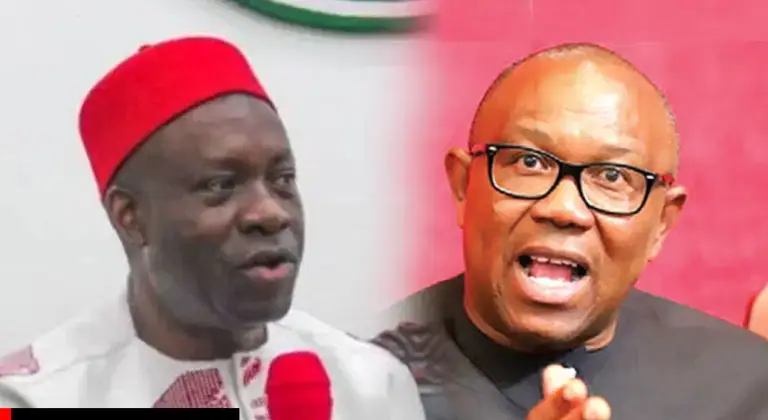
The financial records of a governorship that ended more than a decade ago have become the central battleground of Nigeria's 2027 presidential campaign, as the Anambra State Government and the campaign of former Governor Peter Obi trade accusations over loans, unpaid bills, and the selective use of data to rewrite history.
At the heart of the dispute is a simple question: when Peter Obi left office on March 17, 2014, did he leave Anambra State in debt, or did he leave it with savings? The answer depends entirely on which records one chooses to believe, and both sides have produced documents they insist settle the matter.
The Anambra State Government, through Commissioner for Information and Value Reorientation Dr Law Mefor, released what it described as public debt records showing that eight external loans contracted during Obi's tenure remained outstanding. The government put the original value of those loans at $123.77 million, with an outstanding balance of $92.35 million as of June 30, 2026, equivalent to N127.37 billion at the official exchange rate. Mefor said monthly deductions from the state's Federation Account Allocation Committee revenue were still servicing the loans, and that the government had a duty to set the record straight after Obi reiterated his claim that he left no debts.
The government's case rests on a claim about what Obi did with the money he borrowed. Mefor alleged that Obi spent about $4.05 billion during his eight years in office, equivalent to N5.4 trillion at the current exchange rate, yet left the state without functioning water schemes, with dead public schools and hospitals, and with 44 per cent of communities lacking public primary schools. The implication is clear: Obi borrowed heavily, spent heavily, and left the state worse off than his supporters claim.
But the response from Obi's camp, articulated most forcefully by his media aide Valentine Obienyem in a Vanguard column published on September 19, accuses the Soludo administration of weaponising revisionist history and economic illiteracy. Obienyem argues that the government's figures are manipulated, that they conflate multilateral development credits with commercial debt, and that they judge historical expenditures through the prism of today's inflated exchange rates. "In public governance, nothing exposes intellectual bankruptcy quite like the weaponisation of revisionist history and economic illiteracy," he writes.
The most damaging admission came from Mefor himself. During an appearance on Arise Television's Morning Show on September 18, the commissioner conceded that he had not actually verified how much of the $123 million loan Obi's administration drew down. When informed that Debt Management Office records showed only $30 million was actually drawn, Mefor said he did not check properly before issuing his press statement and would approach the DMO for confirmation. The admission undercuts the government's central claim and lends weight to the argument that the debt figures were released without adequate verification.
Obi's counter-claim is that he left the state with savings, not debts. His handover note, released publicly, showed a net balance of N86.67 billion, including local investments valued at N27 billion and foreign currency investments of $156 million, valued at N26.5 billion. He said his administration cleared more than N35 billion in historical gratuities and arrears and handed over the state without outstanding salary, pension or gratuity obligations. He specifically disputed the claim concerning a N2 billion ecological fund, saying the money was released shortly before he left office for the Oko/Umuchiana erosion crisis and was left untouched in a First Bank account.
The Anambra government disputes the handover note, saying the account in question was an Internally Generated Revenue Consolidated Revenue Account, not an ecological fund account, and that it never held the amount Obi claims. The government also alleges that Obi owed verified salaries, gratuities and pensions to retired teachers and water corporation staff, and that "survivors still testify" to the debts he left behind.
The dispute has drawn in the highest levels of Nigeria's political establishment. The Presidency, through Special Adviser on Information and Strategy Bayo Onanuga, challenged Obi to honour his pledge to quit the 2027 presidential race if the debt claims were proven. "Mr Obi's eight years were an unmitigated failure, now masked by revisionism," Onanuga said. Minister of Aviation Festus Keyamo accused critics of double standards, saying it was hypocritical to scrutinise President Tinubu's Lagos tenure while rejecting checks on Obi's Anambra administration.
The politics of the dispute are impossible to ignore. Obi is seeking the presidency on the platform of the Nigeria Democratic Congress, while Governor Chukwuma Soludo has endorsed Tinubu for a second term and declared that his party, the All Progressives Grand Alliance, will not field a presidential candidate. The debt dispute has therefore become a proxy battle in a wider contest over Anambra's votes and the credibility of Obi's record as a public official. The timing, less than four months before the presidential election, is not coincidental.
What is missing from the public debate is an independent reconciliation of the figures. The Debt Management Office, which both sides cite, has not issued a public statement reconciling the competing claims. The state government has not released the primary loan documents it says support its case. Obi's camp has released its handover note, but the government disputes its authenticity and the nature of the accounts it describes. Until an independent audit settles the matter, the dispute will continue to be fought in the media and on the campaign trail, with each side presenting its version of what happened when Peter Obi left office in March 2014.
For now, both sides remain entrenched. The government says the deductions continue and the loans remain outstanding. Obi's camp says the handover documents prove otherwise and accuses the state government of fabricating evidence to damage his campaign. What is certain is that the battle over Obi's Anambra legacy has become the defining issue of the early 2027 campaign, and the coming weeks will determine whether it damages his candidacy or rebounds against those who sought to use it against him.
📩 Stone Reporters News | 🌍 stonereportersnews.com
✉️ info@stonereportersnews.com | 📘 Facebook: Stone Reporters News | 🐦 X (Twitter): @StoneReportNew | 📸 Instagram: @stonereportersnews
Add comment
Comments