

Reported by Ariajegbe Sylvia Esezobor
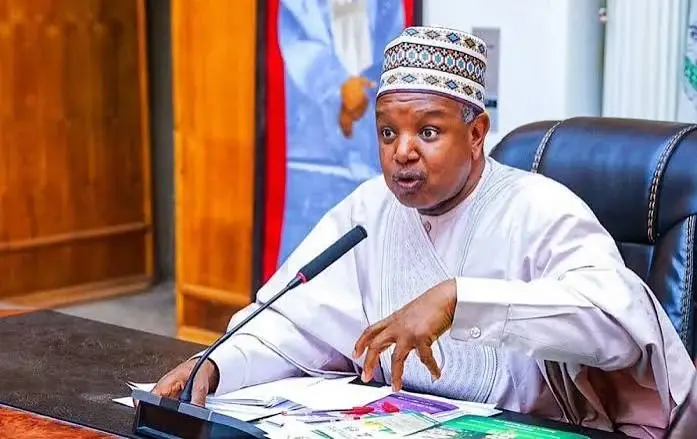
The Minister of Budget and Economic Planning, Senator Abubakar Atiku Bagudu, has declared that Nigeria’s national budget is too small to deliver the level of development the country desires, warning that the economy will continue to disappoint until the nation makes the right fiscal choices and mobilises significantly more resources.
Bagudu made the declaration on Monday, September 28, 2026, at the 2026 Senate Press Corps Capacity-Building Workshop in Abuja, themed “Leveraging Legislative Oversight and Media Collaboration to Safeguard the National Budget from Unlawful Insertions.” He said the debate over the national budget should go beyond allegations of unlawful insertions and focus on a more fundamental question: what should Nigeria’s national budget be, and what level of resources does the country require to achieve its development ambitions?
According to the minister, Nigeria has the smallest national budget among the world’s ten most populous countries, warning that the country cannot expect to achieve the same development outcomes as nations with significantly larger fiscal capacity. The ten most populous countries are India (about 1.48 billion people), China (about 1.41 billion), the United States (about 349 million), Indonesia (about 288 million), Pakistan (about 259 million), Nigeria (about 242 million), Brazil (about 214 million), Bangladesh (about 178 million), Russia (about 144 million) and Ethiopia (about 136–139 million). Nigeria’s 2026 budget stands at N68.32 trillion, approximately $49 billion. By comparison, Pakistan’s budget for the year is about $67 billion, while Brazil’s 2025 federal budget was at least 25 times the size of Nigeria’s budget, despite a broadly comparable population and a federal structure comprising federal, state and municipal governments.
“This economy is a small economy, and it will continue to disappoint until we get it right,” Bagudu said. He cited Nigeria’s low revenue-to-GDP ratio as a key constraint on government expenditure relative to the country’s needs, noting that the country had historically operated with limited fiscal space. He said the key question was whether Nigeria should continue to budget strictly according to its existing resources or develop the confidence, policies and public support required to mobilise more resources for economic transformation. “In trying to think about it, we should have some ideas. I don’t have one definitive answer, but I would say that of the 10 most populous countries in the world, Nigeria has the smallest national budget,” he said. “That is why, in 2023, our President began to talk about the Renewed Hope Agenda, which is an invitation to Nigerians to appreciate that we are not where we want to be, but we are at a point where we want to be better.”
The minister linked the issue of resource mobilisation to public confidence, particularly regarding revenue generation and borrowing. He said borrowing is subject not only to legal approval by the National Assembly but also to public acceptance of the need for additional resources. “If people do not support borrowing, the National Assembly will not allow borrowing,” he said. He argued that countries which successfully transformed their economies had made deliberate choices to move beyond their existing limitations, and that Nigeria’s ambition of building a $1 trillion economy could not be separated from the size and structure of the national budget. He said the national budget should be understood as a product of negotiation between the Executive, the people and the National Assembly, which he described as having the ultimate constitutional authority over the budget.
Bagudu also addressed the controversy over budget insertions, urging journalists and citizens to ask questions before reaching conclusions about projects that appear unusual or unnecessary. He acknowledged the need for vigilance against unlawful insertions but noted that Nigeria’s federal structure means lawmakers often bring constituency-specific needs to the budget that may not be immediately apparent to people from other parts of the country. He cited challenges such as desertification, erosion, oil-related environmental degradation and lack of access to water as examples of problems that may influence the priorities of individual lawmakers. He recalled the controversy over the inclusion of freezers in the 2024 budget, saying further interrogation showed that the items were intended for a fishing community where women needed facilities to preserve fish. He stressed that his explanation was not a defence of every legislative expenditure, but an appeal for evidence-based scrutiny. “We are dealing with human processes and human errors. Therefore, vigilance is necessary, and the media and legislative oversight should remain vigilant,” he said.
The minister’s intervention comes against the backdrop of Nigeria’s rising debt profile, which stood at N166.79 trillion as of June 30, 2026, according to the Debt Management Office. The figure represents an increase of N14.39 trillion, or 9.44 per cent, from the N152.40 trillion recorded at the end of June 2025. Former Vice President Atiku Abubakar has repeatedly criticised the administration’s borrowing, demanding that the government account for how previously borrowed funds were deployed before securing new loans. The World Bank has projected that 62.5 per cent of Nigerians could be living in poverty in 2026, compared with 40 per cent in 2019 and 56 per cent in 2023, underscoring the scale of the development challenge the budget is expected to address.
The political context of Bagudu’s remarks is unmistakable. The 2027 general elections are less than four months away, with the presidential and National Assembly elections scheduled for January 16, and the governorship and state assembly elections for February 6. President Bola Tinubu is seeking a second term on the All Progressives Congress platform, while former Vice President Atiku Abubakar of the African Democratic Congress and former Anambra Governor Peter Obi of the Nigeria Democratic Congress are among the major challengers. The economy, the cost of living and the government’s fiscal record have become central issues in the campaign, and Bagudu’s admission that the budget is too small for Nigeria’s population is likely to be seized upon by both supporters of the administration, who will argue it justifies the need for continuity and reform, and critics, who will contend that it confirms the government’s failure to mobilise resources effectively.
For Nigerians, the minister’s message carries both a warning and a challenge. The warning is that the country cannot deliver the development its people expect without a significantly larger budget, and that achieving that will require difficult decisions on revenue, investment and borrowing. The challenge is to engage with those decisions rather than simply criticising the budget’s contents. As Bagudu put it, the national budget should be a product of the country’s imagination and ambition, and Nigeria cannot achieve the outcomes it desires with the smallest budget among the world’s most populous nations. Whether that argument resonates with a public enduring economic hardship will be tested in the months ahead.
📩 Stone Reporters News | 🌍 stonereportersnews.com
✉️ info@stonereportersnews.com | 📘 Facebook: Stone Reporters News | 🐦 X (Twitter): @StoneReportNew | 📸 Instagram: @stonereportersnews
Add comment
Comments