

Reported by Ariajegbe Sylvia Esezobor
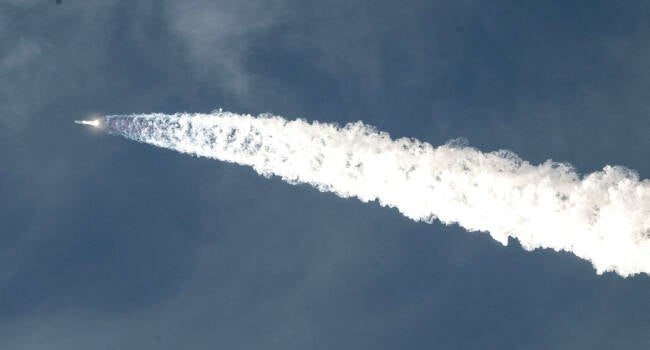
SpaceX launched its enormous Starship rocket into orbit for the first time on Monday, September 28, 2026, marking a historic milestone for the world's most powerful launch vehicle and a major step toward NASA's Artemis moon program. The 124-metre Starship/Super Heavy vehicle lifted off from SpaceX's Starbase facility in South Texas at 8:48 a.m. EDT (1246 GMT), beginning a flight that was originally planned to last nearly 10 hours and complete about six orbits of Earth.
The spacecraft almost did not achieve the long-desired goal after one of its engines shut down too soon shortly after stage separation. One of Ship 41's six upper-stage Raptor engines failed during ascent, prompting SpaceX spokesperson Dan Huot to tell livestream viewers that the craft would not reach orbit. However, with everything else working well and the bad engine no longer needed for the remainder of the flight, flight controllers decided after several tense minutes to proceed as planned. "Starship is orbital," Mission Control announced to cheers.
The mission carried 26 of SpaceX's latest and most advanced Starlink V3 satellites, which were deployed into orbit approximately 34 minutes after launch. SpaceX confirmed that its Starlink team had made contact with all 26 satellites. Each V3 satellite is designed to add 1 Tbps of capacity to the Starlink network, giving the 26-spacecraft batch a combined 26 Tbps, which SpaceX says is around 10 times the capacity added by a Falcon 9 launch carrying the current V2 Mini satellites. The deployment marked the first time Starship carried an operational payload to orbit, giving the flight a commercial purpose alongside its extensive test programme.
The Super Heavy first-stage booster was not meant to return to the Starbase launch site, instead splashing down in the Gulf of Mexico within minutes of the morning liftoff. The booster was modified after ice clogging issues interfered with a splashdown attempt on the last test flight, and SpaceX triggered the booster's flight termination system upon splashdown. The upper stage was expected to enter an orbit at an altitude of about 275 kilometres and remain there for almost 10 hours before conducting a deorbit burn and attempting a controlled splashdown in the Pacific Ocean west of Chile. However, SpaceX later cut the mission short, directing the spacecraft toward a controlled splashdown near Hawaii nearly seven hours ahead of schedule.
Flight 14 represents a significant change in the Starship programme. The previous 13 integrated flights deliberately followed suborbital trajectories, allowing SpaceX to test the vehicle without placing it into a sustained Earth orbit. This time, Starship graduated from hour-long suborbital test flights and made the leap to reaching Earth orbit. "Flight tests until this point have intentionally flown passively safe suborbital trajectories to maximize public safety while allowing for maximum learning," SpaceX said in a mission summary. "By going to orbit, the next phase of developing Starship to be fully and rapidly reusable can begin".
The successful orbital flight is critical for NASA's Artemis programme. NASA is counting on a modified version of Starship for use as a lunar lander, and the agency is facing intense pressure to get the vehicle ready for a crucial test flight next year that could pave the way for the next moon landing. NASA's Artemis IV mission, slated for no sooner than 2028, would have astronauts landing on the moon in either Jeff Bezos' Blue Moon or Musk's Starship, whichever is ready first. SpaceX is pressing hard to certify Starship for orbital flight, a vital step toward moon and Mars travel.
The rocket's reusability is central to SpaceX's long-term ambitions. The 124-metre rocket was designed from the start to be fully reusable, a key to lowering launch costs. If all goes well with this orbital debut, the next Starship will return to the launch pad with giant mechanical arms grabbing the hovering spacecraft. If the catch works, SpaceX will refly the spacecraft by year's end or early next year. SpaceX managed to salvage the last Starship from the Indian Ocean in July, and engineers modified the newly launched Starship's heat shield based on hands-on inspections from the recovered spacecraft.
Musk originally developed Starship for Mars, intending to launch scores of them with the red planet's first settlers. For now, he plans to focus on the moon and use Starship to haul satellites into orbit by the truckload, phasing out the company's frailer Falcon 9 rocket within several years. Musk has acknowledged the risks of the test programme, saying at a business summit earlier in September that if the spacecraft breaks apart over land and rains debris onto people, "our popularity would diminish very rapidly. That's why we're being extremely cautious here".
The launch came after a string of failures, delays and spectacular explosions in recent years that had defined Starship's development. The earlier test flights ventured no farther than the Indian Ocean halfway around the world, often crashing in flames and briefly skimming space. The achievement of orbit marks the beginning of Starship's transition out of a test flight campaign and into formal operations, a leap that is expected to have a paradigm-shifting effect not just on SpaceX, but on the entire space industry.
For SpaceX, the orbital flight validates years of iterative testing and positions the company to accelerate its Starlink deployment, support NASA's lunar ambitions, and pursue its longer-term goal of making humanity a multiplanetary species. For NASA, it offers reassurance that Starship is on a path toward operational readiness for Artemis. For the space industry, it signals the arrival of a fully reusable super-heavy-lift vehicle capable of carrying more than 100 tonnes to orbit, a capability that could reshape the economics of space access. As Mission Control put it, Starship is orbital. The next phase has begun.
📩 Stone Reporters News | 🌍 stonereportersnews.com
✉️ info@stonereportersnews.com | 📘 Facebook: Stone Reporters News | 🐦 X (Twitter): @StoneReportNew | 📸 Instagram: @stonereportersnews
Add comment
Comments