

Reported by Ariajegbe Sylvia Esezobor
Senate President Godswill Akpabio has charged lawmakers to remain committed to protecting public funds, declaring that the National Assembly owes Nigerians a duty to guard the public purse and that the legislature and the press must jointly answer to the people from whom all public authority derives.
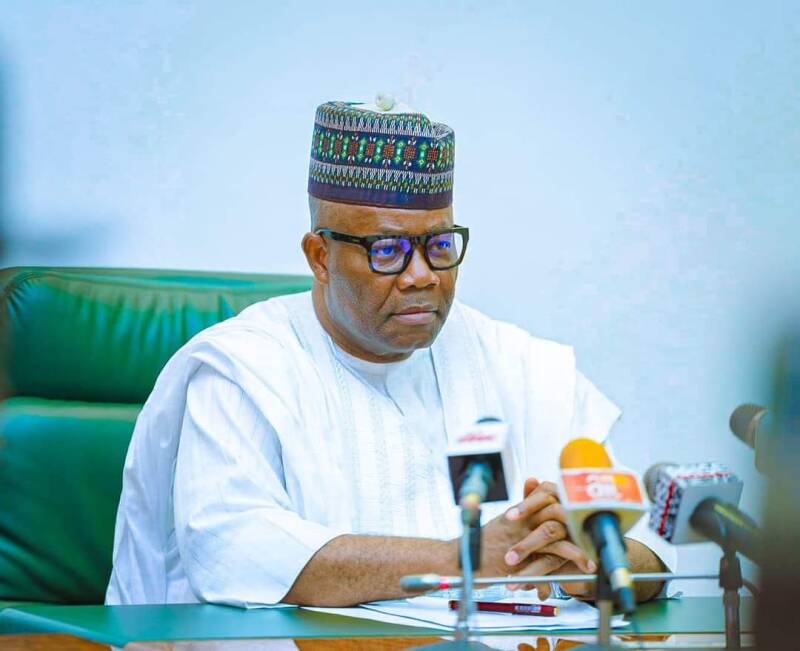
Akpabio gave the charge on Monday at the 2026 Capacity-Building Workshop organised by the Senate Press Corps in Abuja, themed “Leveraging Legislative Oversight and Media Collaboration to Safeguard the National Budget from Unlawful Insertions.” Represented by the Chairman of the Senate Committee on Media and Public Affairs, Senator Yemi Adaramodu, the Senate President said the theme went to the heart of representative government. “Parliament must guard the public purse, the press must illuminate the public record, and both must answer to the Nigerian people from whom all public authority comes,” he said. He urged parliamentary journalists to deepen their understanding of the Constitution and the rules governing the institution, stressing that effective oversight required lawmakers to scrutinise government spending while the media provided the public with clear and verified information on how public resources were appropriated and utilised.
The workshop convened key stakeholders in the budget and legislative accountability process. The Minister of Budget and Economic Planning, Senator Abubakar Atiku Bagudu, delivered a presentation in which he argued that Nigeria’s budget was relatively small compared with those of the world’s largest economies and that the country needed to significantly expand its fiscal capacity. Bagudu, whose remarks were reported separately, said Nigeria had the smallest national budget among the world’s ten most populous countries. He cautioned against erroneous reportage of budget line items, explaining that some provisions represented genuine needs identified in particular communities, while supporting continued vigilance and scrutiny of the budget process.
The Director of BudgIT, Oluseun Onigbinde, represented by BudgIT Foundation Country Director Vahyala Kwaga, said legislative budget scrutiny should move beyond approving appropriations to assessing the performance of government agencies and public policies. The Executive Director of the Civil Society Legislative Advocacy Centre, Auwal Musa Rafsanjani, represented by Ebu Emmanuel, urged lawmakers and journalists to subject budget line items to rigorous scrutiny, insisting that budget provisions should be justified, transparent, properly costed and measurable. He warned that vague, duplicated or inflated provisions could undermine public spending and called for accountability across the entire budget cycle, from proposal and justification to approval, implementation, monitoring, audit and accountability.
Akpabio’s remarks came against the backdrop of renewed concerns over the integrity of Nigeria’s budget process. The Chairman of the Senate Press Corps, Chief Taiye Odewale, identified an alleged N1.3 billion allocation to the non-existent Presidential Foreign Intervention Promotion Council in the 2026 budget as an issue that underscored the need for stronger safeguards against questionable budget entries. The controversy surrounding the allocation has intensified scrutiny of how budget provisions are inserted and approved, and it formed the backdrop for the workshop’s focus on legislative oversight and media collaboration. Akpabio addressed the issue indirectly by warning against allowing sensational claims to overshadow verification, particularly at a time when fabricated documents, images and voices could circulate rapidly. “A motion is not a law. A bill at First Reading is not an Act. A committee recommendation is not necessarily the decision of the Senate. An accusation made in debate is not proof of guilt, and a proposed allocation is not money already spent,” he said.
The Senate President called for a press that could question government without turning allegations into established facts. “I ask for no tame press,” he said. “We serve the same Republic under different obligations: Parliament must deliberate, legislate and oversee; the press must inquire, verify and report.” He urged journalists to scrutinise expenditure while giving concerned persons the opportunity to respond. “Where there is credible evidence of wrongdoing, let it be examined without fear. Where there is waste, let it be exposed. But an allegation does not become a fact through repetition,” he said. He also stressed that parliamentary journalism demanded thoroughness because while sensational claims were rewarded immediately, careful corrections often reached fewer people.
Akpabio’s intervention comes amid broader scrutiny of the National Assembly’s own spending. The Socio-Economic Rights and Accountability Project has issued a seven-day ultimatum to Akpabio and Speaker of the House of Representatives Tajudeen Abbas, demanding that members of both chambers refund and return to the public treasury all monies and allowances linked to a N110 billion vehicle procurement and support allowance scheme. SERAP has also called on the two leaders to refer allegations of the diversion or non-accounting of over N6.3 billion in constituency project funds to anti-corruption agencies for investigation and possible prosecution. The civil society organisation’s demands have added a layer of complexity to the budget accountability debate, raising questions about the legislature’s own stewardship of public resources even as it calls for greater scrutiny of the executive’s spending.
The workshop also featured a session on the use of artificial intelligence tools in journalism, with organisers saying the training was intended to improve journalists’ capacity to analyse budget documents, conduct research and strengthen professional reporting. Bagudu said artificial intelligence should assist journalists and lawmakers in asking better questions but should not replace human judgment, verification and professional safeguards.
The political context of Akpabio’s charge is unmistakable. The 2027 general elections are less than four months away, with the presidential and National Assembly elections scheduled for January 16, and the governorship and state assembly elections for February 6. President Bola Tinubu is seeking a second term on the All Progressives Congress platform, while former Vice President Atiku Abubakar of the African Democratic Congress and former Anambra Governor Peter Obi of the Nigeria Democratic Congress are among the major challengers. The integrity of the budget process and the stewardship of public funds have become central issues in the campaign, and the allegations of budget padding and unlawful insertions have provided ammunition to critics of the administration and the National Assembly.
For Nigerians, the message from the workshop carries both a promise and a warning. The promise is that the legislature and the media will work together to expose waste, resist unlawful insertions and ensure that public funds serve their intended purposes. The warning is that the process requires vigilance, verification and a willingness to resist the temptation to treat allegations as established facts. As Akpabio put it, Parliament stands guard over the public purse and journalism stands guard over the public record. “Let Parliament answer with an honest account of the people’s money, and let the press answer with an honest account of the people’s affairs,” he said. Whether that standard is met will be determined not by declarations at workshops but by the conduct of lawmakers and journalists in the months ahead.
📩 Stone Reporters News | 🌍 stonereportersnews.com
✉️ info@stonereportersnews.com | 📘 Facebook: Stone Reporters News | 🐦 X (Twitter): @StoneReportNew | 📸 Instagram: @stonereportersnews
Add comment
Comments