

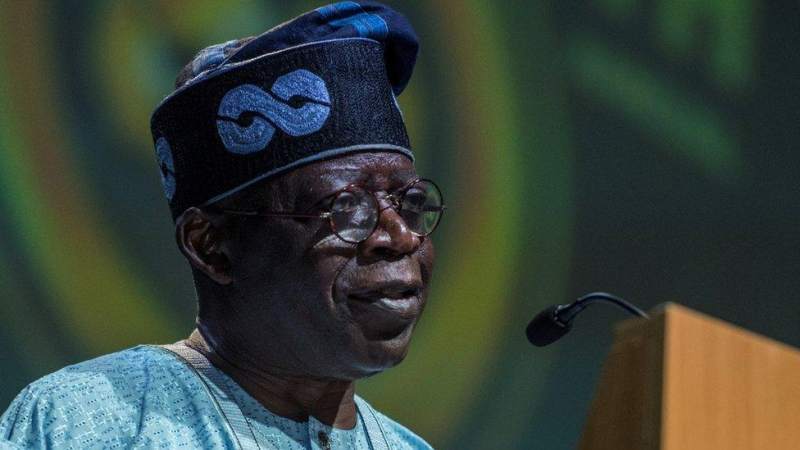
The Minority Leader of the Sokoto State House of Assembly, Abubakar Magaji, has criticised President Bola Tinubu’s administration over what he described as a lack of visible development and continuing insecurity, arguing that many Nigerians have yet to feel sufficient improvement in their daily lives under the Federal Government.
Magaji, who represents Bodinga North Constituency in the Sokoto State legislature, made the remarks while assessing the performance of the Tinubu administration, with particular attention to the security situation and conditions confronting communities in Sokoto State.
According to the opposition lawmaker, the level of development he expected from the Federal Government has not become sufficiently visible to ordinary citizens.
He also questioned the effectiveness of the government’s response to insecurity, pointing to continuing attacks and difficulties experienced by communities affected by banditry.
Magaji’s comments represent his political assessment of the administration rather than an independently established conclusion that no development has taken place since Tinubu assumed office.
The Federal Government has announced and implemented programmes in infrastructure, education, economic reforms and security during the period, while opposition politicians have continued to question whether those measures have produced sufficient improvements for citizens.
The security aspect of Magaji’s criticism comes amid continuing concerns in Sokoto and other parts of Nigeria’s North-West.
Communities in several Sokoto local government areas have faced bandit attacks, killings, kidnappings, displacement and threats from armed groups.
Earlier this month, suspected bandits reportedly demanded ₦40 million from residents of Kebbe town in Kebbe Local Government Area and threatened an attack if the money was not paid.
The Sokoto State Police Command confirmed that it was aware of the reported threat, with spokesperson DSP Ahmed Rufai saying the Anti-Kidnapping Unit was working on the information.
Residents in Tambuwal Local Government Area also recently protested over repeated kidnappings and attacks.
The protesters demanded increased deployment of security personnel and stronger operations to protect communities, farmers and traders.
Sokoto police said security personnel were monitoring the situation and taking measures to protect lives and property.
These incidents provide context for Magaji’s criticism but do not, by themselves, establish that federal security operations have produced no results.
The Sokoto State Government, which is controlled by the All Progressives Congress, has offered a different assessment.
Governor Ahmed Aliyu said on September 24 that collaboration between the state government and security agencies was producing what he described as “tangible results” against banditry.
Aliyu cited security operations in Rabah, Tureta and Kebbe local government areas, saying captives had been rescued and livestock recovered.
He also said the state had provided armoured vehicles and other operational support to security agencies and pledged that efforts would continue until displaced residents could safely return to their communities.
That position contrasts with criticism from opposition politicians who argue that continuing attacks demonstrate that more needs to be done.
The debate is not limited to Magaji.
The Minority Caucus of the House of Representatives called on Tinubu in August to intensify efforts against terrorism, banditry, killings and mass abductions across northern Nigeria.
The lawmakers cited incidents in Sokoto, Plateau, Niger, Kaduna and Katsina and called for sustained intelligence-led operations against armed groups.
Sokoto politicians have also raised concerns specifically about communities within the state.
Manir Dan’iya, the African Democratic Congress governorship candidate in Sokoto, said earlier in September that displacement, attacks and the abduction of women and girls required a stronger response from both federal and state authorities.
He called for improved intelligence operations, greater protection for vulnerable communities and assistance for displaced families.
In April, Senator Ibrahim Lamido, representing Sokoto East, similarly complained about persistent bandit attacks in his constituency.
Lamido said communities had experienced displacement and destruction of livelihoods and argued that the Federal Government’s response had been inadequate.
He said insecurity was among the issues influencing his political consultations at the time.
Another federal lawmaker from Sokoto, Abdussamad Dasuki, who represents Kebbe/Tambuwal Federal Constituency, has proposed greater security cooperation between Nigeria and neighbouring Niger Republic.
Dasuki argued in June that banditry, kidnapping, terrorism and arms trafficking in the North-West have cross-border dimensions and that stronger intelligence sharing and border surveillance could improve security operations.
Taken together, the statements demonstrate that insecurity remains a significant political and humanitarian concern in Sokoto despite continuing security operations.
For affected residents, the consequences extend beyond the immediate danger of attacks.
Persistent insecurity can prevent farmers from reaching their land, disrupt movement between communities and markets, force families from their homes and increase transportation and food costs.
Those effects make security closely connected to the development question raised by Magaji.
Roads, schools, hospitals and economic programmes have reduced impact when communities cannot safely use them or residents have been displaced from their homes.
At the same time, measuring development requires examining actual government programmes and outcomes rather than relying solely on statements from either governing or opposition politicians.
The Tinubu administration has undertaken major economic reforms since May 2023, including the removal of the petrol subsidy and changes to the foreign-exchange system.
The government maintains that its reforms are intended to stabilise public finances, attract investment and establish conditions for longer-term economic growth.
Critics have focused on the immediate hardship accompanying those changes, including higher living and transportation costs.
Development has consequently become one of the central political arguments ahead of the 2027 general election, with the government pointing to programmes and reforms while opposition politicians question how much ordinary Nigerians have benefited.
The same competing assessments apply to security.
Federal and state authorities regularly report arrests, rescues, recovered weapons, destroyed bandit camps and other operational successes.
Yet continued attacks, kidnappings and displacement provide opposition politicians and affected communities with grounds to demand stronger protection.
The House of Representatives itself called on Tinubu on September 30 to address rising insecurity and youth restiveness, following a motion during plenary.
Lawmakers stressed the constitutional responsibility of government to protect citizens and called for action against banditry, kidnapping and other forms of violent crime.
Magaji’s comments therefore enter an existing national debate rather than introducing a new concern.
For residents of Sokoto, the practical measure of security improvement is likely to be whether farmers can return safely to their fields, displaced families can return home, travellers can move without fear of abduction and communities no longer face threats or demands from armed groups.
The Sokoto government says progress is being made and that recent operations have produced results.
Magaji and other opposition figures maintain that the persistence of insecurity shows the response remains inadequate.
Both positions can ultimately be assessed against measurable outcomes: the frequency of attacks, numbers of people killed or abducted, successful rescues, communities restored, economic activity resumed and development projects completed.
Magaji’s criticism places responsibility particularly on the Tinubu administration, but insecurity in Sokoto involves overlapping federal, state and local responsibilities.
Nigeria’s military, police and other federal security institutions have primary operational roles, while state authorities provide logistical support and work with community security structures.
The lawmaker’s broader argument is that Nigerians should be able to see and experience the results of government policies rather than judge performance primarily through official announcements.
The Tinubu administration and Sokoto State Government, meanwhile, maintain that security operations and development programmes are producing progress even as they acknowledge that banditry has not been completely eliminated.
For the people living in affected communities, that political disagreement will matter less than whether measurable improvements eventually translate into safer communities, restored livelihoods and development they can experience directly.
📩 Stone Reporters News | 🌍 stonereportersnews.com
✉️ info@stonereportersnews.com | 📘 Facebook: Stone Reporters News | 🐦 X (Twitter): @StoneReportNew | 📸 Instagram: @stonereportersnews
Add comment
Comments