

Reported by Ariajegbe Sylvia Esezobor
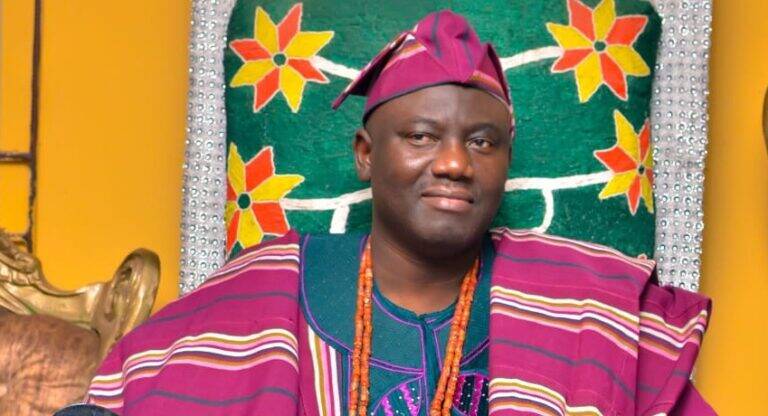
The Alaafin of Oyo, His Imperial Majesty Oba Abimbola Akeem Owoade I, has called on Nigerian politicians to eschew primordial sentiments and adopt a more pragmatic approach to resolving the country’s myriad challenges, warning that national growth and development depend largely on the good sense of justice, moral worth, responsibility, conscientiousness, devotion to duty, selflessness, probity and honesty exhibited by both leaders and the led.
The monarch made the call on Wednesday, September 30, 2026, in a statement issued by his Director of Media and Publicity, Bode Durojaiye, in Ibadan, the Oyo State capital, to commemorate Nigeria’s 66th Independence Anniversary, which is marked on October 1. The statement, titled “2027: Alaafin urges politicians to unite, focus on fixing Nigeria,” framed the anniversary as an occasion for sober reflection rather than mere celebration, coming as it does less than four months before the 2027 general elections, with the presidential and National Assembly polls scheduled for January 16, and the governorship and state assembly elections for February 6.
The Alaafin said politicians must close ranks, logically brainstorm and arrive at an in-depth and coherent understanding of the contending state-building issues confronting the country. He traced Nigeria’s journey from the amalgamation of the Southern and Northern Protectorates in 1914, which brought together peoples of diverse historical and cultural backgrounds into one political space to chart a new future. Despite the obvious challenge of diversity, he said, the commitment of the colonial government towards ensuring unity was demonstrated in policies aimed at fostering cultural, political, social and economic ties among the various groups in the new nation. From the amalgamation through the era of regional administrations, Nigeria became committed to a united federation, an arrangement he described as a functional framework between diverse communities for living together and working together nationally while preserving a measure of separate identity.
He noted that the quantum of unification and the quality of unity achieved were obvious, pointing to the accomplishments of Nigeria’s founding leaders, Chief Obafemi Awolowo, Dr Nnamdi Azikiwe and the Sardauna of Sokoto, Ahmadu Bello, in education, solid infrastructure, gainful employment, social welfare programmes and sound healthcare delivery. Their sacrifices, he said, laid the foundation for the country’s independence and the early promise of nationhood. The Alaafin’s invocation of the founding fathers served as a pointed contrast to the present, a reminder that the values they embodied, selflessness, probity and devotion to duty, are precisely what he believes are in short supply among today’s political class.
Central to the monarch’s message was a call for the constitutional recognition and strengthening of traditional institutions, which he described as the only remnants of Nigeria’s pre-colonial political system. He argued that there was no justifiable reason to relegate traditional rulers in modern governance, drawing a striking comparison with the British system. “If the British who colonised Nigeria and introduced liberal democracy still preserve their traditional institutions by making the Queen of England the Ceremonial Head of State with powers over the British Armed Forces, there is no justifiable reason to throw traditional rulers in Nigeria to the dustbin of modern politics and governance,” he said. He emphasised that since citizens, who are the major determiners of the success or otherwise of democratic and development programmes, remain under the traditional influence of Obas, the position of traditional rulers as potent mobilisers, advisers, mediators, facilitators, adjudicators and nominators should be greatly harnessed.
The Alaafin lamented that traditional institutions had gone through thick and thin in the country’s political history, from the pre-colonial through the colonial to the post-colonial eras, noting that since independence in 1960, their political status had continued to decline with far-reaching consequences for governance. Before colonial rule, he said, traditional rulers were not only political rulers but custodians of history, culture, religion and economy, with systems that perfectly suited the social, political and economic realities of the era, with the overall goal of the welfare of the generality of the people. The advent of colonial rule and subsequent post-independence politics, he argued, weakened and humiliated these institutions, depriving the country of a stabilising force that could have helped bridge the gap between government and the governed.
The monarch commended the administration of President Bola Ahmed Tinubu for focusing on rebuilding and laying foundations for a sustainable country, expressing optimism that Nigeria’s challenges can be surmounted if all stakeholders work together. His commendation, however, was not an endorsement of complacency. The thrust of his message was that the work of nation-building requires a collective effort that transcends party lines, ethnic affiliations and sectional interests, and that politicians must lead by example, demonstrating the same values of justice, honesty and selflessness that he identified as the bedrock of national development.
The Alaafin’s intervention comes at a critical moment in Nigeria’s political calendar. The 2027 elections are fast approaching, and the political atmosphere is already charged with tension, defections, realignments and bitter exchanges between the ruling All Progressives Congress and opposition parties. In recent weeks, the country has witnessed the disqualification of a Big Brother Naija finalist for violence, the arraignment of five men in Borno for wearing “Tinubu Must Go” T-shirts, and a legal battle over an alleged two-million-dollar land deal involving the son of the FCT Minister. Against this backdrop, the Alaafin’s call for unity and pragmatic leadership carries particular weight, offering a moral counterpoint to the polarising rhetoric that has come to define the pre-election season.
Traditional rulers in Nigeria occupy a unique space in the country’s political architecture. They are constitutionally barred from partisan politics but remain deeply influential at the grassroots, commanding respect that often transcends political, ethnic and religious divides. The Alaafin of Oyo is one of the most prominent traditional rulers in Yorubaland, and his voice carries significant weight in the South-West and beyond. His decision to use the occasion of the 66th Independence Anniversary to deliver a message that is both a critique of the political class and a call for institutional reform reflects the growing role of traditional institutions in national discourse, particularly as the country navigates economic hardship, security challenges and political uncertainty.
For Nigerians, the Alaafin’s message is a reminder that the problems confronting the country are not beyond solution, but they require a different kind of politics, one rooted in service rather than self-interest, in dialogue rather than division, and in a shared commitment to the common good. As the country marks 66 years of independence, the question the Alaafin poses is whether the political class is willing to heed that call, or whether the cycle of blame, division and inertia will continue to define Nigeria’s journey. The coming months, as the 2027 campaigns intensify, will provide an answer.
📩 Stone Reporters News | 🌍 stonereportersnews.com
✉️ info@stonereportersnews.com | 📘 Facebook: Stone Reporters News | 🐦 X (Twitter): @StoneReportNew | 📸 Instagram: @stonereportersnews
Add comment
Comments