

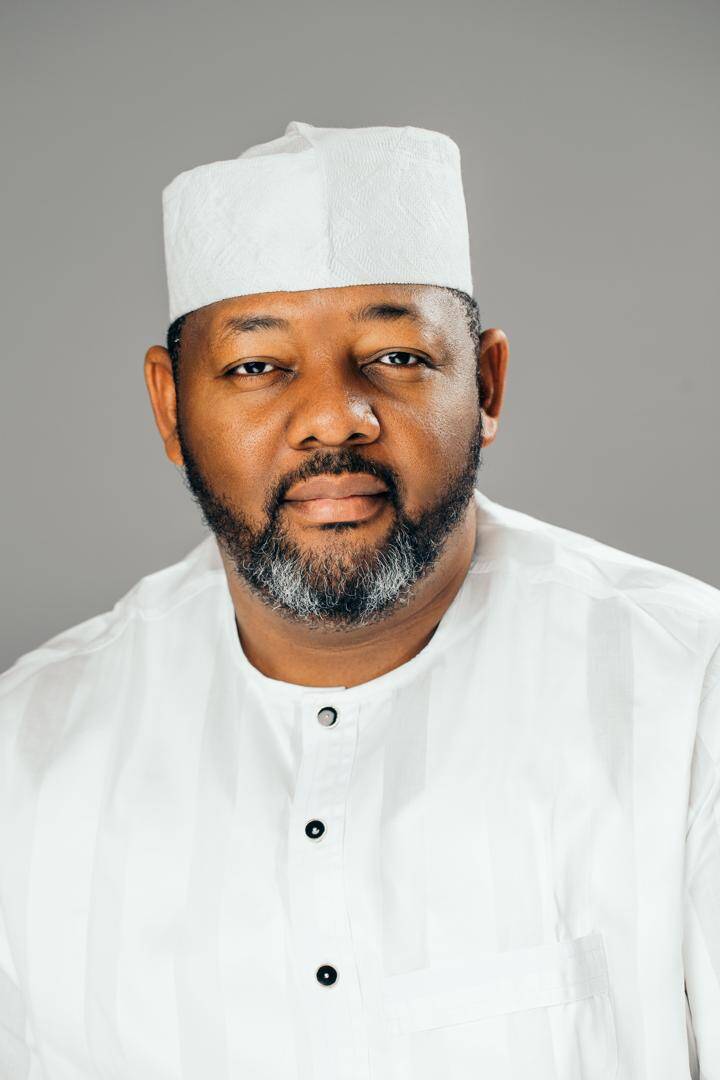
Reported by Ariajegbe Sylvia Esezobor
The reduction in transportation costs promised by President Bola Tinubu has already begun, the Executive Chairman of the Presidential Initiative on Compressed Natural Gas and Electric Vehicles, Ismaeel Ahmed, has said, disclosing that fares on several routes across the country are already significantly lower than what commercial operators charge, with savings of between 31 and 83 per cent recorded in seven states and the Federal Capital Territory.
Ahmed made the declaration on Wednesday during an interview with Channels Television, a day before the October 1 target set by President Tinubu for measurable reductions in transportation costs nationwide. He said the number of CNG refuelling stations in Nigeria had increased from fewer than ten before 2023 to ninety when the initiative was launched, and that more than 120,000 vehicles had been converted to CNG, with data still being collated. "What we are going to be seeing, starting tomorrow, is hopefully a reduction of transport fares in certain routes," he said. "If you jump on a CNG bus today from Gwagwalada to Abuja, you will be paying nothing less than 40 per cent cheaper than what you should be paying."
The figures cited by the Pi-CNG chairman are consistent with the data the agency released on Tuesday. According to the initiative, early deployments in seven states and the FCT are already delivering fare savings of between 31 and 83 per cent on some corridors. In Borno State, 500 electric tricycles, 20 electric buses and 150 electric saloon cars and taxis are operating alongside eight solar-powered charging terminals, with fares subsidised to as low as ₦50 for buses, ₦100 for taxis and ₦200 for tricycles. In Enugu, 100 CNG buses operated by FEMADEC on behalf of the state government ply busy routes such as Enugu–Nsukka, where fares have fallen from between ₦3,000 and ₦4,000 to ₦1,600 on the CNG-supported service, exerting downward pressure on other operators' prices. In the FCT, commuters on CNG buses pay roughly half the previous fares on key routes: Kubwa–Berger and Apo–Nyanya/Maraba now cost ₦500 instead of ₦1,000, Masaka–Berger ₦600 instead of ₦1,000, and Berger–Gwagwalada ₦700 instead of ₦1,200. Lagos has also recorded significant reductions, with Ikorodu–Fadeyi dropping from ₦1,200 to ₦680, Ikorodu–Maryland from ₦1,000 to ₦570, and Ikeja–Obalende from ₦1,400 to ₦720.
President Tinubu, in a nationwide broadcast on Thursday, October 1, said the removal of the petrol subsidy on May 29, 2023, had created the conditions for the current economic challenges but insisted that his administration would not return to what he described as the ruinous petrol subsidy regime. "Disruptions to global energy supplies are once again pressuring petrol and diesel prices and increasing transportation costs worldwide," he said. "Nigeria cannot control events in global energy markets. But as a gas-rich nation, we can reduce our exposure." He cited existing interventions across several states as evidence that CNG and electric-powered transportation can significantly reduce fares. In Kaduna, he said 100 CNG buses had provided free transportation on major routes, carrying about 3.2 million passengers in their first year and saving commuters an estimated ₦3.5 billion. In Oyo State, CNG buses deployed to Pacesetter Transport reportedly reduced the Lagos–Ibadan fare from about ₦8,000 to ₦3,200 during the initial deployment. In Adamawa, alternative-energy transport services had reduced fares by up to 50 per cent, from ₦8,000 to ₦4,000, while 100 CNG buses in Enugu had lowered the Enugu–Nsukka fare from ₦2,500 to ₦1,500. In Plateau State, government-supported buses transport about 13,000 commuters daily at ₦200, compared with more than ₦500 charged by commercial operators. On the Suleja–Abuja route in Niger State, commuters now pay ₦550, compared with about ₦800 previously, while Abia State had introduced 40 electric buses with fares subsidised by 50 per cent.
The President said the programme had become more urgent amid disruptions to global energy supplies that are putting pressure on petrol and diesel prices and increasing transportation costs worldwide. He disclosed that more than 120,000 vehicles had been converted to CNG in the past three years, while over 400 certified conversion centres and more than 90 CNG refuelling stations were now operating across the country. He also directed the rollout of an additional 500 CNG refuelling stations, bringing the planned nationwide programme to 1,000 stations. An implementation committee for the National Affordable CNG Transit Programme was established under the Nigeria Governors' Forum, chaired by Governor AbdulRahman AbdulRazaq of Kwara State, to coordinate the intervention with states and relevant stakeholders. The committee is working alongside Pi-CNG and state governments to identify priority transport corridors, determine appropriate interventions and put the necessary arrangements in place.
The initiative has not been without challenges. Transport operators in several states have complained about inadequate refuelling infrastructure, high conversion costs and long queues at existing stations. In Lagos, CNG queues have been reported at some filling stations, including the NIPCO facility at Ibafo along the Lagos–Ibadan Expressway, where buses, cars and trucks were seen waiting to buy CNG. A commercial driver said the scarcity of stations was forcing operators to spend hours waiting for the product. Another driver said he had considered converting his vehicle but was discouraged by the cost and the prospect of spending hours at refuelling stations. The uneven rollout has raised questions about the ability of transport operators and state governments to deliver cheaper fares across the country within the timeline set by the President.
Ahmed acknowledged the challenges but said the initiative was working to expand infrastructure. He said the government's job was to create an enabling environment, and that the initiative was backed by investors. "People are converting in droves, especially because we are entering new areas that we have not entered before," he said. "In the last one year, there was no single CNG station. Now, there are 10 refuelling stations in Kano." He emphasised that the true measure of success would be whether passengers felt cheaper fares. "If an operator is spending less on energy but the passenger continues to pay the same fare, then our work is not complete," he said. The coming weeks will determine whether the fare reductions recorded on the routes already served by CNG and electric vehicles spread to the rest of the country, and whether the infrastructure constraints that have slowed the rollout can be addressed fast enough to meet the expectations the government has set.
📩 Stone Reporters News | 🌍 stonereportersnews.com
✉️ info@stonereportersnews.com | 📘 Facebook: Stone Reporters News | 🐦 X (Twitter): @StoneReportNew | 📸 Instagram: @stonereportersnews
Add comment
Comments