

Reported by Ariajegbe Sylvia Esezobor
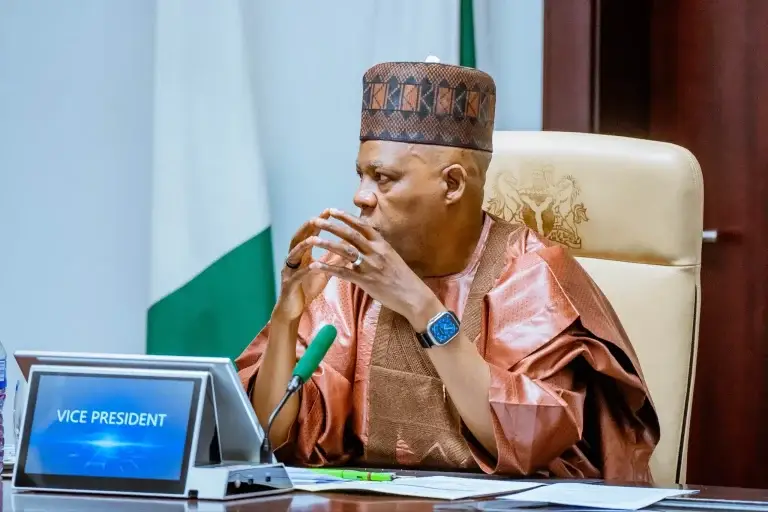
The Federal Government has begun construction of a new ultra-modern National Control Centre for the Nigerian Independent System Operator in Osogbo, Osun State, to replace a 64-year-old facility that officials say no longer meets the demands of running Nigeria's electricity grid. The groundbreaking ceremony was performed on Wednesday by Vice-President Kashim Shettima, who was represented by his Senior Special Assistant on Legal Matters, Alhaji Bashir Maidugu, with the Minister of Power, Joseph Tegbe, in attendance, according to a statement issued by the minister's Special Adviser on Media and Publicity, Adeola Labzy.
Shettima said reliable electricity was central to President Bola Tinubu's Renewed Hope Agenda, stressing that power supply remained critical to economic growth, industrial productivity and social development. He described electricity as the foundation of an economy that works, enabling manufacturers to plan production, small businesses to operate confidently, and hospitals and schools to function effectively, while creating jobs and expanding economic opportunities. The Vice-President described the National Control Centre as a critical component of grid reliability, saying Nigeria needed modern infrastructure to manage its increasingly interconnected electricity system. "We cannot run a modern, interconnected grid with the tools of yesterday," he said, adding that the country could not continue to operate a modern grid with outdated equipment and systems.
Tegbe said the new centre would give NISO improved visibility of activities across the national grid and enable operators to respond more quickly to faults and other disturbances. He described the project as a practical demonstration of the President's commitment to addressing the underlying challenges affecting electricity supply, and as a concrete expression of the administration's determination to fix the structural weaknesses in the sector. The facility will feature an integrated Supervisory Control and Data Acquisition system, large-format display screens and analytical tools to help operators identify emerging faults, plan preventive maintenance and optimise the use of existing generation and transmission capacity. The centre is also expected to improve responses to grid disturbances, support the integration of renewable energy and strengthen Nigeria's coordination with other countries participating in the West African Power Pool, backed by stronger physical and cybersecurity measures to protect critical electricity infrastructure.
The project comes amid persistent challenges in Nigeria's electricity sector, including repeated national grid collapses and inadequate power supply that continue to affect households, businesses and industrial activities. The grid has collapsed multiple times in 2026, with the first total system failure occurring on January 23, followed by a second collapse on January 27. In September, a nationwide outage left homes and businesses in darkness for hours after multiple tripping of a transmission line along the Onitsha substation in Anambra State. The Transmission Company of Nigeria has made a case for functional SCADA systems to prevent a repeat of such incidents, while industry stakeholders have identified the absence of fully deployed SCADA systems across the country's 330kV and 132kV transmission lines as a major cause of incessant grid collapse. The existing National Control Centre, built in 1962, has been at the centre of efforts to manage these disruptions, but officials acknowledge that the facility has long been overwhelmed by the demands of a modern grid. In April 2026, NISO disclosed that new control centres were under construction in Osogbo and Gwagwalada, equipped with modern facilities to support flexible and efficient system operations, and that more than 70 per cent of generating units had already been integrated into the National Control Centre for real-time monitoring. The Transmission Company of Nigeria subsequently handed over a temporary control room building extension for the SCADA and Energy Management System at the Gwagwalada 330kV Transmission Substation to NISO, which served as an interim operational base until the permanent centre becomes operational.
NISO Managing Director and Chief Executive Officer, Engr. Abdu Bello Mohammed, said the project would improve the operator's ability to monitor the national grid, coordinate system operations and make faster, better-informed decisions during disturbances. He said improved data from upgraded telemetry systems, SCADA and automatic metering would support more effective grid management, improve market settlement and strengthen the security and resilience of electricity supply. He noted that the new centre would equip NISO to meet the technical requirements of the West African power system, and emphasised the importance of skilled operators, saying technology does not operate the grid; people do. In his remarks, Tegbe disclosed that the Federal Government was targeting about 200 gigawatts of generation capacity by 2060, alongside an expansion of transmission infrastructure to meet rising electricity demand within Nigeria and the sub-region. He said the country would need more towers, more transmission lines and more substations, and that a modern National Control Centre upgraded to handle cybersecurity challenges and all sorts of interferences and disturbances was required to stabilise the power sector.
Shettima, however, cautioned that infrastructure alone would not transform the electricity sector. He said transforming the sector required more than increasing generation capacity and expanding transmission lines, stressing the need to build institutions that are clearly defined, professionally managed and accountable. "Infrastructure alone will not transform the electricity sector. The institutions operating that infrastructure must also uphold the highest standards of professionalism, transparency, accountability and technical discipline," he said. He noted that the Electricity Act 2023 provides the framework for the transformation of the sector, including the integration of renewable energy into the national grid, and that a modern economy required an electricity system capable of responding to changing demand, accommodating new generation sources, managing disturbances and supporting investment.
Tegbe said consumers and businesses stood to benefit from fewer avoidable outages and more dependable electricity supply, although the effectiveness of the control centre would also depend on improvements across the wider power value chain. He noted that adequate gas supply to power plants, properly maintained transmission equipment and functional distribution networks remained essential to delivering electricity to end users, and that the new facility would strengthen the coordination needed to translate investments in generation and transmission into usable electricity for homes and businesses. The ceremony was witnessed by the board and management of NISO, members of the National Assembly Committees on Power, leadership of various distribution companies, representatives of the Osun State Government, industry stakeholders and community leaders. The project represents the most significant investment in Nigeria's grid management infrastructure in decades, and its completion will be watched closely as a test of whether modern technology can deliver the stability that the country's ageing facilities have failed to provide.
📩 Stone Reporters News | 🌍 stonereportersnews.com
✉️ info@stonereportersnews.com | 📘 Facebook: Stone Reporters News | 🐦 X (Twitter): @StoneReportNew | 📸 Instagram: @stonereportersnews
Add comment
Comments