

Reported by Ariajegbe Sylvia Esezobor
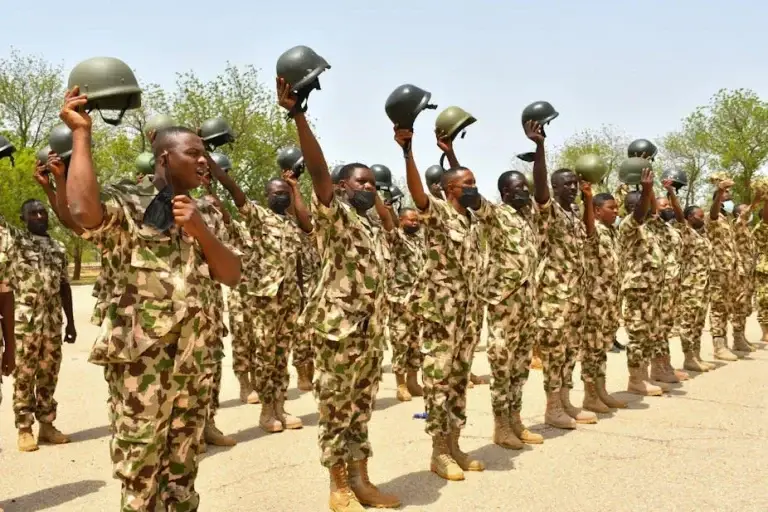
The General Officer Commanding, 2 Division, Nigerian Army, Major General Auwalu Mahmuda, has warned troops deployed to newly established formations in Oyo and Osun states against unprofessional conduct, charging them to remain disciplined, professional and proactive as the Nigerian Army expands its footprint in the South-West to confront contemporary security challenges.
Mahmuda gave the warning during a visit to the newly established Headquarters 7 Brigade in Oyo Town and 137 Battalion in Ile-Ife, Osun State, on October 1, 2026, as part of efforts to ensure their seamless take-off. The Acting Deputy Director of 2 Division Army Public Relations, Lieutenant Colonel Jonah Danjuma, disclosed this in a statement made available to newsmen on Friday in Ibadan. Danjuma said the GOC urged the troops to be disciplined and proactive in the discharge of their duties, enjoining them to be professional, mindful of their conduct and protect the image and reputation of the Nigerian Army. He said the GOC warned that he would not tolerate any act of unprofessionalism, quoting him as saying, “The Chief of Army Staff, Lieutenant General Waidi Shaibu, expects exemplary conduct always.” The message was unambiguous: the expansion of the Army’s presence in the South-West comes with heightened expectations of discipline and professionalism, and any deviation would attract consequences.
The visit was part of Mahmuda’s broader effort to assess the locations and ensure that the troops settle in and immediately commence the discharge of their constitutional responsibilities. The establishment of the new formations and units, he said, was aimed at effectively addressing contemporary security challenges. “The Nigerian Army has been doing a lot to improve troops’ welfare, which demonstrates the COAS’s Soldiers First Concept,” the GOC was quoted as saying. “You must reciprocate the gesture by remaining committed to your duties and denying criminal elements freedom of action.” The reference to the Soldiers First Concept reflects a broader push by the Army leadership to position welfare as a central pillar of operational effectiveness, linking improved conditions of service to the discipline and commitment expected of personnel in the field.
The GOC also stressed the importance of maintaining effective civil-military relations with host communities, noting that cooperation with residents was essential to the successful discharge of their responsibilities. In Ile-Ife, the GOC was received on arrival by the Commanding Officer, 137 Battalion, Lieutenant Colonel Christopher Okwujiako. Community leaders in the town, led by Sooko Adegboyega Ogunwusi, Sooko Laukun of Ife, thanked the Nigerian Army for establishing the 137 Battalion in the town and commended the COAS and the GOC for the initiative, which they said would further strengthen security in the area. The engagement with community leaders underscored the Army’s recognition that its operations depend on local cooperation and that the trust of host communities is a force multiplier in the fight against criminal elements.
The activation of the new formations is part of a wider restructuring of the Nigerian Army under the leadership of Lieutenant General Waidi Shaibu, who assumed office as Chief of Army Staff in 2025. In July 2026, the COAS approved the appointment of General Officers Commanding for newly established divisions, marking a significant expansion of the Army’s command structure. Under the new arrangement, 1 Division Kaduna oversees Kaduna, Kano, Katsina and Jigawa states, while 2 Division Ibadan covers Oyo, Osun, Ekiti and Ondo states. The 3 Division Jos is responsible for Plateau, Bauchi and Gombe states, with other newly created divisions extending the Army’s reach across the country. The establishment of Headquarters 7 Brigade in Oyo and 137 Battalion in Ile-Ife forms part of this broader effort to put more boots on the ground and strengthen the Army’s capacity to respond to emerging security threats in the South-West.
The security context in the South-West has become increasingly complex in recent years. Banditry, kidnapping and armed robbery have spread from the North-West into parts of the South-West, with forests in Oyo, Osun, Ondo and Ekiti states providing cover for criminal groups. The Oyo State Government declared a 16-hour curfew in 10 local government areas in June 2026 following a surge in kidnapping, and the state subsequently acquired surveillance aircraft to strengthen aerial reconnaissance and intelligence gathering in high-risk areas. The Nigerian Army has conducted operations in the region, including the establishment of a new brigade in Oyo and the deployment of troops to flashpoints along the Lagos-Ibadan Expressway and the Ibadan-Ife axis. The new formations are intended to enhance the Army’s ability to respond rapidly to security incidents and sustain pressure on criminal networks operating in the region’s forests and rural communities.
For the people of Oyo and Osun states, the establishment of the new formations represents a tangible increase in military presence and a signal that the Federal Government is taking the security challenges in the South-West seriously. The 137 Battalion in Ile-Ife, in particular, addresses a longstanding demand from community leaders in the town, which hosts the prestigious Obafemi Awolowo University and is a major commercial and cultural centre in Osun State. The presence of a battalion in the town is expected to improve response times to security incidents and provide a deterrent to criminal groups operating in the surrounding areas. The community leaders’ appreciation of the initiative reflects the extent to which residents view the Army’s presence as a source of reassurance.
The GOC’s visit also comes amid ongoing scrutiny of the Nigerian Army’s conduct in its operations across the country. The Army has faced allegations of human rights abuses and unprofessional conduct in several theatres, and the leadership has consistently emphasised the importance of discipline and respect for human rights. The GOC’s warning against unprofessionalism and his emphasis on protecting the image and reputation of the Army reflect an awareness that the institution’s effectiveness depends not only on its operational capacity but also on its standing in the communities it serves. The message to the new troops was clear: they are expected to uphold the highest standards of conduct, and any deviation will be treated as a serious breach.
The establishment of the new formations and the GOC’s charge to the troops mark the beginning of a new chapter in the Nigerian Army’s presence in the South-West. The coming months will determine whether the expanded footprint translates into improved security outcomes for residents of Oyo, Osun and the wider region, and whether the troops deployed to the new formations can meet the expectations set by the Chief of Army Staff. As Mahmuda put it, the COAS expects exemplary conduct always. The troops have been warned, the communities have been engaged, and the Army has committed itself to a mission that will be judged by results.
📩 Stone Reporters News | 🌍 stonereportersnews.com
✉️ info@stonereportersnews.com | 📘 Facebook: Stone Reporters News | 🐦 X (Twitter): @StoneReportNew | 📸 Instagram: @stonereportersnews
Add comment
Comments