

Reported by Ariajegbe Sylvia Esezobor
A 35-year-old woman in Houston, Texas, shot and killed her four-year-old daughter before turning the gun on herself, hours after a family court judge awarded primary custody of the child to her ex-husband, in a tragedy that has devastated a family and left even seasoned legal professionals searching for words.
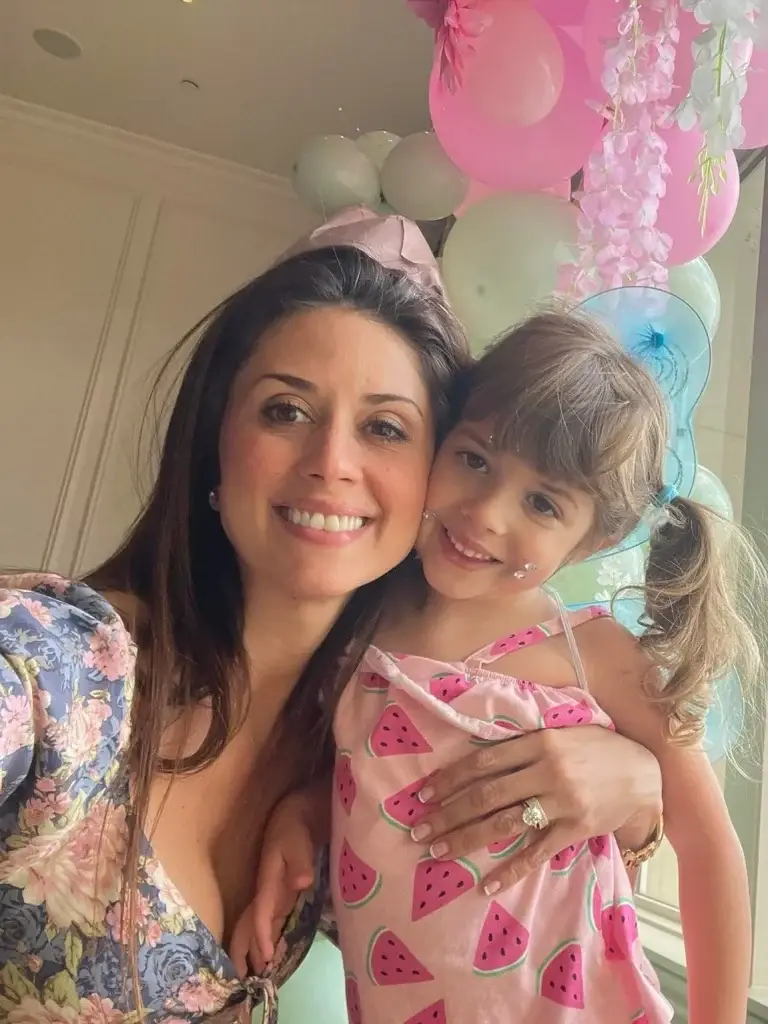
Cibelle Savella, originally from Brazil, was supposed to hand over her daughter, Vivian, to her ex-husband, Aaron Savella, on the evening of Tuesday, September 29, 2026, following a custody hearing that did not go in her favour. Instead, she returned to her home in west Houston and shot Vivian dead before turning the weapon on herself. Houston Police Department officers responded to a shooting call at approximately 5:45 p.m. local time at a residence on the 300 block of Terra Reserve Place. On arrival, they found Vivian dead from an apparent gunshot wound. Cibelle was found with a gunshot wound to her face and was rushed to hospital, where she was pronounced dead on Wednesday, September 30, 2026.
Houston Police Lieutenant Larry Crowson provided a brief and chilling account of the sequence of events. "There was a custody hearing earlier today that didn't go well for the mother," Crowson said. "She came home, shot her 4-year-old, and then shot herself." The brevity of the police account belied the depth of the tragedy: a child was dead, a mother was dead, and a father who had followed every legal step to secure custody of his daughter would never see her come home.
The custody dispute between Cibelle and Aaron Savella had been bitter and prolonged. The couple divorced in November 2024 after just four years of marriage, and the legal battle over their daughter continued for nearly two years. The custody hearing on September 29 was the culmination of that process. The judge granted primary custody to Aaron and imposed a series of stringent restrictions on Cibelle. According to court filings cited in media reports, she was banned from speaking to Vivian in her native Portuguese unless a supervisor could speak the language, prohibited from attending the child's school performances and extracurricular activities, ordered to pay child support to her ex-husband, and required to cover 50 per cent of any out-of-pocket medical expenses. The reasons behind the judge's decision to impose such restrictions were not immediately clear from the reporting, and the specific findings of the court have not been publicly detailed. What is known is that the ruling represented a significant loss for Cibelle, and within hours of its issuance, both she and her daughter were dead.
Charlotte Rainwater, the lawyer representing Aaron Savella, spoke to reporters about the shock that has gripped everyone involved. "I've been practising family law for 28 years and have never experienced anything like this," Rainwater said. "I don't think anyone in this courtroom on Tuesday contemplated this could be the outcome." Her words captured the sense of disbelief that has followed the tragedy. In family law, custody disputes are routine, and outcomes that disappoint one party are common. But the leap from a courtroom ruling to a murder-suicide is almost beyond comprehension, even for professionals who have spent decades navigating the emotional minefield of family litigation.
The Savella family issued a statement through their lawyer describing Vivian in terms that conveyed the depth of their loss. "Vivian was 4 years old. She was loved without limit by her father, Aaron, and by everyone whose life she touched. There are no words for what has been taken from us," the family said. They also addressed the legal process that Aaron had followed in his effort to protect his daughter. "Aaron did everything the law asks of a parent who is trying to protect his child. He trusted the courts. He followed every order. He waited for the process to work. On Tuesday, a judge placed Vivian in his primary care, and she was supposed to come home to him that evening. She never did."
The tragedy has raised painful questions about the adequacy of support systems for parents navigating custody disputes. Cibelle was described as having lost her daughter through a legal process that, in its final stages, imposed significant limitations on her role in Vivian's life. The restrictions on speaking Portuguese to her daughter, a language that would have connected the child to her Brazilian heritage and her mother's family, were particularly notable. The conditions imposed by the court suggest that serious concerns had been raised about Cibelle's conduct or circumstances during the custody proceedings, though the specific nature of those concerns has not been publicly disclosed. What is clear is that within hours of the ruling, she had access to a firearm and used it on her child and herself.
The incident has renewed conversations in the United States about the intersection of custody litigation, mental health and gun access. The period immediately following a contentious custody ruling is widely recognised by family law professionals and domestic violence experts as a time of heightened risk. Studies on filicide-suicide, the killing of a child by a parent who then takes their own life, have identified custody disputes as one of the most common precursors to such acts. The dynamics are complex: the parent may feel a profound sense of loss, rage, shame and despair, and in extreme cases, may come to view the child as an extension of the conflict and a possession to be taken from the other parent rather than a person to be protected. The Savella case fits this pattern with tragic precision.
Aaron Savella has not spoken publicly about the loss of his daughter. The family statement, issued through Rainwater, has been the only public comment. The images that have circulated in media coverage, of a father who did everything the law required and still lost his child, have resonated deeply. The case has drawn international attention, with coverage in Nigerian outlets including Punch, Nigerian Tribune, and international broadcasters, reflecting the universal shock that such stories provoke.
For the legal system in Harris County, where the Savella custody case was heard, the tragedy raises difficult questions that extend beyond the individual case. Judges in family courts are required to make decisions in the best interests of the child, but they cannot predict every outcome or control the actions of parties who receive rulings they consider devastating. The mechanisms for assessing risk and providing support to parents in the aftermath of custody decisions are limited, and the gap between the courtroom and the home is where tragedies like this unfold. Rainwater's comment that no one in the courtroom on Tuesday contemplated this outcome is a reminder that the law, for all its procedures, operates within the bounds of human unpredictability.
Cibelle Savella was a Brazilian national living in the United States. Her family in Brazil has not issued a public statement. The investigation into the shooting is ongoing, though with both the perpetrator and the victim deceased, the focus of the inquiry is likely to shift towards understanding the circumstances and timeline rather than pursuing criminal charges. The tragedy has left a four-year-old girl dead, her father grieving, and a family shattered by a sequence of events that began in a courtroom and ended in a home on a quiet west Houston street.
📩 Stone Reporters News | 🌍 stonereportersnews.com
✉️ info@stonereportersnews.com | 📘 Facebook: Stone Reporters News | 🐦 X (Twitter): @StoneReportNew | 📸 Instagram: @stonereportersnews
Add comment
Comments